Foodie Friday: The Pizza Chef

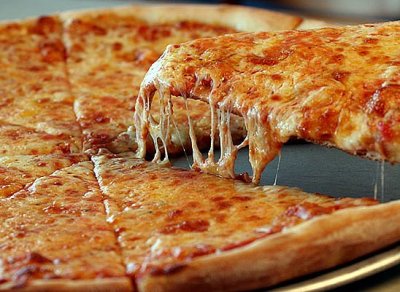
New York-style pizza has a thin, crackery crust with ingredients spread across the top. Photo: ecryptical.blogspot.com

As the general manager at Santullo’s Eatery in Chicago, Ill., Jeremy Kniola tosses pizza pies, schmoozes with customers, and figures out how to rake in more dough (we don’t mean the flour-y kind).

Santullo’s serves up slices of New York-style thin-crust pizza to set itself apart from the crowd of deep-dish eateries that line the streets of Chicago’s Wicker Park. And if customers complain about that, the staff simply recommends they go elsewhere. Below, Kniola talks about the mystery behind the pizzeria’s name, his scarring experience with Domino’s, and his unabiding love for omelettes and Arrested Development.

Age: 34
Graduated from: Didn’t attend college
In the pizza business for: 2 ½ years; many years in the restaurant business
Previous jobs: Table waiter; coffee shop manager

Growing up in the restaurant business, did you feel as though a career in the food industry was inevitable? As a kid, I wanted to be a rock star; I played bass. But my dad ran a restaurant in the early 60s, and I worked there through high school, waiting tables and cooking. Then I got into the management side of things and stepped my way up, which I really enjoyed.

What do you do all day at Santullo’s? I take care of finances, inventories, and marketing – but I don’t just sit in my office. I’m also on the floor, talking to customers to see what they want, and working shifts and making pizzas. I’m also working on a new menu to attract more customers while still keeping the musical, artsy feel of the place.

The Santullo's storefront. Photo: santullos.com

What will the new menu include? Vegan and vegetarian pizza options and a pasta menu, which our regulars have been asking for.

How would you describe a slice from Santullo’s? It’s New York-style instead of the traditional Chicago deep-dish. Our thin crust has a cracker feel, so it can’t hold a lot of weight, but we’re always trying new things that make us different from our competitors.

Like what? Our Hawaiian pizza isn’t just pineapple and ham – we also mix in barbecue sauce and bacon. A lot of our creations are generated by customer feedback.

Do you get backlash for serving New York-style slices in Chicago? On occasion, but in those cases, we suggest [other pizzerias] to those people. You can’t satisfy everyone.

Besides the crust thickness factor, how does New York-style differ from Chicago-style pizza? With New York-style, the ingredients are spread evenly across the top. With Chicago-style, the ingredients are in the middle of the pizza, and it has a lot more bread.

Something people don’t know about your job: Making pizza doesn’t take long to learn, but it does take a long time to perfect. People think we just toss out pizzas, but we need to make sure the weight is distributed equally on the dough with a nice circular edge. It can get thin and tear very easily.

Photo: recipes.howstuffworks.com

Do you spin the dough on your fingertips? That would rip it. It should land on your knuckles after tossing it in the air.

Best part of your job: Working with my friends. We’re all musicians or artists who also enjoy food – and we don’t dread coming to work. I actually come in on my days off.

Most challenging part of your job: With food prices rising, we have to figure out where to spend money that will be most effective for bringing in customers.

Do you ever get sick of pizza? No. I don’t eat it every day – I also try different things on our menu, like sandwiches and salads.

Most popular pizza: Margherita, which includes fresh mozzarella, tomato, and basil.
Your favorite pizza: Great White, which includes provolone and mozzarella cheese, red onions, sun-dried tomatoes, roasted garlic, and olive oil.
Type of oven used: Two older-model electric stoves.

Where does the name “Santullo” come from? It’s a mystery! It’s supposed to be a family thing, but there’s nobody named Santullo here. We have more fun coming up with concepts and telling people stories than knowing where it really came from.

Are you Italian? No. There are Italian people here, but not me.

Most despised corporate pizza chain: Domino’s. I had a bad childhood experience – let’s just say [the pizza] came back up.

What is it about pizza that unites all Americans? It’s traditional, like the cheeseburger or hot dog. You can have it as a quick lunch, a snack at a game, or over a movie with your family on a Friday night.

Your comfort food: Omelettes. I was raised to eat something right away in the morning.

Breakfast pizza. Photo: thekitchn.com

Have you tried making a breakfast pizza? We’ve done a few as specials, with eggs and tomato sauce.

Where do you see yourself in five years? Opening more Santullo’s locations in the Chicago area and beyond.

If you could star in any TV show, it would be: Arrested Development.

LAUNCHING YOUR CAREER>>
1. Start from the bottom: take a job waiting tables or shadowing a chef. I washed dishes and waited tables to understand as much as possible about the business.

2. Look to see what your competitors are doing to get ideas, but be as original as possible. Do things your own way to separate yourself from the crowd.

3. Keep an open mind and find people you can work with. The last thing you want to do is fight at work.

Follow Santullo’s Eatery on Twitter at @SantullosPizza.

Hungry for more? Click here for more Foodie Fridays on No Joe Schmo, including a master fudge maker and professional competitive eater.

Great Balls of Fire: The Glass Blower

Rene Steinke is fascinated by how much glass has changed the world, from telescopes and microscopes to Intel chips.

“I have ADD bad, and glass blowing is the only thing that makes me focus,” Rene Steinke says between breaths. He’s working on a masterpiece as we speak. “It really channels all my energy.”

Steinke, a self-described 30-year-old child, spends his days teaching classes at Rainbow Glass and working in his dream factory in downtown Sacramento, Calif. (it’s half glass blowing studio, half skateboarding rink).

Growing up, Steinke worked at a pizzeria, where he burned himself more on the pizza oven than he does now on balls of molten glass. But pursuing his passion comes at a cost: his financial struggles force him to build all his equipment from junkyard scraps.

Age: 30
Based in: Sacramento, Calif.
Graduated from: Nowhere; I’m a high school dropout who found something I loved
In the business for: 15 years
Previous jobs: Pizza delivery man; construction worker

How did you transition from remodeling roofs to blowing glass? At age 15, someone at the construction site I was working at offered me an opportunity to help out at a glass blowing studio after work. The studio’s owners noticed I picked up [glass blowing] quickly and wasn’t afraid, and they offered me a job on the spot. I quit my construction job and started working there instead.

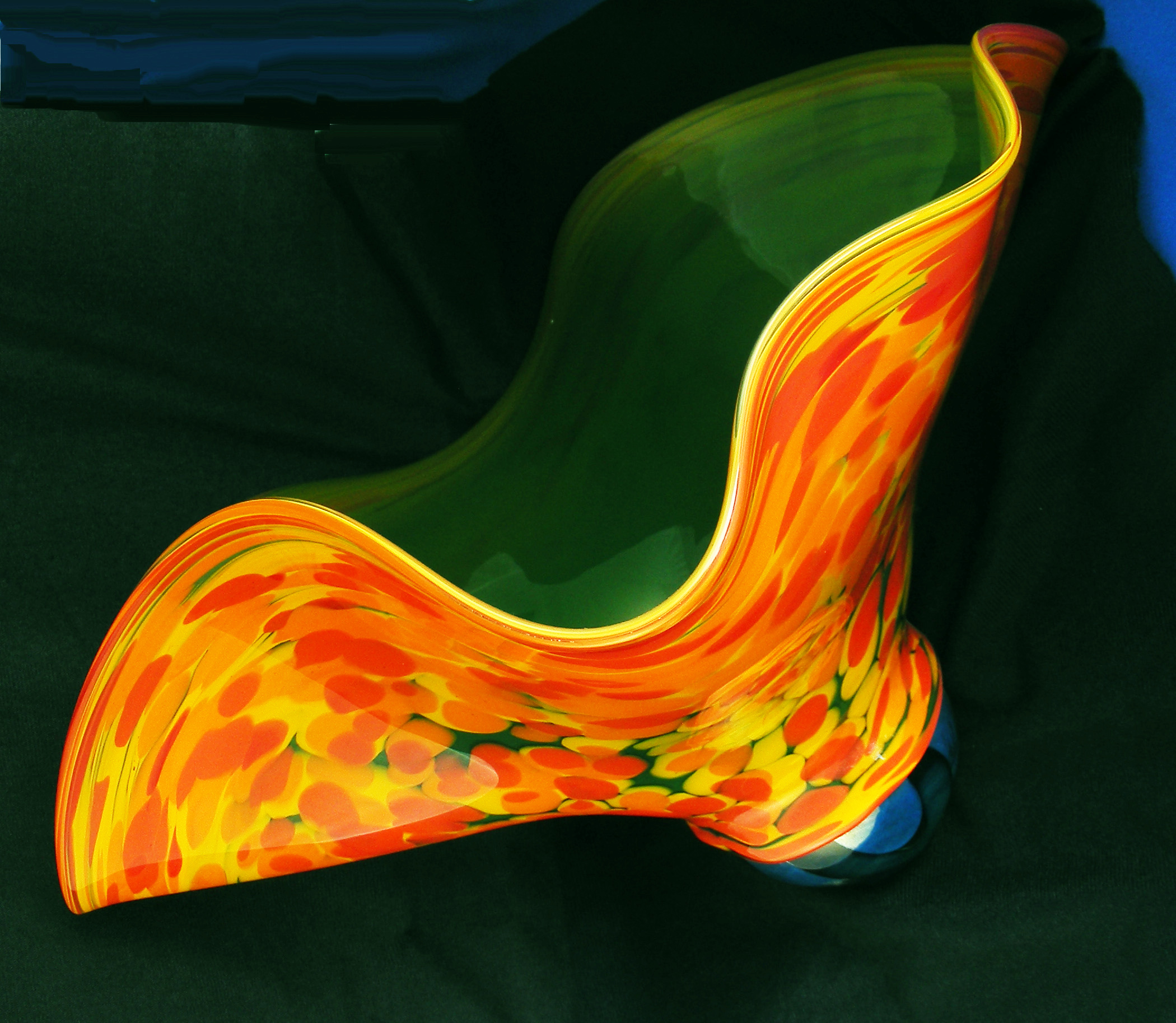
This multi-colored vessel features a large hand-blown marble in the center.

Without a formal education, what sort of training did you receive for blowing glass? I studied at the Corning Center for the Fine Arts in Corning, NY, under a famous Venetian glass blower. That opened my eyes to how glass blowing works.

Briefly explain the process of glass blowing. A ceramic crucible inside the 70-lb. kiln heats up to 2100 degrees Fahrenheit, melting the glass inside it. I take a steel pipe – a hollow blowpipe – and gather a ball of molten glass on the end. I blow into the pipe to shape the glass, let it cool, and dip it back into the furnace. Then I break the glass off the blowpipe and leave it in the oven to cool until the end of the day.

Do you coax the glass into certain shapes only using your breath? With the help of metal tools, like tweezers, and cherry wood blocks.

How close can you get to the glass without burning yourself? You never actually touch the glass, but you can use wet newspaper to shape it. Working on a large piece might require someone else to hold up a paddle or piece of wood as a heat shield.

Did you love fire as a little kid? Yes. I think fire is a wonderful thing. [Editor’s note: via email, Steinke’s mother stated that he wanted to be an arsonist or firefighter as a child.]

Steinke teaches student Gabriel Dart, 15, how to start the shape of a piece.

Most kids grow out of the pyro phase. I’ve always done extreme activities, like skateboarding and snowboarding – and I’ve always loved art. So I found this extreme art form, where I had an instant love for the process and the medium. I have bad ADD [attention deficit disorder], and this is the only thing that makes me focus.

Do you still find time to skate and snowboard? I have a warehouse in downtown Sacramento with a half-pipe and a glass blowing studio.

Best part of the job: Making something beautiful without touching it with your hands.

Most challenging part of the job: It’s very physically demanding work and difficult to learn. You keep stumbling over yourself until you figure it out, but that’s why I enjoy it so much.

It must be tough to keep the hot glass intact. If you let a piece go below 1,000 degrees, you risk breaking what you’re working on. The glass is moving all the time; you’re constantly chasing this weird, morphing piece, trying to control something that doesn’t want to be controlled.

Any serious injuries? Only cuts from the glass, not burns. When I worked at a pizzeria, I burnt myself more on the damn pizza oven than I have ever burned myself on glass. And now, I’m working with three to four times the amount of heat.

Steinke created this glass bicycle for the annual Amgen Tour of California. It features working parts, complete with rolling wheels.

How would you describe your style? I’m really into using nature, particularly sea life. I’m working on a product line of functional sea life art that’s half sculpted and half blown, like seahorse flower vases.

Your favorite project: I was the lead glass blower for a project in the Davis Public Library in Davis, Calif., which consisted of 32 pieces of glass suspended from the skylight in a reverse pyramid.

Common myths about the profession: People ask whether sucking inward will burn my lungs out. The answer: no, it won’t.

Biggest setback: Figuring out how to make money and survive. But I overcame that by scrounging – I built all my equipment from junkyard pieces. If I see metal in an alley, I’ll pull over and pick it up.

Pricing for your work: They range for $50 to $10,000, based on the time it took me, amount of glass used, and how much I love the piece.

If you could be reincarnated into someone dead or alive, who would it be? Let’s go with Tony Hawk.

Learn more about the process:

LAUNCHING YOUR CAREER>>
Interested in blowing glass? Rene Steinke offers some advice.
1. Remember that you fail your way to success.

2. Attend a reputable training program. Two schools that offer great ones are the Corning Center for the Fine Arts and the Pilchuck Glass School.

3. Travel abroad and learn from as many mentors as you can. There are a million ways to blow glass – don’t get stuck in just one.

PLUS: For more artsy No Joe Schmos, check out the tattoo artist, the filmmaker and film editor couple, and the permanent makeup artist.

All photos courtesy of Darby Patterson.

Foodie Friday: The Master Fudge Maker

Mmm, we can never say no to fudge.

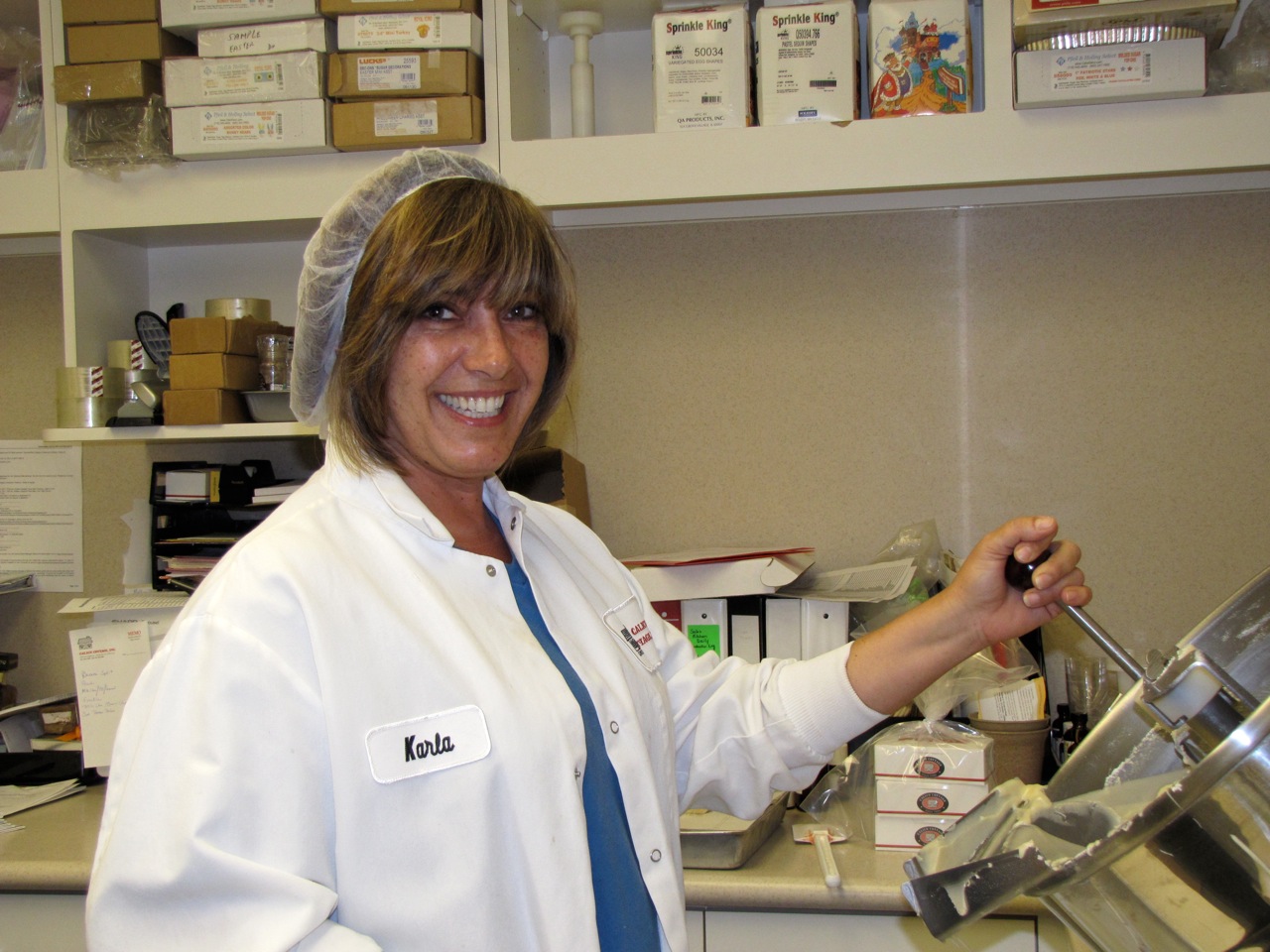
Even though she doesn’t quite have a sweet tooth, Karla Bayon eats fudge every day. For her job, she has to.

Bayon is the master fudge maker at Calico Cottage, Inc., a family-owned business that’s been churning out rich, creamy chocolate for almost 50 years. From red velvet to chipotle corn, she’s constantly toying with new flavors, decorating fudge, and coming up with novelty ideas, like fudge pizza.

As summer winds down, it’s out with the watermelon sherbet and in with the apple pie. Below, Bayon dishes on her favorite mix-in, weight gain associated with the job, and the weirdest flavor she’s ever seen.

Age: 53
Graduated from: Suffolk Community College, Associate’s degree with emphasis on psychology
In the fudge industry for: Almost 5 years
Previous jobs: Stay-at-home mom; manager and baker at Reinwald’s Bakery in Huntington, NY

In one sentence, what do you do all day? In a nutshell, I develop new recipes and play with food.

What made you decide to pursue a career in baking? I didn’t intend to be in the food industry, but it’s funny where life takes you. After my husband had a tragic accident, I took a temporary job at Reinwald’s, a local bakery, and ended up staying there for 18 years. Then I took a job at Calico Cottage that evolved into the master fudge maker position.

Red velvet fudge is one of the most successful flavors.

Did you have an “aha” moment? My son was graduating college, and he was so excited about starting his life. To see his excitement to start a whole new journey – I felt like I was missing something. I was middle-aged and felt like it was time for me to get back some of that excitement.

Where do you draw inspiration for new fudge flavors? It could be in the spice aisle or vegetable aisle of the grocery store. Lately, I’ve been trying to get into Tex-Mex fudge flavors.

How does Calico Cottage decide which flavors to produce? Recently, a few employees got together to brainstorm, and we came up with over 600 ideas. We take a few flavors at a time and work with those – sometimes they work beautifully, sometimes we put them on hold, and sometimes they tank.

Flavor that worked beautifully: Red velvet.
Flavor that tanked: Oriental, with noodles and wasabi.

How do you judge what qualifies as “good” fudge? It has to be visually appealing. One flavor I thought would be a success was French toast, but it wasn’t working visually, so we put it on hold. Fudge also has to be creamy and delicious – you want to bite into it and taste exactly what it’s supposed to be.

Fudge-covered marshmallow pops for the December holidays.

Do you offer special seasonal flavors? Around the fall, we have apple pie and pumpkin pie flavors, and at Christmas, we have eggnog and cranberry nut. For the summer, we’ll have watermelon and sherbet fudge.

Most popular flavor: Chocolate walnut. You can’t go wrong with chocolate and nuts.

Your favorite flavor: Cappuccino. I love coffee.

Strangest flavor: Sauerkraut fudge. I also once saw garlic fudge at a garlic festival out west.

Something people don’t know about your job: There are no boundaries; what you think can’t work sometimes surprisingly does.

Little-known fudge fact: Fudge tends to get soggy if you put in crispy things, like pretzels. [Click here for more little-known fudge facts.]

What flavors are you working on now? I’ve been combining savory and sweet, so I’m working on a mango coconut with peppercorn, and also a chipotle corn with a nice crunch factor. But my job isn’t just developing flavors – it’s also decorating and coming up with novelty ideas.

These fudge wreaths are the holiday version of the "fudge flats" that Bayon developed.

Like what? I just came up with a “fudge flat,” which is kind of like fudge pizza. The crust is made of yogurt-covered pretzels, and it has a layer of fudge on top with nuts or raisins.

Do you have a sweet tooth? I’m developing one more and more every day. That’s why I like to work with savory flavors, too.

Do you eat fudge every day? Yes, but it’s very rich. If I keep it up, they’re going to have to put a “wide load” sign on me.

Have you gained weight since taking the job at Calico Cottage? At least 10 pounds. Typically, I try to eat light – like yogurt and fruit for breakfast and salad for lunch. That way, I won’t feel so bad when I take a bite of fudge.

Milk or dark chocolate? Milk. But our Mexican dark chocolate, which is dark chocolate with cinnamon, is very good, too.

Candy or plain? Nuts, like almonds or hazelnuts. I love crunch and texture in fudge.

Favorite dessert? Ice cream with hot fudge sauce. I also find a lot of inspiration in ice creams that are pushing the envelope.

Dream job in college: Radio broadcasting. But not long after graduating, I got married and had a kid. Life happens.

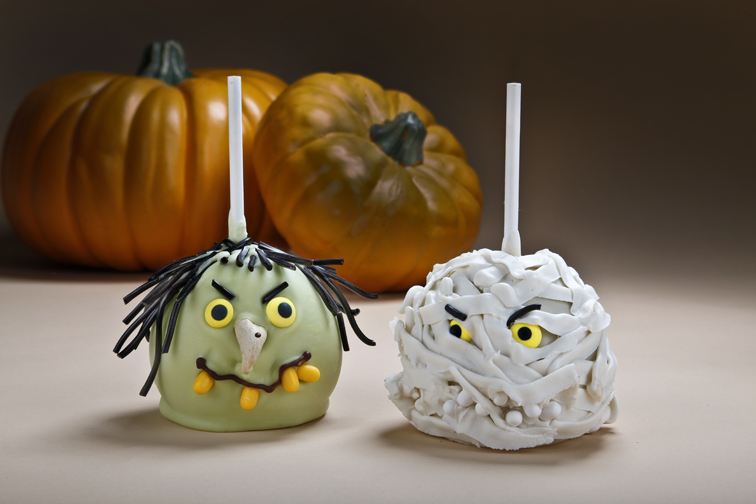
Fudge-covered apples for Halloween.

LAUNCHING YOUR CAREER>>
The fudge master serves up some advice for recent grads: Go with your passion and do what you love. I ask my son all the time: are you happy with what you do? That affects every aspect of your life: personal and professional.

Check out more than fudge 150 recipes and learn to decorate fudge yourself! All photos courtesy of Calico Cottage/Lynn Misiak.

PLUS: Got a sweet tooth? Check out other dessert-themed Foodie Fridays, like the Cold Stone Creamery taste master and fortune cookie writer.

Beyond Skin Deep: The Tattoo Artist

Jesse Neese got his first tattoo at age 20, so he often jokes that his kids have to wait until then, too.

Why settle for just one tattoo when your entire body can be a canvas? Jesse Neese, the owner of Nuclear Ink in Omaha, Nebr., considers his entire body one tattoo.

The art of tattooing dates back to the beginning of mankind. It developed a somewhat seedy reputation, but modern artists with high hygiene standards now offer beautifully crafted, customized designs.

Neese, a father of two and former high school art nerd, has been inking thousands of customers for 12 years. His schedule book fills up months in advance; his larger projects, like full back pieces, can take multiple five-hour sessions.

Below, he reveals how the profession has helped bring him a sense of community.

Title: Owner, Nuclear Ink
Age: 37
In the business for: 12 years
Graduated from: University of Nebraska at Omaha, degrees in studio art and dramatic art
Pricing: $125 per hour
Previous jobs: salesman; waiter; customer service representative

What inspired you to pursue tattoo artistry? I saw a lot of bad tattoos around me, and I thought I could do better. If a permanent mark is going to be made on your body, it should be done well.

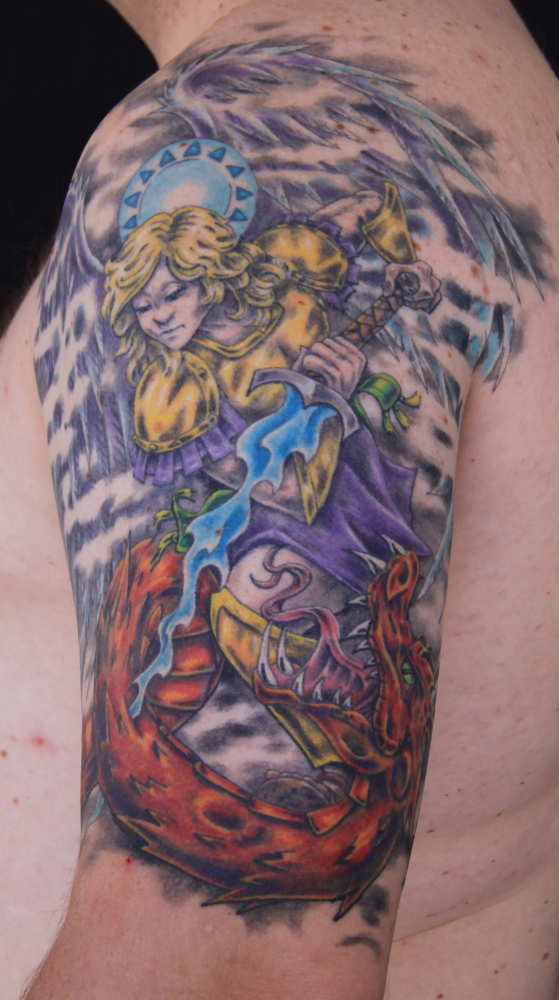
Neese often receives religious requests, such as this tattoo of Saint Michael.

How did you get started? At age 18, I went into every shop in town, asking to learn how to do tattoos. I didn’t have an “in,” though. So I got a few tattoos and an art degree, and forgot about wanting to be a tattoo artist. About 10 years later, I ran into an artist I used to know, and set up an apprenticeship with him. We eventually opened a studio together, and I bought his part of the business in 2003.

Does your theater background help with tattooing? There’s a lot of lighting involved in theater, so that gave me a good eye for light and shadowing with tattoos. For example, I use shadowing to give tattoos a 3D illusion. I also have lots of experience with costuming, which gives me an advantage with larger tattoos that flow around the collar.

What’s the preparation procedure for tattooing? I work with people to design the tattoo to fit their body. I take paper and measure out the space of the tattoo – sometimes, I’ll draw the design out on paper beforehand, and other times, I’ll just draw it right onto the skin with a marker. It’s easier to draw right on if a tattoo is wrapping all the way around the arm.

Do you numb people before injecting ink underneath their skin? I don’t believe in that – it’s not necessary. If you’re not willing to put up with the fact that it hurts a little, you don’t want it enough.

How long does the process take? Larger tattoos can take multiple four- to six-hour sessions, each a few weeks apart.

Neese typically works until 9 p.m. or 10 p.m. in the evening.

Craziest tattoo you’ve ever done: I don’t consider anything crazy. But I’ll never do the same tattoo more than once, unless friends or family want matching ones.

Your work looks heavy on fantasy art. I never want to get stuck in doing just wildlife or dragons. I run the whole range, from black and gray to color and from realism to crazy cartoons.

What do you think of the “tough guy” stereotype of tattoo artists? For the most part, [tattoo artists] are the nerdy art kids from high school – the ones that were picked on and messed with. We’re the ones that really love and enjoy artwork.

Something people don’t know about the job: How much work it is. I spend all day tattooing, then come home and fall asleep on the drawing table. Some say they only draw in a good mood, or when they’re upset – you can’t do that as a tattoo artist.

How many people have you tattooed? Anywhere from one to five per day, six days per week, for 12 years. So that’s thousands of tattoos in my life – I can’t even count how many.

How many tattoos do you have? I consider my body one tattoo – it’s an open space. I have some medieval engravings, totem animals, goblins, and Hot Rods with my wife, kids, and myself racing off in a cartoon buggy.

Various AC/DC tribute tattoos.

Do you tattoo yourself? It’s a mix of doing it myself and letting others do some, since it’s difficult to reach most angles.

Any music while you work? Nothing slow and mellow.

Favorite part of your job: Growing up, I never felt part of my community or the bigger picture. Now, I meet everyone in my community. I’ve tattooed local police officers, firefighters, doctors, nurses, and fast food workers.

What tattoos do the firefighters get? Many get the Maltese cross, but just as many get other personal designs.

Do you think it’s important for tattoos to have deep meaning? Not necessarily. Some TV shows make it seem like someone needs to die in order to get a tattoo. That’s negative; I’d rather get a tattoo to celebrate someone.

What does your office look like? It’s pretty clean, with white walls, a few murals, and lots of my own artwork – like poster-size photos of back tattoos I’ve done.

One of Angelina Jolie

LAUNCHING YOUR CAREER>>
1. Focus on becoming a professional artist: get an art degree and do as much artwork as possible. Consider joining the Alliance of Professional Tattooists (APT), which has a code of ethics I strongly believe in.

2. Get tattooed. You’ll learn a lot about how the process works and what it’s like to have one. It’s also valuable for a tattoo artist to have a tattoo he’s not happy with; it teaches you the gravity of the business, and keeps you in check.

3. When pursuing an apprenticeship, be professional: don’t show half-finished sketches on notebook paper. Instead, show a portfolio of finished artwork.

For more of Neese’s work, check out his art galleries and Nuclear Ink’s Facebook page. All photos, unless stated otherwise, are courtesy of Jesse Neese.

Another way to get inked: this No Joe Schmo is a permanent makeup artist!

Foodie Friday: The Kimchi Taco Truck

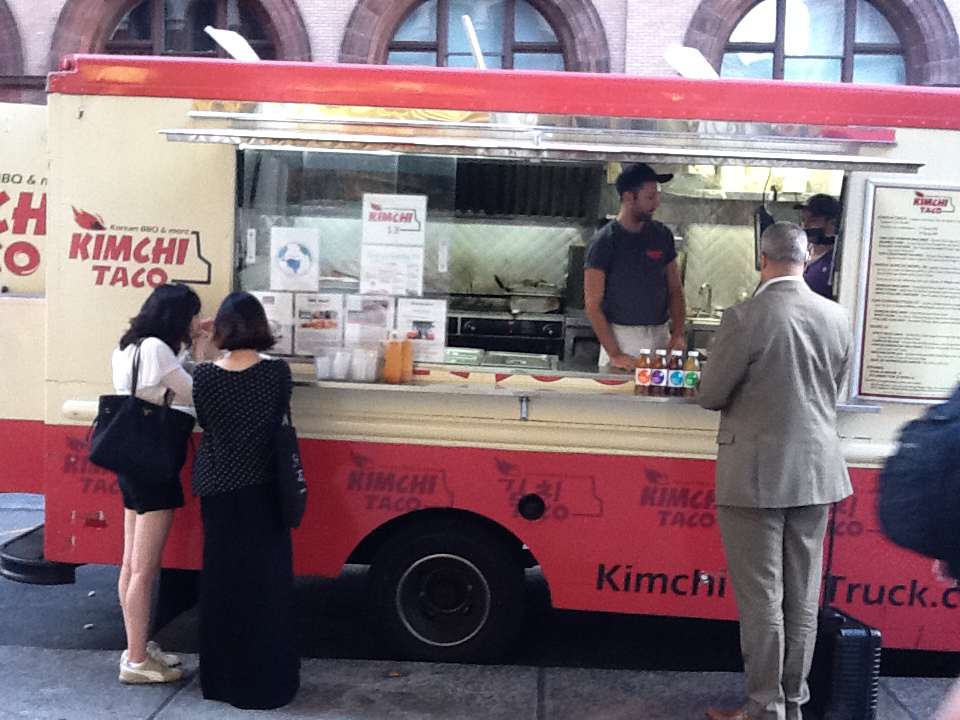
Today’s Foodie Friday is the first No Joe Schmo snapshot, a new series that will briefly chronicle a cool or crazy job through one photograph (snapped by yours truly). The snapshot series — which will appear several times each month — are super-condensed versions of No Joe Schmo posts, just featuring the photo, one or two direct quotes describing the job, and a bit of logistical info. The series kicks off with a Foodie Friday featuring a New York City food truck!

“Kimchi, a part of Korean culture, isn’t too big in the United States. By mixing it with tacos, we’re bringing it to mainstream New York. I love introducing people to something they don’t know about.”

Who: Christian Manzo, 27
What: Part-time worker at the Kimchi Taco Truck, which serves up Korean barbecue-inspired tacos stuffed with marinated beef, braised pork, and chicken. The truck’s owners fused their Korean heritage with their Philadelphia roots, resulting in a Kim-Cheesesteak Sandwich. All kimchi is made in-house.
Kimchi is: Spicy, pickled cabbage “essential to every Korean meal.”
Where: Various destinations in Manhattan, NY, including Soho, Midtown, and Astor Place.
Favorite menu item: Pork tacos.
Originally hails from: San Francisco, where Korean culture and food trucks are “huge.”

Follow Kimchi Taco Truck on Twitter at @KimchiTruck and on Facebook, where the truck lists its lunch and dinner schedules.

Hungry for more? Click here for more Foodie Fridays on No Joe Schmo, like the co-founder of Crumbs Bake Shop and creative director at Dylan’s Candy Bar!