Check in next week for Foodie Friday!

Next week's Foodie Friday: Mia Bauer, a co-owner of Crumbs. Photo credit: crumbs.com

Sorry to disappoint, but no Foodie Friday today! The series will continue next week, with the co-owner of Crumbs Bakery, Mia Bauer. Be sure to tune in next week to read about Mia’s first experience with the dessert and what she loves most about baking.

In the meantime: trying to decide on a well-paying career path? Science and tech are always a solid background. Check out this article on The Huffington Post about how science, technology, engineering and math (STEM) play a key role in the sustained growth and stability of the U.S. economy.

Happy Friday!

The Vegan Shoe Designer

Elizabeth Olsen founded Olsenhaus at age 35, after a long career in fashion.

After working for designers like Tommy Hilfiger and Calvin Klein, Olsen decided to forge her own path by designing shoes made from recycled materials, including TV screens, black cork, and tire rubber. So she founded Olsenhaus Pure Vegan, named after her Nordic heritage.

Olsen, who has been a vegetarian for 23 years and a vegan for 4, wouldn’t be caught dead in fur or leather. In fact, she postponed our conversation because a stray cat “found her” during a run — and she decide to take it in. She chats below about the collapse of our planet, vegan stereotypes, and being a man in a previous life.

Title: Founder, owner, and designer at Olsenhaus Pure Vegan
Age: 38
Graduated from: University of Florida, degree in art and art history; FIT, degree in accessories design
In the business for: 3 years
Previous jobs: Creative director at Tommy Hilfiger; designer for Calvin Klein, Bulga, Nine West, and Jodi Arnold MINT; ad-campaign stylist; commercial and film stylist

Job description in one sentence: I am a creative visual artist/designer and consciousness educator. I came to the planet to bring the vegan lifestyle into the 21st century mainstream.

Shoe materials: Mainly faux suede, mixed with sustainable cotton, cork, wood, and linen.
Number of shoes produced per year: About 6,000 pairs.

Are they made in America? Unfortunately not. There are no women’s or men’s factories in the U.S. that can produce in volume at a feasible cost and on time. I work in Mexico, Portugal, and India – all factories there are personally checked.

Define “personally checked.” I look for ventilation, check that machinery is up to date, inspect the payroll, ensure the workers are getting breaks and vacations, and check the bathrooms. Being there tells you a lot about the energy of the workers; if they seem afraid or unhappy, something is wrong.

"Joy" (L) is made from recycled TV screen, black cork, recycled tire rubber, and sawdust. "Dream" (R) is also made from recycled TV screen, and has a wooden heel.

Is there really a big difference between purchasing vegan and non-vegan shoes? Being vegan is the single biggest way to stop negatively impacting the inhabitants of the Earth, our environment, and the collective consciousness.

How has your work experience in Malaysia, Italy, South America, Asia, and Africa shaped your current perspective and mission? Experiencing so many different cultures has made me super adaptable to any situation with ease, and the realization that everyone just wants the same thing, deep down inside: to feel loved and a part of something. Cultural differences are so overrated, and cause so much hate, angst, and war. It’s all the result of the overrun human ego.

Inspiration to start Olsenhaus: When I worked for other companies, I’d often wonder, How can I express myself and not have to answer to unqualified people? I wanted to talk about what was happening to animals and the process of making leather. About 10 billion animals are slaughtered each year, which is completely unnecessary.

Origin of the company’s name: It pays homage to my Nordic heritage by combining my last name, Olsen, with haus, which is the German word for house.

Watch Elizabeth discuss her passion for vegan shoes:

This might seem obvious, but do you keep a vegan diet? Yes. I have been vegetarian since the age of 15, and vegan for the past four years.

Best part of your job: Saving animals and pushing vegan fashion forward. I enjoy watching people’s minds start to change.

Worst part of your job: I hate being lumped into any kind of “vegan” stereotype, and I dislike when people use the issue of animal rights to feed their own egos.

Why are vegan products so important? Humans must move away from the usage of animals, and the rate of physical and mental destruction is simply not sustainable. The health of all beings will continue to decline and the planet will collapse.

What’s the next big trend in fashion? Eco with a certain look – not the hippie-dippie type. For shoes, I think it’s going to be natural elements mixed with silver and futuristic tones.

Your everyday shoes are: Actually, I am usually barefoot. But I’d have to say flip-flops, flat sandals, or ballerina flats. I only wear heels when I’m attending an event, or at night.

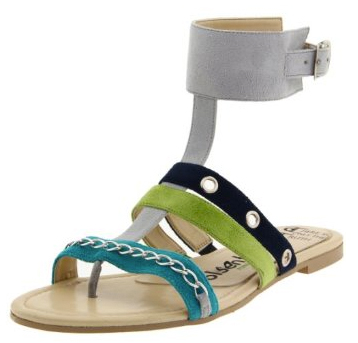
Beach ball sandal with chain and studs from the Olsenhaus Spring 2011 collection.

What shoes are you wearing right now? The beach ball flats from my Spring 2011 collection (see left).

Something at the top of your bucket list? I’ve done all the exciting daredevil stuff – from rock climbing to safaris to parachute jumping. I’ve traveled the world extensively.

So….there’s nothing you still want to do? Now, my bucket list consists of normal stuff, like settling down. I also want to take time off to spend in India.

If you could be reincarnated into someone dead or alive, who would it be? I’ve never wanted to be anyone but myself. Lives I have found most interesting, though, include Siddhartha, Gandhi, Joan of Arc, and Julian Assange. And I was definitely a man in past lives.

How do you know? I’m pretty uninterested in things that are stereotypically female; I’m fine just wearing yoga pants and a tank top all day long, and I don’t love dresses and makeup per se.

LAUNCHING YOUR CAREER>>
This industry is not actually that glamorous, so be prepared for very long hours. The overall trend for the future is for goods to have a meaningful message and a positive impact on the planet, humans, and animals.

Follow Elizabeth on Twitter at @Elizabeth_Olsen, and check out where you can purchase Olsenhaus shoes. All photos courtesy of Olsenhaus.com.

The Monster Truck Driver

"I'm very to the point," Jon Zimmer says. "And I expect everyone around me to work like I do."

Since high school, Jon Zimmer knew that racing was in his blood. Over the years, he’s transitioned from a dirt bike to a 10,000 lb. monster truck with an engine equivalent to that of eight Toyota Camrys.

Zimmer belongs to a four-person monster truck team, Sudden Impact Racing, which is one of the largest independent teams in the country. They schedule 40 to 53 shows per year across the United States, meaning Zimmer is constantly on the road, away from his wife and kids. Below, Zimmer chats about flipping over in his truck, reaching local celebrity status, and loving Pawn Stars.

Age: 33
Graduated from: Vergennes Union High School in Vermont. I didn’t go to college.
In the industry for: 11 years
Salary: Between $30,000 and $50,000/year
Truck costs: More than $150,000 to build; easily that much to run for one year
Previous jobs: Farmer; construction worker; carpenter

What led you to monster trucks? A lot of [monster truck drivers] grow up doing lots of sports, but I spent high school on dirt bikes and four wheelers. We didn’t really have sports in my town, so it was all about being able to drive anything that was put in front of you. Racing is in my family’s blood.

Zimmer's Amsoil Shock Therapy gliding over a lineup of crushed cars.

How you got the job: During my honeymoon, I happened to meet Dennis Anderson, who owned the famous Grave Digger monster truck. Through Dennis, I met a team in Philadelphia, and I began working for them full-time as a mechanic and learning everything I could about monster trucks. During a show five years later, one of the guys on the team said to me, “Okay, you’re driving today.” Apparently, I did well.

Was your wife mad that Anderson hijacked your honeymoon? [Laughs.] She was – and always has been – very supportive. She’s awesome enough to let me do this for a living.

Do you have kids? Yes, a daughter who’s 19, and a son who’s 11. For the past few years, my son has been spending his summers on the road with me. He’s really taken an interest in the mechanics.

Is driving a monster truck like riding a bike – once you know how, you always know how? Each is a little different. But every monster truck is the same in the sense that they are 12 feet high, 12 feet wide, weigh about 10,000 pounds, and have an average of 1500 horsepower. The tires are about 66 inches. My team, Sudden Impact Racing, owns four trucks – and I can pretty much drive all of them.

Do you mostly compete in races or do solo shows? There are two kinds of monster truck events. The first is side-by-side racing over cars. The second is 90 seconds of freestyle, when a truck is on the track by itself with tons of different obstacles, from airplanes to boats to mobile home trailers.

Watch Jon Zimmer freestyle on the track:

Where did the name of your truck, Amsoil Shock Therapy, come from? [Motor oil company] AMSOIL is one of my major sponsors, and “Shock Therapy” is the name of one of their oils.

Truck decorations: Reds, blues, lightning bolts – it’s a very busy paint job.
Number of shows per year: 40 to 53, which is extreme. Most teams do 20 to 30.

What goes through your head right before a big race? I don’t get nerves anymore; I put it in my head to go out there and have fun.

Do people recognize you from your TV appearances? Since I’m from a very small town in Vermont, I didn’t really advertise what I did for a living. But now, since I’ve been on TV shows, people in the neighborhood will tell me they saw me on the Speed Channel. My wife gets a kick out of that.

Best part of the job: The crowds and fans. For example, we’ll go to Jacksonville and race in front of 74,000 people in one night. It blows my mind how much the fans know about us.

Hardest part of the job: Traveling and being away from my family. There was a period of five or six years when I was only home for a total of one month.

Zimmer standing alongside his truck before a show.

Something people don’t know about the job: There’s still a perception that monster truck driving is a redneck, backwoods, fair-type atmosphere. It’s not – and you might not realize that until you go to big shows. This is a full-time job for a lot of us.

Racing gear: Fire-protected underwear; full fire suits; and fire gloves. You sweat your butt off, but if you catch on fire, you’ll be able to get out.

Have you been injured on the job? Other than an occasional sore back, no. You can flip over and crash in these trucks, and you’ll be fine. They are shock resistant, and the seats are customized. It’s safer than any NASCAR race car.

What straps you in? A five-point harness with custom-built feet. Most of us also wear helmets. The rulebook is unbelievably [strict] – motor truck racing is the only motor sport controlled by kill radios.

Kill radios? An official can shut my car off at any time when I’m driving – like if I’m rolling over and there’s a fire I don’t know about. I’ve flipped over and been shut off about 10 times.

Career goal: Ultimately, I’d like to win the World Finals, which are held every March in Las Vegas, Nevada. Only the 24 best trucks are invited, and I’ve been there the past two years.

What did you wish you had known going into the industry? I grew up on work ethics and was never lazy, but I didn’t realize how much work this job entails. We’re not just playing on weekends and crushing cars and going home. It’s constant – there’s never a time you can just walk away from your truck.

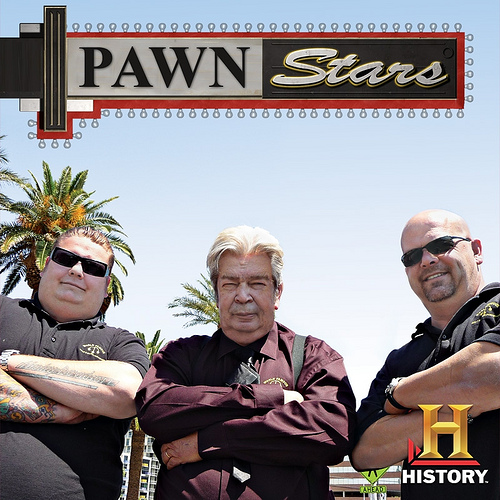
ZImmer would "love to own the place in Pawn Stars," he says. Photo credit: newsrealblog.com

If you could be the star of any TV show, which would it be? Pawn Stars.

Most important monster truck lesson: Brain-to-foot control is extremely important. Because of the huge engine, you can basically make a monster truck do anything with your right foot.

LAUNCHING YOUR CAREER>>
Driven to drive? Jon Zimmer reveals three keys to the sport.

1. Consider attending a University Technical Institute (UTI) or other technical school right out of high school. UTIs offer programs to go straight from schooling into the Monster Jam series.

2. Go to shows and meet the drivers. Most will try to visit with everyone who wants to talk to them, so be persistent.

3. If this is truly what you want to do, build a solid work ethic and be prepared to constantly work your tail off. When things are bad, just put your head down and push through it.

Unless specified otherwise, all photos courtesy of SuddenImpact.com. Check out more team photos and videos on the team’s website!

PLUS: Are you interested in filming monster trucks instead of driving ’em? Meet Alexis Boling, a freelance filmmaker (and previous No Joe Schmo!) who’s working on a documentary called “French Monster Trucks.”

Remembering Pets, One Clay Paw at a Time

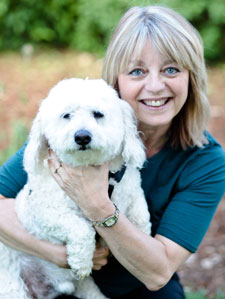
Laurel Lagoni with her cockapoo, a mix between a cocker spaniel and poodle.

When Laurel Lagoni received her Master’s degree in human development and family studies, she assumed she’d be working with, well, humans and families.

Now, as president and CEO of World by the Tail, Inc., Laurel Lagoni’s career revolves around cats, dogs, horses, and even 1,800 lb. grizzly bears.

Although Lagoni pursued a career in grief counseling, this is a niche she didn’t expect. She co-founded World by the Tail, which develops and distributes products to help owners cope with pet loss, primarily kits with clay paddies for vets to make impressions of pets’ paws.

Title: President and CEO, World by the Tail, Inc.
Age: 58
In the business for: 14 years
Graduated from: Iowa State University, Bachelor’s in journalism; Colorado State University (CSU), Master’s in human development and family studies
Previous jobs: Faculty member in human development at CSU; director of Argus Institute for Families and Veterinary Medicine at CSU
Based in: Fort Collins, Colorado
Salary: Around $70,000/year as a mental health professional at CSU; around $80,000 to $90,000/year (plus profits) at World by the Tail

What inspired you to start your own business? The administration at the university changed, and I was asked to explain my program and prove myself. It felt like the right time to leave academia, so I started doing the same thing I’d always done – but in a business setting. That’s where World by the Tail came from.

ClayPaws prints that can be made from the kits sold at World by the Tail.

Basis of World by the Tail: We package and sell ClayPaws kits to veterinarians, which they make for clients whose pets are dying. It’s a memento of their pet to express passion and understanding – a little memorial keepsake. Vets buy them in quantity, like 500 at a time.

Price per clay paw: About $5 or $6, but we offer quantity discounts.

Can the kits be used for any animal? Yes. Rabbit, dog, or even horse hoofprints.

How did you transition from human development to helping pets? I had just joined the faculty of CSU’s human development department, and the university’s Veterinary Teaching Hospital was starting an animal cancer treatment center. A vet called our department and asked for someone to help set up a clinical department to help emotional pet owners say goodbye to their pets. I jumped at the opportunity.

What’s one “goodbye ceremony” you’ll never forget? Bart the Bear, a grizzly bear who weighed 1,800 pounds and had appeared in various movies. His trainer brought him to the vet school because of a cancerous tumor on his paw [which he ultimately died from]. In order to take a clay paw print, we put 25 pounds of clay in an aluminum turkey pan, fit his paw in for a print, and then baked the clay for three hours. We made several copies, so I have the same paw print in my office now.

Bart the Bear appeared in Legends of the Fall with Brad Pitt. Watch Brad Pitt meet the grizzly for the first time:

Origin of the name “World by the Tail”: I was listening to a folk song by Shawn Colvin, and one of the lines was, “I’m swinging the world by the tail.” I proposed it to my business partners, and they liked it.

How many pets do you own now? Two dogs – a Chesapeake Bay retriever and a cockapoo – and two black cats.

Other pets over the years: Guinea pigs, and a crayfish from my daughter’s classroom that she wanted to keep. At one point, we had four dogs, but that was too many.

How do you cope with deaths of your own pets? ABC’s 20/20 filmed my family euthanizing our dog, who was dying from lymphoma. Afterward, I heard from so many people who thought it would be too frightening or sad to be with their animal during death, but [the 20/20 segment helped them realize] they could do it.

Photo credit: bestfriends.org

Cremation or backyard burial? We’ve cremated all of our dogs, because they’re bigger and harder to bury. But since we live in a rural neighborhood, we’ve buried our two cats, three guinea pigs, and the little crayfish in our front yard.

Most valuable lesson learned: I had a professor at CSU who told us to look for the gap – to look for what’s not being studied, what area is not being served. It’s the most valuable advice I ever got, because I knew that grief counseling for pet owners was that gap.

What’s your reaction to non-pet lovers who think your job is nutty? People depend on animals to make their lives better, to provide unconditional love and companionship. Research proves that pets help the elderly feel useful, and help teach self-esteem and responsibility to kids. So it’s not crazy to think that if we depend on them when they’re alive, we feel genuine grief when they die.

Required professional reading: The Fur Person by May Sarton.
Required personal reading: The Mists of Avalon by Marion Zimmer Bradley.

Tell me about the story you wrote for Chicken Soup for the Pet Lover’s Soul. My co-director at the Veterinary Teaching Hospital [at CSU] had a client whose husband had died abruptly from electrocution. She brought in her dying horse, and found lots of dates in common between the horse and her husband. We worked with her to finish grieving her husband through saying goodbye to her horse. [Editor’s note: Lagoni is also the co-author of four books and more than 50 book chapters and journal articles.]

Photo credit: veterinarywisdom.com

LAUNCHING YOUR CAREER>>
1. Pursue at least a Master’s degree, plus additional training in grief areas like hospice training and crisis hotline training. It’s not enough to just want to help others; it takes a professional to give support. Grief is a very unpredictable emotion to deal with.

2. Don’t try to start a small business on your own. There are bound to be parts of the business you don’t like, which you’ll end up putting off, and the business will eventually fail because you can’t keep up. Find someone who complements your skills – who has a love and expertise in the areas you don’t.

3. Look into groups like the Association for Death Education and Counseling (ADEC) and the Association for Pet Loss and Bereavement (APLB). Many different people from different walks of life belong to those associations, and you can learn a lot of information about pet loss support.

Follow World by the Tail on Twitter at @VetWisdom, and find more information on coping with pet loss on their site for pet parents.

Do you love pets? Read more about pets on No Joe Schmo: Kat Albrecht is a cop-turned-pet detective!

Foodie Friday: The Competitive Eater

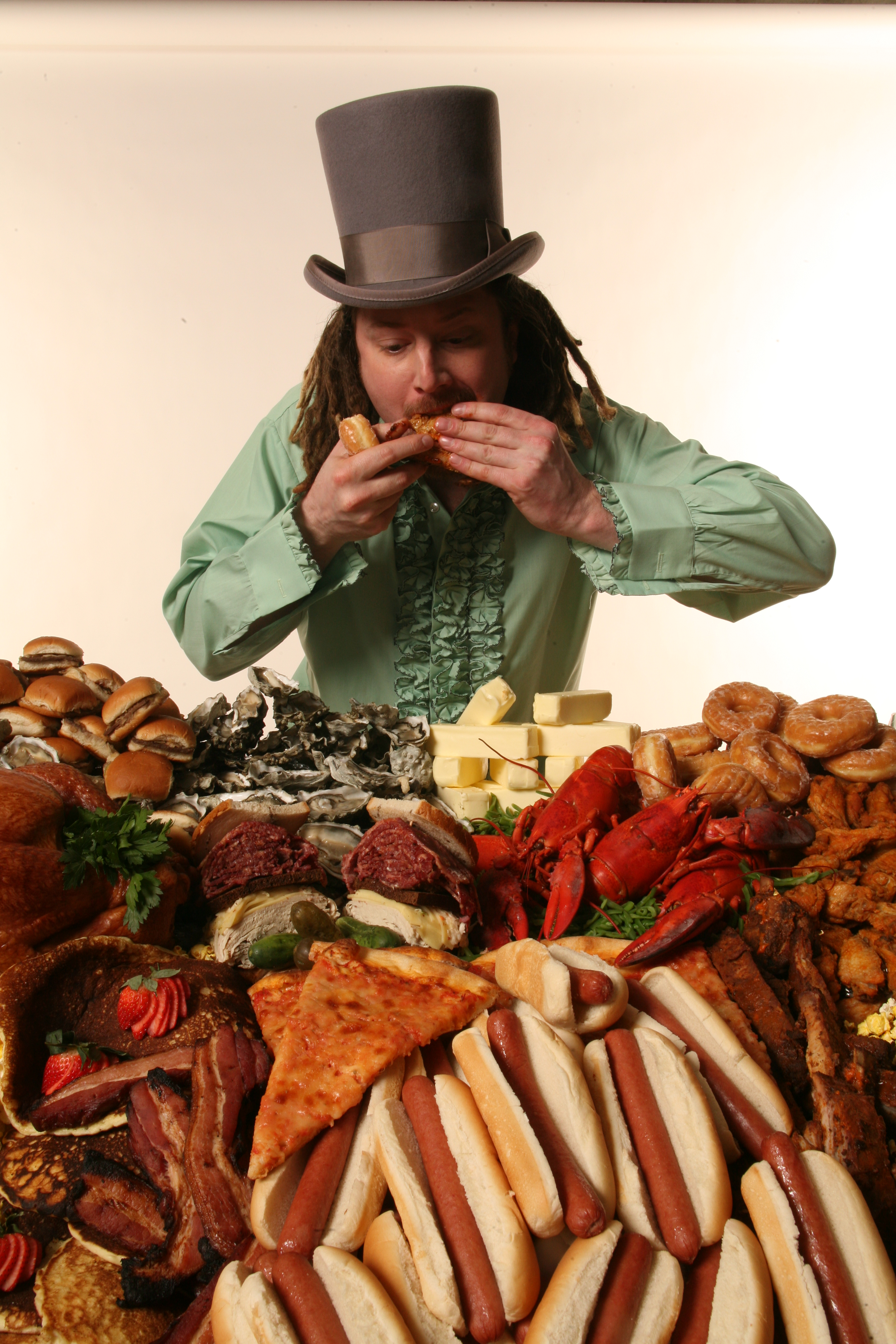
During a photo shoot for the documentary about Conti's eating endeavors.

Crazy Legs Conti holds world titles in string beans, pancakes and bacon, beef brisket, and Twinkies. At age 40, he can eat 348 oysters in eight minutes.

Crazy Legs, as he identifies himself on his tax forms, is a top-ranked professional eater with the International Federation of Competitive Eating and the subject of the documentary “Crazy Legs Conti: Zen and the Art of Competitive Eating.”

Extreme eating has exploded over the past few years, especially with Nathan’s Famous Fourth of July Hot Dog Eating Contest in Coney Island, N.Y. – the Super Bowl of competitive eating. Until this year, Conti participated in the contest nine times in row.

Age: 40
Weight: 230 lbs.
Graduated from: Johns Hopkins University
In the industry for: 10 years
Previous jobs: Window cleaner; nude model for studio art classes; independent screenplay writer
Real name: I’ve gone by Crazy Legs for more than 20 years; it’s the name I pay my taxes under.

Your day job: Every competitive eater has a day job to pay the bills. I’m the beverage manager at two Manhattan strip clubs, Scores and the Penthouse Executive Club, where I order all the booze and beer. So I get free drinks at that job, and free food from competitive eating.

When did your enthusiasm for eating start? I’ve always eaten as many Maine lobsters and Maryland crabs as I could get my hands on – I think I ate my first oyster at age 1. My dad and uncle would slide them to me across the table.

How did you transition from enjoying food to eating competitively? In the mid-90s, competitive eating was much more of a subculture, and I was an avid spectator. That was my entry point. I traveled to New Orleans and ate 34 dozen oysters at the Acme Oyster House, which put me on the path.

Pre-contest rituals: The morning of a contest, I’ll drink a glass of fruit juice and nothing else. Leading up to it, I’ll eat mostly soft, malleable foods, but it really depends on what the contest is for. If it’s a meat-eating competition, I won’t eat meat for a week beforehand.

And what about mental preparation? It’s all a mental game. You need a strategy going in; figure out how quickly you can eat one of the food item, and then extrapolate it.

Watch the trailer for Conti’s documentary, “Crazy Legs Conti: Zen and the Art of Competitive Eating.”

Why do you think the sport draws such huge crowds? It causes a visual reaction – even if you’re mortified, you can’t look away. In the simplest sense, competitive eating is a big communal meal like Thanksgiving. People bond over food.

When you’re not downing 29 dozen oysters, what does your normal diet consist of? Lots of oatmeal, flaxseed, and quinoa. I’d like to eat Eggplant Parmesan and French toast every day, but I try to stay in shape.

Any health problems? Nope. I jog, and have even run a few marathons.

Did you participate in Nathan’s Famous Fourth of July Hot Dog Eating Contest this year? This was the first year in nine years that I haven’t qualified; I would have been the first eater in the 96-year history of the frankfest to qualify 10 years in row. I wrote an article for FoodRepublic.com about that.

During competitions, it's "mind over stomach," says Conti.

How does the qualification process work? There are three rounds, in 12 or 14 locations across the United States and overseas. Other smaller competitions have runoffs.

Is there camaraderie among eaters at the table? It’s like a brotherhood of the stomach. At the table, we’re fierce competitors, but afterward, we’ll all go out and run up a big bar tab.

Your last meal on Earth would be: Maine lobster, Gulf oysters, and my dad’s strawberry rhubarb pie.

Most rewarding part of the job: I traveled with Major League Eating to various naval bases, including Guantanamo Bay, to entertain the soldiers.

Worst part of the job: The food hitting your stomach that night or the next morning. You forget what it’s like to ingest 100 Buffalo wings in 12 minutes until you’re lying in bed.

Where do you see yourself in five to 10 years? I hope to host a food-related show on TV and travel on someone else’s dime. Wherever I am, though, I’ll be sure to have a big breakfast in front of me.

Favorite celebrity chef: I’ve been reading a lot of Anthony Bourdain lately. But my favorite is Patrick Bertoletti, who is a chef and a competitive eater.

Conti enjoying Coney Island after wolfing down hot dogs at the Nathan's contest.

Weirdest foods you’ve tried: I’ll try anything once. I ate horse in Italy; hufu, which is tofu that tastes like human flesh; and fugu, a fish in Japan that contains deadly poison. I also once ate whale, which looks like beef, but has a spongy, fishy texture – I don’t recommend it.

Is there anything you haven’t tried? I read about these bats that people eat in Korea, but I think they have lots of neurological diseases.

Proudest moment: I ate my way out of an eight-foot box of popcorn at the Tribeca World Premiere for my documentary. After that, I was dubbed the “Houdini of Cuisine-y” and the “David Blane of the Alimentary Canal.” Another stunt I’m not as proud of involved me climbing out of a window in Chelsea [in Manhattan, N.Y.] while wearing a Speedo and proceeding to eat 12 donuts in three minutes. I got a lot of strange stares.

Biggest food quirk: I’m anti-condiment. I like food in its purest form.

LAUNCHING YOUR CAREER>>
Crazy Legs offers 3 tips on eating your way to the top.
1. Visit MajorLeagueEating.com and find events in your area to attend.
2. Identify a food you love, eat too much of it, and see if you still like it the next day. Then find a bar that has pickled eggs in brine, and see if you can eat 10 of them without throwing up.
3. Read The Inner Game of Tennis – it will give you a mental edge.

Click here for more Foodie Fridays! All photos courtesy of Crazy Legs Conti.