Foodie Friday: The Kimchi Taco Truck

Today’s Foodie Friday is the first No Joe Schmo snapshot, a new series that will briefly chronicle a cool or crazy job through one photograph (snapped by yours truly). The snapshot series — which will appear several times each month — are super-condensed versions of No Joe Schmo posts, just featuring the photo, one or two direct quotes describing the job, and a bit of logistical info. The series kicks off with a Foodie Friday featuring a New York City food truck!

“Kimchi, a part of Korean culture, isn’t too big in the United States. By mixing it with tacos, we’re bringing it to mainstream New York. I love introducing people to something they don’t know about.”
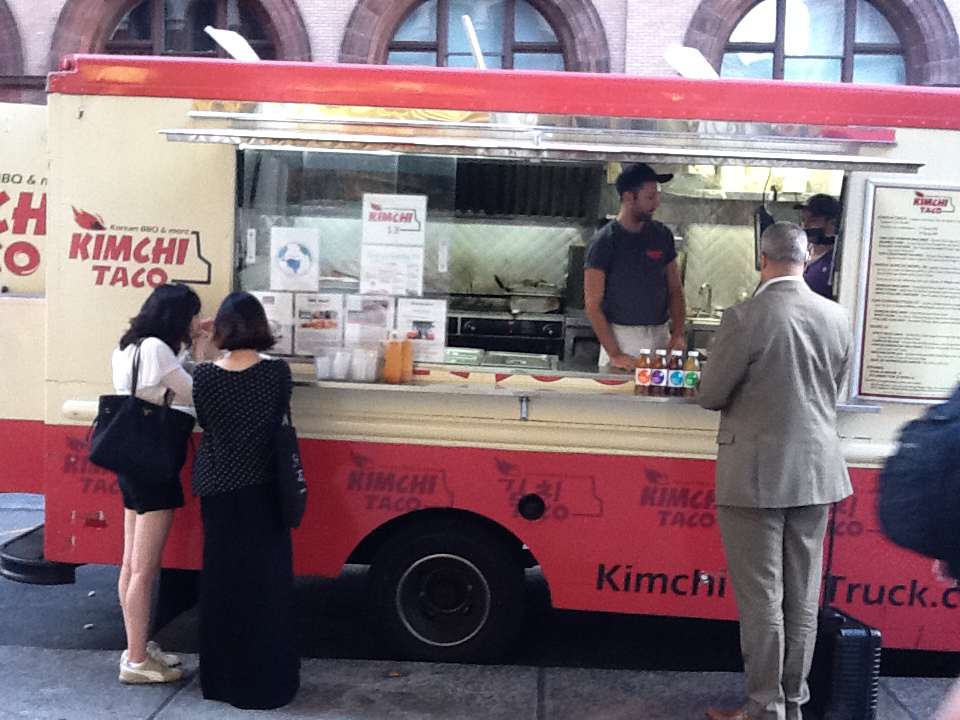
Who: Christian Manzo, 27
What: Part-time worker at the Kimchi Taco Truck, which serves up Korean barbecue-inspired tacos stuffed with marinated beef, braised pork, and chicken. The truck’s owners fused their Korean heritage with their Philadelphia roots, resulting in a Kim-Cheesesteak Sandwich. All kimchi is made in-house.
Kimchi is: Spicy, pickled cabbage “essential to every Korean meal.”
Where: Various destinations in Manhattan, NY, including Soho, Midtown, and Astor Place.
Favorite menu item: Pork tacos.
Originally hails from: San Francisco, where Korean culture and food trucks are “huge.”

Follow Kimchi Taco Truck on Twitter at @KimchiTruck and on Facebook, where the truck lists its lunch and dinner schedules.

Hungry for more? Click here for more Foodie Fridays on No Joe Schmo, like the co-founder of Crumbs Bake Shop and creative director at Dylan’s Candy Bar!

Bull Riding: The 8 Most Dangerous Seconds Ever

"Technically, I am a cowgirl," bull rider SaVannah Tallent says. "But some of my friends and I refer to ourselves as cowboy-girls."

It has the highest rate of injury of any rodeo sport and accounts for about half of all traumatic injuries to rodeo contestants. It’s not a matter of if you get hurt, but when.

But those stats don’t stop SaVannah Tallent, 21, from pursuing a career in bull riding. “There’s just something about bucking horses that stirs up my soul,” she says. “I can’t ignore it.”

The North Carolina native has dreamed of riding bulls since age 5, but faced firm pushback from her community, who didn’t believe it was an appropriate sport for girls. And though she still hasn’t stayed on a bull for a full eight seconds – the required time for professional riders – she’s well on her way.

Below, Tallent discusses the required garb, the importance of self-esteem, and the scariest part of being charged at head-on. And no, it’s nothing like riding a mechanical bull.

Age: 21
Hometown: I don’t have one. I was born in North Carolina, but grew up on cattle ranches across Georgia, Florida, Oklahoma, and Virginia.
Graduated from: Majored in biology/chemistry at Tulsa Community College in Tulsa, Okla., but never finished.
In the industry for: Mentally, since age 5. Physically, just over a year.
Previous jobs: Ranch hand, cowhand, horse buster

How your aspiration began: When I was 5, my older brother, then 6 ½, rode a Holstein calf for the first time. I wanted to try, and [the ranch hands] told me I couldn’t because I was a girl. From then on, I watched bull riding on TV every chance I got and begged to go to rodeos.

Practicing with a farm hand.

How you made it a reality: I didn’t know a soul who rode bulls, which made things more difficult to get started. When my family moved from Georgia to Oklahoma, I attended a one-day clinic called the Monster Bull, where I rode for the first time. An ex-bull rider I met there, Jocelyn Martin, helped me get more involved.

Time required to stay on bull: 8 seconds.

Your record: I haven’t made it to 8 yet, but I’m practicing.

How do you “win”? Two judges score the bull and rider separately. The bull is scored on how well he bucks, on a scale of 1 to 25. The rider is scored on how well he rides, also on a scale of 1 to 25. Those scores are added for the final score.

Bull-riding attire: In addition to normal jeans and Western shirts, we’re required to wear a protective vest, protective mouthpiece, riding gloves, and boots with bull-riding spurs. I also choose to wear a helmet.

How do you prepare for a ride? I stretch out my rope and knot it. Then, with someone spotting me, I’ll coax my way on top of the bull and set my rope atop the bull’s shoulders. I’ll tighten it up and wrap the tail of the rope around my hand, get into position, and put my free hand in the air. At your nod, they open the gate and the bull comes out. After eight seconds, the buzzer goes off.


Do you feel intimidated as a female in the sport? Bull riding is definitely male-dominated, but the sport isn’t man against man; it’s man against bull. That bull doesn’t care if you’re male, female, or a monkey – he’s still going to buck just as hard.

Are the bulls trained? Yes. They’re trained to buck, just as dogs are trained to sit.

Photo: viva-freemania

Has one ever charged you? On the ranch and in the arena! Cows will do it, too. Bullfighters are in the pen to distract the bull while you’re getting off – basically, to save your life.

Best part of your job: That moment right before you nod your head for the ride to begin.

What’s going through your head at that moment? I picture the movements in my head, but I stay pretty still and quiet. I’ve never been one to get psyched up.

Most important quality in a bull rider: A can-do attitude. It’s part physical and part mental.

Does it resemble riding a mechanical bull? No! A mechanical bull doesn’t have the forward movement like a real bull does. And you never get stepped on by a machine.

Are the bulls treated cruelly? Just like there are bad dog owners, there can be bad stock contractors. But to most contractors, the bulls are their babies – their pride and joys. You can walk right up and pet some bulls, although I would not recommend that.

Long-term goals: To ride bulls, saddle broncs, and do bareback riding. There’s just something about bucking horses that stirs up my soul – I can’t ignore it. I hope to have quite a few titles under my belt, and to be teaching and helping other girls who want to ride.

Photo: hatsshoping.com

LAUNCHING YOUR CAREER>>
1. This profession doesn’t necessarily require a college degree. Instead, it takes years of experience you can’t get in a building or online somewhere. Start practicing by making a rodeo bull dummy to perfect your form.

2. Join an association, even if you’re not pursuing bull riding as a career. Two important ones in the industry include Professional Bull Riders, Inc. (PBR) and Professional Rodeo Cowboys Association (PRCA).

3. Ladies: don’t listen to the nay-sayers. You can do anything as long as you’ve got the heart, the try, and the willingness to put forth the effort. Sometimes, you’ve got to believe in yourself before others can believe in you.

Unless otherwise noted, all photos courtesy of SaVannah Tallent.

Check out other No Joe Schmo adventurers:

MORE: Behind The Scenes At Great Coasters

Yesterday’s post on Jeff Pike, the VP of Sales and Design for Great Coasters International, Inc. was insanely popular — more than any other No Joe Schmo so far! Clearly, we’ve got some big-time roller coaster fans on our hands.

In order to shed more light on Great Coasters’ work, check out the photos below. Some feature Jeff standing atop his woodwork, and others highlight the company’s creations from around the world. See if you can identify the Mountain Flyer in Shenzhen, China!

This slideshow requires JavaScript.

All photos courtesy of GreatCoasters.com and Chris Gray.

The Roller Coaster Engineer

Jeff Pike on the Ozark Wildcat at Celebration City in Branson, Missouri. Photo: greatcoasters.com

Many people associate roller coasters with fingers squeezed tightly around the cold, hard metal of a lap bar. Jeff Pike associates them with rocking chairs.

Pike has worked at Great Coasters International, Inc. for 13 years, since even before college graduation; with nine weeks left in his senior year, he picked up from school in Kentucky and finished his degree in California, where a job offer waited. Great Coasters is the only company in the world that not only designs wooden roller coasters, but also builds them. Its work ranges from the Wildcat in Hershey Park, Pa. (85.2-foot drop) to the Mountain Flyer in Shenzhen, China (131.2-foot drop).

One might not expect the conservative, antisocial Cincinnati engineer – who doesn’t like “neighbors, people, or any of that crap” – to ride roller coasters at 3 a.m. But he does, thousands and thousands of times over.

Title: VP of Sales and Design, Great Coasters International, Inc.
Age: 34
Graduated from: University of Louisville, degree in mechanical engineering
Years in the coaster business: 13
Number of coasters built: 22
Previous jobs: Internship at Lexmark, doing inkjet printer experiments; internship at D.H. Morgan Manufacturing, Inc., doing drafting work

Working at Great Coasters was your first job out of college. How did you nail that down? During a college internship, I met the president of Great Coasters, who hired me before I even graduated. With nine weeks left of my senior year, I packed up my things [from University of Louisville], drove to California, and finished my degree out there. To this day, my mom still says I dropped out of school.

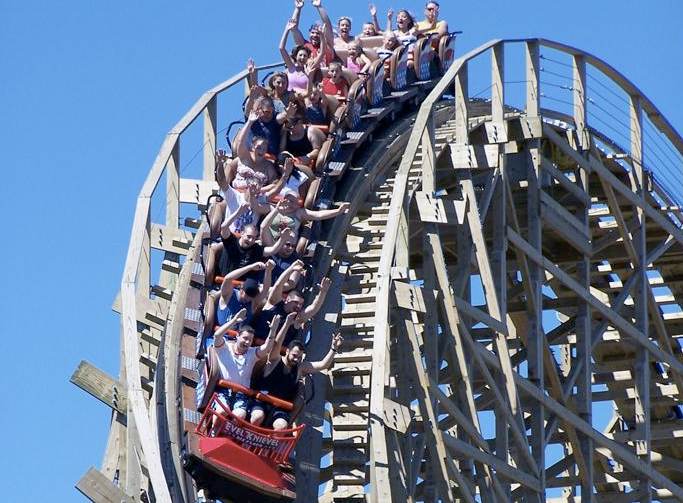
Evel Knievel at Six Flags in St. Louis, Missouri. Photo: Scott Rutherford

Did you have an “aha” moment? At Lexmark, I got a real dose of corporate culture. I thought, to hell with this, I want to make roller coasters.

Your first time riding a roller coaster: At age 8, my dad took me to Kings Island in Cincinnati, which was my first time on a big coaster. I was terrified, and my sister made fun of me. So I forced myself to ride it again. That’s when I decided to dedicate my life to building roller coasters.

Do you still visit Kings Island? They’re customers of Great Coasters now, and I still get a little bit of that magic when I go back.

Job responsibilities: I spend half my time drafting up proposals and coming up with new layouts and theme concepts. The other half of my time is split between traveling the world trying to sell rides and doing the greasy, dirty work of putting cars together on the tracks.

Do you try out all the coasters yourself? That’s one of the coolest times. We’ll ride them 15 to 20 times to take measurements, and then test them at 3 a.m. when nobody else is there.

Photo: xfinitytv.comcast.net

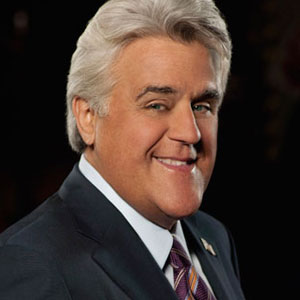
Where do you draw inspiration from? A lot of places, including seaside roller coasters that run parallel to the beach or jut out on the pier – they have a very distinct shape and feel. Once, we were drawing in the office, and a People magazine lying around had a picture of Jay Leno. We followed his hairline and chin to plan one of our coasters in Holland.

Does Jay know about that? No. We’re trying to figure out a way to use that to get on his show.

Your primary work is wooden coasters, not steel ones. Wooden coasters are like nice pieces of framed artwork in a museum of technology. They stand out because they seem so anachronistic, but they meld so well into the background.

Take a virtual ride from the front seat of a Great Coasters creation:

Are wooden coasters a very niche market? There are basically three companies that build wooden coasters in the world, and we’re one of them.

Average coaster size: 2,800 to 2,900 feet long.
Amount of lumber per coaster: About 50 truckloads.
Average coaster cost: $7 million to $13 million. Mountainside coasters are very expensive, while parking lot ones are a piece of cake.

Do you have any kids? An 8-year-old and a 5-year-old who are wild about coasters. They believe the world is about roller coasters and playgrounds.

Are you a hands-in-the air guy? As a kid, but now, I’m a patient rider. It’s relaxing; coasters are like giant rocking chairs for me.

Really? A rocking chair? It’s almost like surrendering to the world – you let the machine take you wherever you want to go. It’s an escape from gravity.

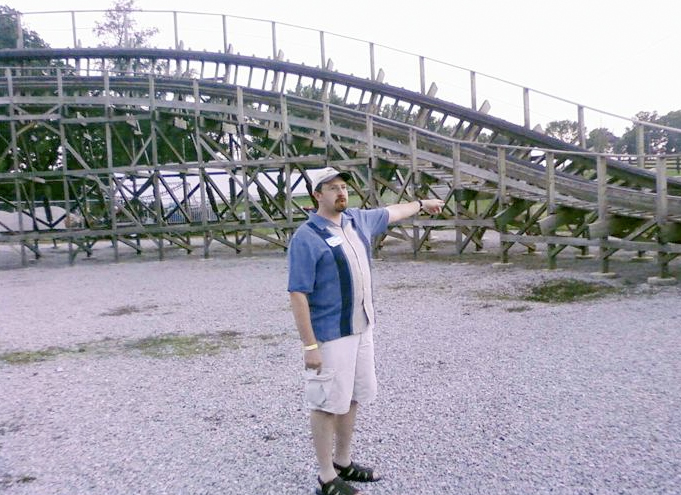
Pike giving a tour of Kentucky Rumbler, the first coaster he designed entirely on his own. Photo: Ashley Hancock

Something people don’t know about your job: Nothing that you feel on a coaster is by chance – every bolt, screw, and nail has been carefully planned. People also don’t realize that the only power on coasters is the single lift motor that brings you up the hill – once you’re rolling down, there is no such thing as emergency brakes to stop you.

Most frustrating part of your job: We build coasters across the world, and China is the absolute worst with regulations. It’s mind-boggling how difficult it is to navigate the bureaucratic channels.

Valuable lesson learned: I’ve learned to depend on other people a lot more. It’s exciting to do that first solo project, but it’s nice to have a good support network. People brag about working 80-hour workweeks, but I don’t think that’s healthy.

Do you listen to music while you work? Lady Gaga.

Do you agree that coasters have grown more extreme over the years? I think overall design is more conservative than the 1940s and 50s. Coasters now are taller and faster, for sure, but they don’t have higher accelerations. In the 1940s, theme parks had nurses stationed outside roller coasters.

What are you working on right now? A coaster in Wildwood, N.J. for Morey’s Piers; a coaster for Europa-Park in Germany, which is Europe’s third-largest amusement park; and a project in China. When I hit coaster No. 50, I plan to retire and move to Santa Cruz, Calif.

If you could be any superhero in the world: Superman is really the whole package. All the other guys have weaknesses, but Superman’s is just some rock you’ll never see.

Renegade, a wooden coaster in Minnesota, setting off. Photo: Dustijn Hollon, MidwestInfoGuide.com

LAUNCHING YOUR CAREER>>
Jeff Pike describes the roller coaster ride that is the world of engineering.

1. Dedicate your life to designing coasters, and do it yourself. Starting out, I traveled to amusement parks around the country, took a part-time job as a ride operator, and tracked down maintenance guys to ask about things I didn’t understand.

2. Sending a resume isn’t enough. Show up at trade shows and conferences, make yourself known, and don’t be afraid to break protocol. I skipped a lot of classes in college to attend conferences and try to get the guys designing coasters to notice me.

3. That said, dedicate yourself to learning in school and out of school. You can sense a person’s intelligence and dedication in the first sentence of a cover letter, by how they communicate with you. This job is not easy – it takes a specific skill set and talent – but it has the potential to be very lucrative.

Follow Great Coasters on Twitter at @GreatCoasters and on Facebook. Learn more about career opportunities as a coaster engineer here.

Foodie Friday: The Salad Dressing Entrepreneur

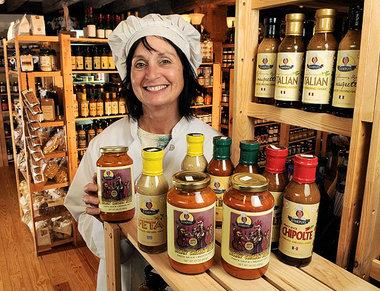
Ramona Waldecker of Central New York, with her line of homemade dressings and marinades.

Ramona Waldecker has been in the restaurant business for more than 30 years, but she’s never followed a recipe. Instead, she glances at the list of ingredients and doctors up the dish herself.

The same entrepreneurial spirit that Waldecker cultivated at age 9 — when she sold veggies from her backyard organic farm to neighbors in her wagon — can be found in her approach to business today. The former restaurateur started a line of salad dressings and marinades made from local products, which she collectively refers to as Ramona’s Kickin’ Chicken Sauces.

Waldecker sells about 6,000 bottles of her products each year in Central New York grocery stores like Wegmans and Price Chopper. Although she plans to move her business to grow in Tennessee, she’s counting her home base in New York for support.

Age: 50
Graduated from: Culinary Institute of America, Associate of Science degree
Based in: Syracuse, NY
Previous jobs: Restaurant owner; food broker [agent that negotiates sales for food producers and manufacturers]

How you got started: As a food broker, I thought bottling my own dressing would make great Christmas presents.

Moment you realized this could be a career: When I first introduced my dressings, a newspaper in my hometown of Baldswinville, N.Y., asked to interview me. From there, the phone started ringing off the hook – and one of those calls was to do a TV commercial. Through that commercial, I met buyers, which landed my products in the supermarket.

You already had a whole line of dressings? No, just one – my Sweet Country Italian dressing. That one will always be my baby.

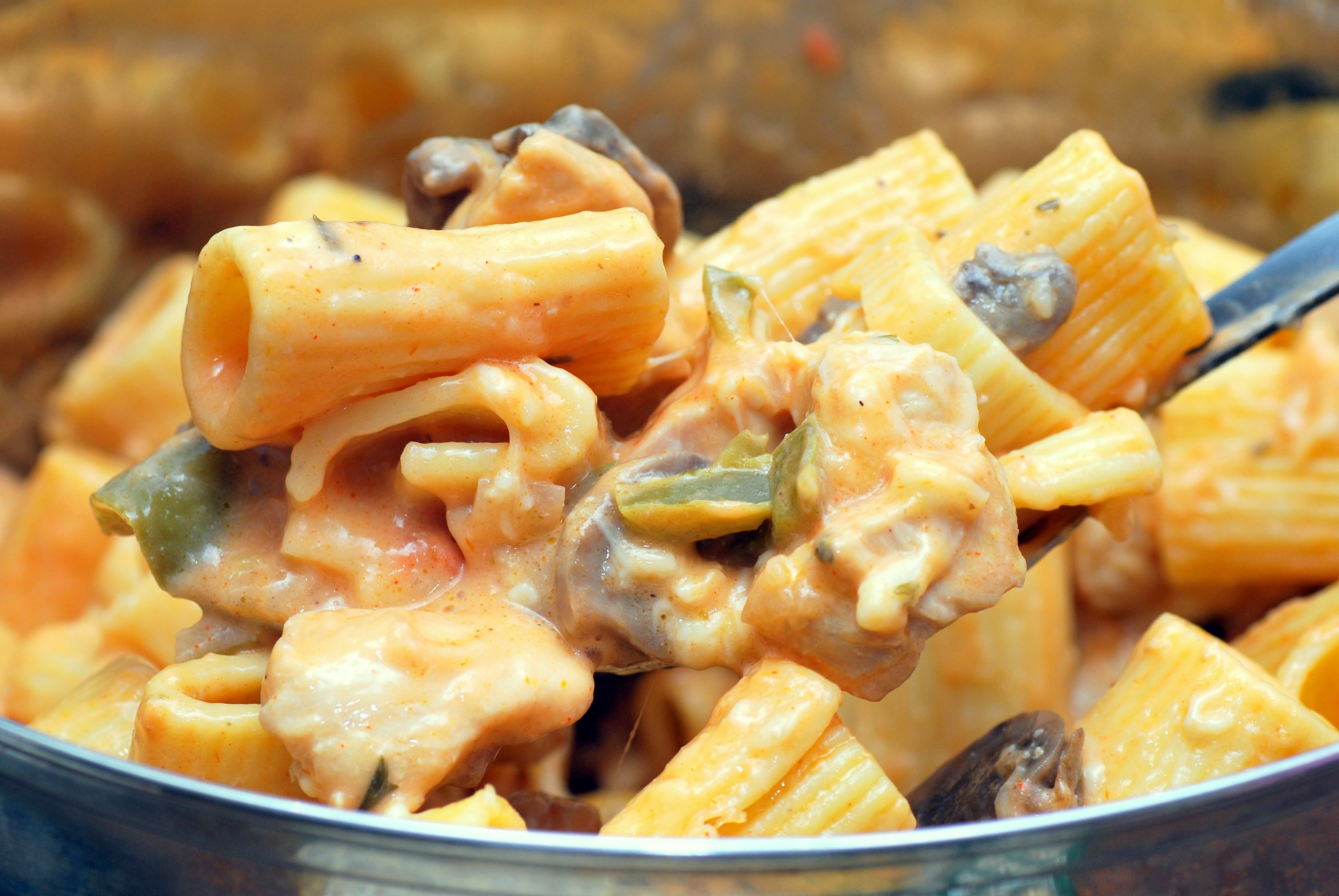
Chicken riggies, a pasta dish native to New York State, typically includes chicken, rigatoni, and peppers in a spicy cream and tomato sauce. Photo: applecrumbles.com

And now? I have a whole line of Ramona’s Kickin’ Chicken products, which I started six years ago. That includes Sweet Country Italian dressing; Mildly Spicy Chipotle dressing; Cajun Black Bean dressing; Citrus Greek Feta dressing; and of course, Ramona’s Kickin’ Chicken Riggie Sauce.

What goes into your Kickin’ Chicken Riggie Sauce? Since I work in food services, I have access to restaurant-quality ingredients, like fresh cream and cheese from the farm. For the sauce, I use all locally-grown veggies, like cherry peppers, regular peppers onions, mushrooms, black olives, and fresh garlic.

Do you make it from scratch? I used to, which took two to three hours in the kitchen. I would taste-test each dressing about 50 times. Now, it’s made in bulk for me at a co-packer.

How did owning your family’s restaurant shape your career path? I started at The Good Times Restaurant at age 12, washing the dishes, which is when I first learned to be a workaholic. Now, with my own business, I still do everything any anything; there’s no being tired, no excuses. Plus, the house dressing I made at the restaurant turned into my Sweet Country Italian. It’s still served there, almost 40 years later.

Most important lesson learned: It takes a long time to get your brand out there. It doesn’t happen just because you have a great product; it can be the luck of the draw. But there’s also a snowball effect when good things start happening.

Best part of your job: Making people’s lives easier with my dressings and sauces – oftentimes, the lives of people who maybe couldn’t cook before.

Most frustrating part of your job: The slow pace. I’ll hear good responses from customers, but then they’ll forget to buy the dressing again the next month. It’s so hard to train people and change their buying habits.

"The only canned vegetable I use is cherry peppers," Waldecker says. "The rest are fresh off the farm." Photo: blog.beauty-goodies.com

How do you measure what tastes “good”? I’m very easily pleased when I go out to eat, but I’m very hard on myself. I can go to a restaurant, taste a meal, and come home and make it exactly – it just comes naturally to me. I’ve only goofed up one dinner in my life, and it was Chinese noodles.

Do you follow recipe books? No. I just look at the ingredients list, but never follow the steps. After I messed up those Chinese noodles, though, I went back to the steps to see what I did wrong.

If you could be a chef anywhere in the world, where would you work? Italy, even though I don’t know any Italian.

Your very first job: I had an organic garden at age 9. I’d load up my wagon with veggies from my garden and sell them around town in a 5-mile radius. Even at 9, I was an entrepreneur – I had business cards and everything.

You’ve always wanted to: Cook on a cruise ship. I love their decorations and presentations!

What are you working on right now? I’m moving to Tennessee, so I plan to grow my business there. But I’m counting on local customers in New York for support; my products will still be sold to supermarkets and smaller retailers in that area. I’m also writing a cookbook.

Where do you hope to be in 5 years? I’d love to go national. My inspiration is Dinosaur Bar-B-Que.

Must-have kitchen appliance: A chef’s knife and large cutting board are still my favorite tools in the kitchen.

Photo: blog.sellametrohome.com

LAUNCHING YOUR CAREER>>
Ramona Waldecker dishes about business ventures centered on food.

1. Take a course that will teach you about being an entrepreneur, such as The Women’s Symposium. It gives you an idea of what you’re getting yourself into; you don’t want to spend a ton of money and then not sell any products off the shelves.

2. Join your local Chamber of Commerce. I think smaller ones are better, because they’re less intimidating and allow you to network with other businesses in more intimate groups.

3. If you love to cook and share, there’s ample opportunity out there. Lots of people are fulfilling their dreams at this very moment.

Check out all of Ramona’s recipes using her dressings and sauces, like Citrus Greek Feta Chicken and Cajun Chili.

Hungry for more? Click here for more Foodie Fridays on No Joe Schmo, like an Oscar Mayer Hotdogger and head beer brewer!