
The Monster Truck Driver

"I'm very to the point," Jon Zimmer says. "And I expect everyone around me to work like I do."

Since high school, Jon Zimmer knew that racing was in his blood. Over the years, he’s transitioned from a dirt bike to a 10,000 lb. monster truck with an engine equivalent to that of eight Toyota Camrys.

Zimmer belongs to a four-person monster truck team, Sudden Impact Racing, which is one of the largest independent teams in the country. They schedule 40 to 53 shows per year across the United States, meaning Zimmer is constantly on the road, away from his wife and kids. Below, Zimmer chats about flipping over in his truck, reaching local celebrity status, and loving Pawn Stars.

Age: 33
Graduated from: Vergennes Union High School in Vermont. I didn’t go to college.
In the industry for: 11 years
Salary: Between $30,000 and $50,000/year
Truck costs: More than $150,000 to build; easily that much to run for one year
Previous jobs: Farmer; construction worker; carpenter

What led you to monster trucks? A lot of [monster truck drivers] grow up doing lots of sports, but I spent high school on dirt bikes and four wheelers. We didn’t really have sports in my town, so it was all about being able to drive anything that was put in front of you. Racing is in my family’s blood.

Zimmer's Amsoil Shock Therapy gliding over a lineup of crushed cars.

How you got the job: During my honeymoon, I happened to meet Dennis Anderson, who owned the famous Grave Digger monster truck. Through Dennis, I met a team in Philadelphia, and I began working for them full-time as a mechanic and learning everything I could about monster trucks. During a show five years later, one of the guys on the team said to me, “Okay, you’re driving today.” Apparently, I did well.

Was your wife mad that Anderson hijacked your honeymoon? [Laughs.] She was – and always has been – very supportive. She’s awesome enough to let me do this for a living.

Do you have kids? Yes, a daughter who’s 19, and a son who’s 11. For the past few years, my son has been spending his summers on the road with me. He’s really taken an interest in the mechanics.

Is driving a monster truck like riding a bike – once you know how, you always know how? Each is a little different. But every monster truck is the same in the sense that they are 12 feet high, 12 feet wide, weigh about 10,000 pounds, and have an average of 1500 horsepower. The tires are about 66 inches. My team, Sudden Impact Racing, owns four trucks – and I can pretty much drive all of them.

Do you mostly compete in races or do solo shows? There are two kinds of monster truck events. The first is side-by-side racing over cars. The second is 90 seconds of freestyle, when a truck is on the track by itself with tons of different obstacles, from airplanes to boats to mobile home trailers.

Watch Jon Zimmer freestyle on the track:

Where did the name of your truck, Amsoil Shock Therapy, come from? [Motor oil company] AMSOIL is one of my major sponsors, and “Shock Therapy” is the name of one of their oils.

Truck decorations: Reds, blues, lightning bolts – it’s a very busy paint job.
Number of shows per year: 40 to 53, which is extreme. Most teams do 20 to 30.

What goes through your head right before a big race? I don’t get nerves anymore; I put it in my head to go out there and have fun.

Do people recognize you from your TV appearances? Since I’m from a very small town in Vermont, I didn’t really advertise what I did for a living. But now, since I’ve been on TV shows, people in the neighborhood will tell me they saw me on the Speed Channel. My wife gets a kick out of that.

Best part of the job: The crowds and fans. For example, we’ll go to Jacksonville and race in front of 74,000 people in one night. It blows my mind how much the fans know about us.

Hardest part of the job: Traveling and being away from my family. There was a period of five or six years when I was only home for a total of one month.

Zimmer standing alongside his truck before a show.

Something people don’t know about the job: There’s still a perception that monster truck driving is a redneck, backwoods, fair-type atmosphere. It’s not – and you might not realize that until you go to big shows. This is a full-time job for a lot of us.

Racing gear: Fire-protected underwear; full fire suits; and fire gloves. You sweat your butt off, but if you catch on fire, you’ll be able to get out.

Have you been injured on the job? Other than an occasional sore back, no. You can flip over and crash in these trucks, and you’ll be fine. They are shock resistant, and the seats are customized. It’s safer than any NASCAR race car.

What straps you in? A five-point harness with custom-built feet. Most of us also wear helmets. The rulebook is unbelievably [strict] – motor truck racing is the only motor sport controlled by kill radios.

Kill radios? An official can shut my car off at any time when I’m driving – like if I’m rolling over and there’s a fire I don’t know about. I’ve flipped over and been shut off about 10 times.

Career goal: Ultimately, I’d like to win the World Finals, which are held every March in Las Vegas, Nevada. Only the 24 best trucks are invited, and I’ve been there the past two years.

What did you wish you had known going into the industry? I grew up on work ethics and was never lazy, but I didn’t realize how much work this job entails. We’re not just playing on weekends and crushing cars and going home. It’s constant – there’s never a time you can just walk away from your truck.
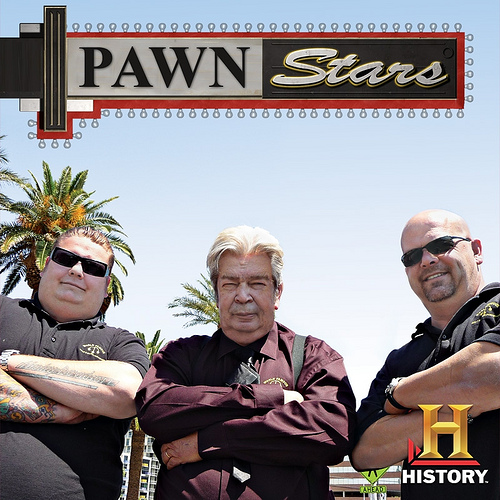
ZImmer would "love to own the place in Pawn Stars," he says. Photo credit: newsrealblog.com

If you could be the star of any TV show, which would it be? Pawn Stars.

Most important monster truck lesson: Brain-to-foot control is extremely important. Because of the huge engine, you can basically make a monster truck do anything with your right foot.

LAUNCHING YOUR CAREER>>
Driven to drive? Jon Zimmer reveals three keys to the sport.

1. Consider attending a University Technical Institute (UTI) or other technical school right out of high school. UTIs offer programs to go straight from schooling into the Monster Jam series.

2. Go to shows and meet the drivers. Most will try to visit with everyone who wants to talk to them, so be persistent.

3. If this is truly what you want to do, build a solid work ethic and be prepared to constantly work your tail off. When things are bad, just put your head down and push through it.

Unless specified otherwise, all photos courtesy of SuddenImpact.com. Check out more team photos and videos on the team’s website!

PLUS: Are you interested in filming monster trucks instead of driving ’em? Meet Alexis Boling, a freelance filmmaker (and previous No Joe Schmo!) who’s working on a documentary called “French Monster Trucks.”


Remembering Pets, One Clay Paw at a Time

Laurel Lagoni with her cockapoo, a mix between a cocker spaniel and poodle.

When Laurel Lagoni received her Master’s degree in human development and family studies, she assumed she’d be working with, well, humans and families.

Now, as president and CEO of World by the Tail, Inc., Laurel Lagoni’s career revolves around cats, dogs, horses, and even 1,800 lb. grizzly bears.

Although Lagoni pursued a career in grief counseling, this is a niche she didn’t expect. She co-founded World by the Tail, which develops and distributes products to help owners cope with pet loss, primarily kits with clay paddies for vets to make impressions of pets’ paws.

Title: President and CEO, World by the Tail, Inc.
Age: 58
In the business for: 14 years
Graduated from: Iowa State University, Bachelor’s in journalism; Colorado State University (CSU), Master’s in human development and family studies
Previous jobs: Faculty member in human development at CSU; director of Argus Institute for Families and Veterinary Medicine at CSU
Based in: Fort Collins, Colorado
Salary: Around $70,000/year as a mental health professional at CSU; around $80,000 to $90,000/year (plus profits) at World by the Tail

What inspired you to start your own business? The administration at the university changed, and I was asked to explain my program and prove myself. It felt like the right time to leave academia, so I started doing the same thing I’d always done – but in a business setting. That’s where World by the Tail came from.

ClayPaws prints that can be made from the kits sold at World by the Tail.

Basis of World by the Tail: We package and sell ClayPaws kits to veterinarians, which they make for clients whose pets are dying. It’s a memento of their pet to express passion and understanding – a little memorial keepsake. Vets buy them in quantity, like 500 at a time.

Price per clay paw: About $5 or $6, but we offer quantity discounts.

Can the kits be used for any animal? Yes. Rabbit, dog, or even horse hoofprints.

How did you transition from human development to helping pets? I had just joined the faculty of CSU’s human development department, and the university’s Veterinary Teaching Hospital was starting an animal cancer treatment center. A vet called our department and asked for someone to help set up a clinical department to help emotional pet owners say goodbye to their pets. I jumped at the opportunity.

What’s one “goodbye ceremony” you’ll never forget? Bart the Bear, a grizzly bear who weighed 1,800 pounds and had appeared in various movies. His trainer brought him to the vet school because of a cancerous tumor on his paw [which he ultimately died from]. In order to take a clay paw print, we put 25 pounds of clay in an aluminum turkey pan, fit his paw in for a print, and then baked the clay for three hours. We made several copies, so I have the same paw print in my office now.

Bart the Bear appeared in Legends of the Fall with Brad Pitt. Watch Brad Pitt meet the grizzly for the first time:

Origin of the name “World by the Tail”: I was listening to a folk song by Shawn Colvin, and one of the lines was, “I’m swinging the world by the tail.” I proposed it to my business partners, and they liked it.

How many pets do you own now? Two dogs – a Chesapeake Bay retriever and a cockapoo – and two black cats.

Other pets over the years: Guinea pigs, and a crayfish from my daughter’s classroom that she wanted to keep. At one point, we had four dogs, but that was too many.

How do you cope with deaths of your own pets? ABC’s 20/20 filmed my family euthanizing our dog, who was dying from lymphoma. Afterward, I heard from so many people who thought it would be too frightening or sad to be with their animal during death, but [the 20/20 segment helped them realize] they could do it.

Photo credit: bestfriends.org

Cremation or backyard burial? We’ve cremated all of our dogs, because they’re bigger and harder to bury. But since we live in a rural neighborhood, we’ve buried our two cats, three guinea pigs, and the little crayfish in our front yard.

Most valuable lesson learned: I had a professor at CSU who told us to look for the gap – to look for what’s not being studied, what area is not being served. It’s the most valuable advice I ever got, because I knew that grief counseling for pet owners was that gap.

What’s your reaction to non-pet lovers who think your job is nutty? People depend on animals to make their lives better, to provide unconditional love and companionship. Research proves that pets help the elderly feel useful, and help teach self-esteem and responsibility to kids. So it’s not crazy to think that if we depend on them when they’re alive, we feel genuine grief when they die.

Required professional reading: The Fur Person by May Sarton.
Required personal reading: The Mists of Avalon by Marion Zimmer Bradley.

Tell me about the story you wrote for Chicken Soup for the Pet Lover’s Soul. My co-director at the Veterinary Teaching Hospital [at CSU] had a client whose husband had died abruptly from electrocution. She brought in her dying horse, and found lots of dates in common between the horse and her husband. We worked with her to finish grieving her husband through saying goodbye to her horse. [Editor’s note: Lagoni is also the co-author of four books and more than 50 book chapters and journal articles.]

Photo credit: veterinarywisdom.com

LAUNCHING YOUR CAREER>>
1. Pursue at least a Master’s degree, plus additional training in grief areas like hospice training and crisis hotline training. It’s not enough to just want to help others; it takes a professional to give support. Grief is a very unpredictable emotion to deal with.

2. Don’t try to start a small business on your own. There are bound to be parts of the business you don’t like, which you’ll end up putting off, and the business will eventually fail because you can’t keep up. Find someone who complements your skills – who has a love and expertise in the areas you don’t.

3. Look into groups like the Association for Death Education and Counseling (ADEC) and the Association for Pet Loss and Bereavement (APLB). Many different people from different walks of life belong to those associations, and you can learn a lot of information about pet loss support.

Follow World by the Tail on Twitter at @VetWisdom, and find more information on coping with pet loss on their site for pet parents.

Do you love pets? Read more about pets on No Joe Schmo: Kat Albrecht is a cop-turned-pet detective!

The LEGO Artist

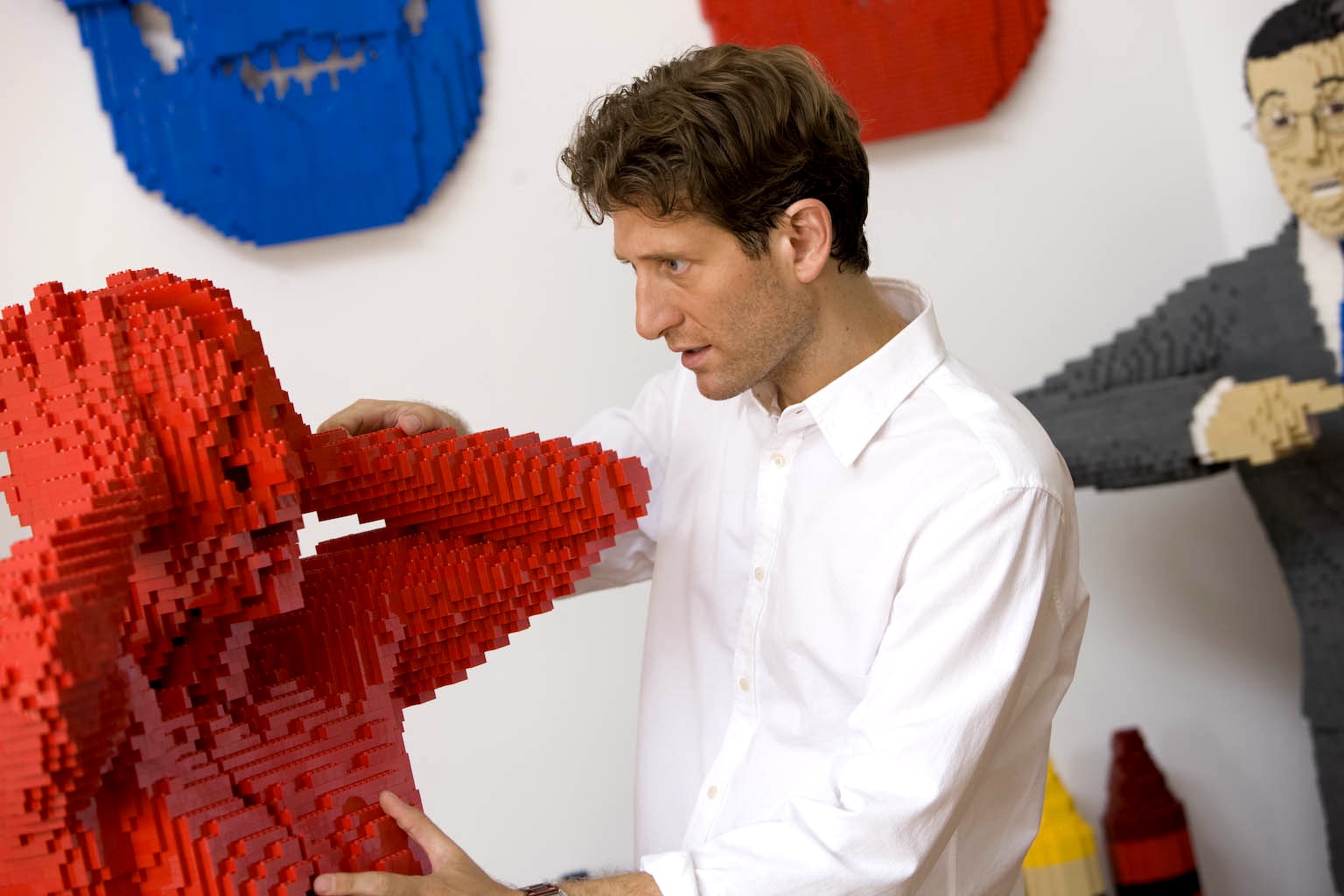
Sawaya posing with one of his life-size LEGO sculptures.

Nathan Sawaya is 37 going on 12. A really talented 12-year-old.

Growing up, Sawaya played with a 36-square-foot LEGO city. While most kids eventually trade in their bricks for video games, Sawaya brought the LEGOs to college – and then to law school. He rediscovered LEGOs not as a toy, but rather as a medium.

Now, his studio holds about 1.5 million colored bricks at any time. The New York corporate lawyer-turned-LEGO artist traded in a six-figure paycheck and health benefits to build 3-D life-size sculptures at $15,000 a pop.

In addition to building his own projects, which are featured in art museums across the country, Sawaya works on commission. Read on for some of his weirdest requests — including one from Pete Wentz.

Self-proclaimed title: Brick artist
Age: 37
Graduated from: New York University; New York University School of Law
Pricing: Sculptures in museums and galleries sell in the $10,000 to $20,000 range
Previous job: Corporate lawyer in New York City

Many of Sawaya’s sculptures, like “Trapped,” are about transition and metamorphosis.

Number of bricks in a life-size sculpture: 15,000 to 25,000 pieces, depending on complexity and body positioning.

Time frame per project: My first projects took me three to four months at a time. Now, I can build a life-size figure in two or three weeks.

How does a Wall Street lawyer begin to tinker with LEGOs? At the end of my workdays, I needed a creative outlet, so I would draw, write, paint, and sculpt. One day, I wondered if I could sculpt larger-scale pieces with LEGOs as the medium.

You happened to have huge tubs of LEGOs lying around? I saved my bricks from when I was kid, so I just dug them out of my closet. As I started working on larger pieces, I bought more online or in stores.

How did it segue from a hobby to career? I began to put photos of my creations on my website, and soon, it crashed from all the traffic. I said, Okay, there’s something here. So I made the decision to play with bricks full-time.

How did your family and coworkers react? Mostly, my friends and family were very encouraging. Of course, there were people who made fun of my adventure, and I learned to cut those negative relationships out of my life. It’s important to surround yourself with support.

Describe the creative process. It must be more than dumping out a pile and going to work, right? Yes. There’s tons of sketching involved; in fact, I always carry a sketchpad with me and am constantly jotting down ideas. I put a little glue on each individual brick, which is a very consuming process. My girlfriend says I go into a trance while I work.

Watch Nathan Sawaya building at top speed:

In 2004, you won LEGOland’s nationwide search for a master model builder for the 128-acre children’s theme park. What was the selection process like? I went through several rounds of different building challenges. During one, I was given a pile of bricks and was instructed to build a sphere in 45 minutes.

Did you get a lifetime supply of LEGOs? Unfortunately not. I still buy my bricks like everyone else.

Something people don’t know about your job: If a project doesn’t look right, I might have to chisel away at entire sections – days’ worth of work – since it’s all glued together. That can be heart-wrenching at times.

What are you working on right now? I’ve found lots of ways to take bricks in new directions, like into fine art galleries and museums. I currently have two museum exhibitions in North American and one in Australia. I’m also producing a film, which has been extremely eye-opening. [Editor’s note: check out yesterday’s post on a freelance filmmaker!]

Did you love LEGOs growing up? My very accommodating parents allowed me to have a 36-square-foot LEGO city in my house.

Sawaya working in his studio, where sculptures adorn the walls.

What about now? Do bricks consume your apartment? I have a separate art studio for my work, which holds about 1.5 million LEGO bricks at any time.

How are they organized? Into clear bins, sorted in rows by shape and color. It’s a bit like walking into a rainbow. I listen to pop music to keep me jumping while I work.

Weirdest request for a sculpture: Pete Wentz requested a giant bumblebee. Another really weird request was for a life-size nude woman with the head of a cat. I passed on that project.

Inspiration for your personal projects: I put lots of emotion into my artwork. Many are about metamorphosis and going through transitions.

“Yellow” is Sawaya’s most iconic sculpture.

Favorite sculpture: I always say that my favorite project is my next one. But the most iconic is probably “Yellow” (see right). It’s been widely used with and without my permission; fortunately, since I used to be a lawyer, that’s all worked out.

Hours per day spent with LEGOs: 12 to 14.

Your job must be inspiring for little kids. I’ve found an interesting market of art collectors who enjoy my work because their kids love it. They’ll tell me, “I have a Damien Hirst, I have a Warhol, and my kids don’t care. But I bring home a Sawaya, and they get excited.”

LAUNCHING YOUR CAREER>>
Nathan Sawaya discusses the building blocks of the biz. Pun intended.
For LEGO work, a background in arts and engineering are very helpful. Kids often ask me how they can be like me, and the first thing I tell them is to practice and think big. It sounds cliche, but I came up with the concept of creating fine art out of LEGOs because it hadn’t been pursued very much. Also, be sure to surround yourself with a very supportive group.

Follow Nathan on Twitter at @nathansawaya and check out his hilarious segment on The Colbert Report. Don’t forget to check out the No Joe Schmo Facebook page for more photos of Nathan and other featured artists!

PLUS: Think LEGO building is cool? Here are 10 other cool jobs you wanted as a kid…

All photos courtesy of BrickArtist.com.

The Filmmaker & The Film Editor

Alexis Boling, left, and his wife, Alex, right. Photo credit: DiBezi.com.

Alexis Boling and his wife, Alex, live together in “the closest thing to a hippie art business commune” in Brooklyn, NY. Their walls are filled with artsy shots of traffic cones instead of smiling family photos.

Alexis, a freelance cinematographer, started Harmonium Films and Music and shot and directed the first-ever music video for Vampire Weekend. Alex, a freelance video editor and producer – and an amateur metalsmither, as her Tumblr reveals – has worked on videos for a slew of corporate clients and websites, including ConsumerReports.com and RollingStone.com.

Below, the film-savvy couple discusses their favorite movie snack, the difficulties of working in the same industry, and the confusing nature of their names (remember, Alexis is the husband; Alex, which is short for Alexander, is his wife).

Age: Alexis, 32; Alex, 28
Graduated from: Alexis, University of Georgia, B.A. in English; Alex, Barnard College, B.A. in English
Salary: Everything is negotiable on a sliding scale; starting rate as a production assistant is typically $200/day

How did you get started in film?
Alexis: I was involved in theater in high school, but never thought of starting my own business. Then I worked on a small art film in college, and was officially bitten by the film bug.
Alex: I wanted to act, but didn’t want to be waiting tables for years while auditioning. So I interned at various production companies, where I found out about an opening for an office manager. I got the job and started three days after graduation.

How did you build your credibility?
Alexis: I put a really nice video camera on my credit card, took over my parents’ garage for a year, and shot anything and everything I could. That was the beginning of Harmonium Films and Music, which I eventually moved to New York City.
Alex: After working at my first job for two years in a one-room office, I began freelancing for HBO and PBS. In the past year, I’ve shifted from production coordinating to editing.

Alexis shot and directed Vampire Weekend’s first music video, “Mansard Roof.” Alex produced and edited it.

Where do you draw inspiration from?
Alexis: Stories that otherwise wouldn’t be told, voices that deserve to be elevated.

Like?
Alexis: For seven years, I’ve been working on a documentary called “French Monster Trucks,” about a family in France that used to run a small traveling circus and now runs a monster truck show. They bought these huge trucks and taught themselves stunts. It’s incredible to watch them bring the trucks down tiny European streets.

Seven years!? I hope to finish it this year. You need a lot of patience in this job.

Does working in the same industry put a strain on your marriage?
Alex: We’ve learned what dynamics don’t work, like when I’m producing and Alexis is directing. We would fight about money and bring the arguments home with us. But when he shoots and I edit, or when he directs and I act – that’s easy.

What’s the hardest part about working for yourself?
Alexis: You’ll never work harder than when you work for yourself. But people get very tied up in job security and think freelancing is too unstable. I don’t buy that at all. One job from one single employer is the least secure option; that one company can shut you down. Freelancers survive by a wave of relationships.
Alex: Unemployment between projects is hard. You should always have stuff in the pipelines for when you have downtime, but it can be difficult to understand that downtime will end.

Watch Alex’s acting reel:

Favorite movie?
Alexis: Buffalo ’66.
Alex: Children of Men.

Favorite movie snack?
Simultaneously: Cherry Coke.

Movie theater or Netflix?
Alexis: Rachel Maddow and HBO.
Alex: HBO on Demand. Or going to plays — I really enjoy theater.

Alex editing her work on Final Cut Pro.

What decorates the walls of your apartment?
Alexis: Our 1870s brownstone in Bed-Stuy [Bedford-Stuyvesant, Brooklyn] is as close as you can get to a hippie art business commune. We have lots of photography from our family — not of our family. [Laughs.] Instead of smiling happy family pictures, we have art photos of traffic cones.

Something people don’t know about you?
Alex: My uncle invented stove top stuffing. He pioneered the idea of selling stale bread to people.

Alexis is typically a female name, and Alex can be a male one. Do people get confused?
Alex: Yes, definitely. Alex is my middle name — my first name is Bodine, but that doesn’t make things easier. People think we did the Alex-and-Alexis thing on purpose.

LAUNCHING YOUR CAREER>>
Alexis and Alex share 4 tricks of the film trade.

Follow Alex on Twitter at @bodine and follow Alexis at @alexisboling.

The Elvis Impersonator

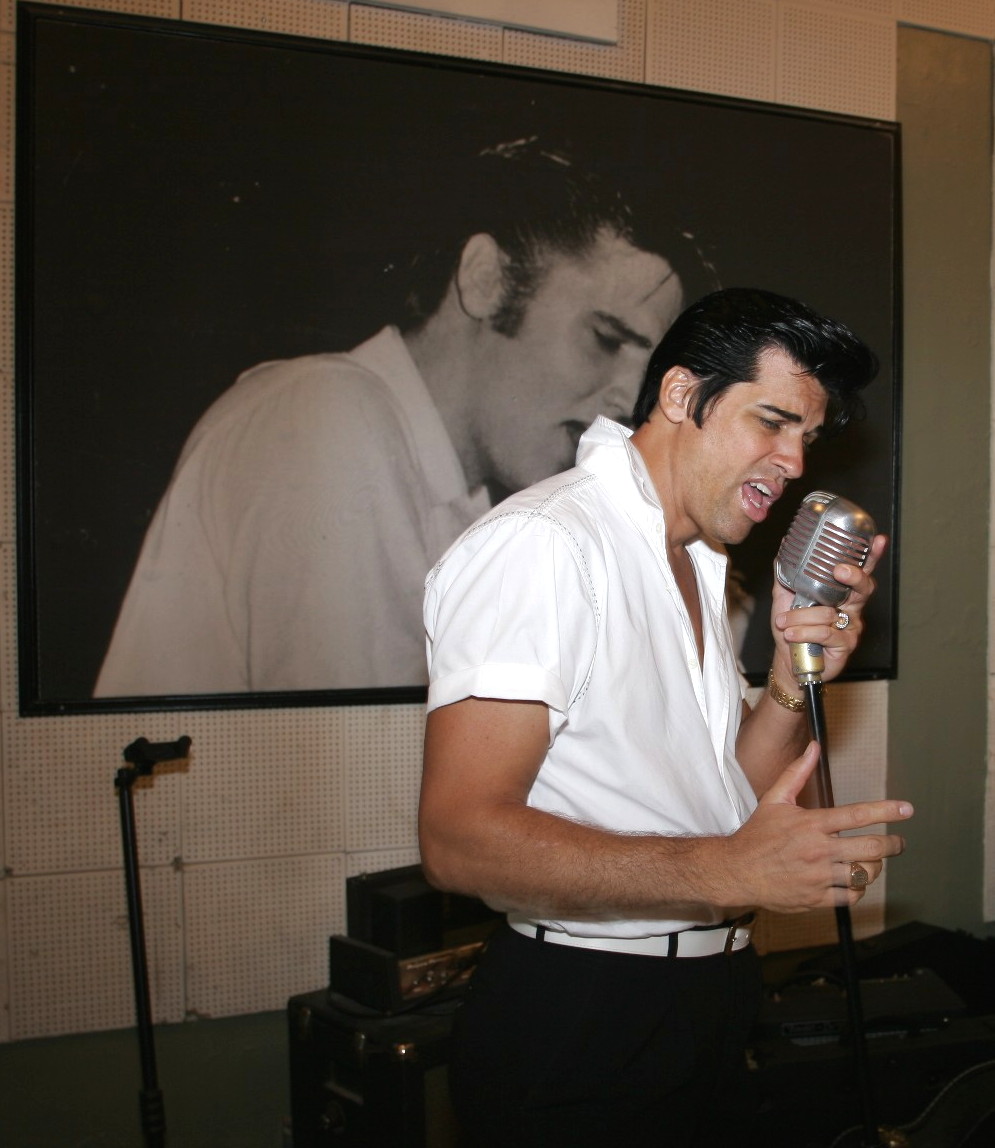
Schulz performing at Turner Field before a Braves game. Photo credit: Flickr.com/Richard Roberson

Harold “Elvis” Schulz wears a red-and-white shirt, blue jeans, and white boots when he’s Country Western Elvis. He wears a G.I. Blues uniform when he’s Army Elvis. He wears a black velvet shirt, gold vest, and white patent leather shoes when he’s Return to Tupelo Elvis.

For over a decade, Schulz and his trio, Young Elvis and the Blue Suedes, have been performing strictly 50s tunes for thousands of adoring fans at nursing homes, corporate events, and weddings around the world.

Schulz’s natural resemblance to The King is striking. For shows, he simply applies Suave Mega Hold hairspray and some red chapstick, and he’s ready to go. Even Elvis’ own stepbrothers tell him he looks like Elvis’ ghost.

Title: Celebrity look-alike and performer
Age: It’s a trade secret – somewhere between 30 and 35
Graduated from: University of Georgia, B.B.A. in marketing
In the industry for
: 11 years
Salary: $200 to $250/hour for nursing homes; $350 for 30-minute private parties; up to $2,000 for 3-hour conventions and corporate events
Previous jobs:
Regional and national salesman at various companies, including Siemens

Biggest crowd: 10,000 people in Kansas City for New Year’s Eve in 2008.
Average crowd: Anywhere from 40 to 5,000.
Total number of shows: In the thousands. In my busiest month, I worked 19 shows.

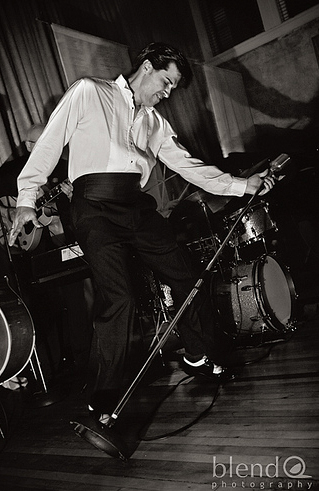
Schulz performing in Memphis.

How you got the job: My ex-wife was garnishing wages from my corporate job, so I only had about $400/month to live on. To make some extra money, I started singing karaoke at different venues for fun. I entered a contest and happened to sing Elvis, and the DJ called me afterward. He asked if I had ever thought about being an Elvis impersonator, and my first thought was, I’m not a fat guy, and I’m not putting on a white jumpsuit.

What changed your mind? He told me I could make $500/hour performing, which perked my ears up. I started practicing, and made $850 for 45 minutes during my first gig. After I was laid off from my corporate job, I decided to go into showbiz full-time.

You call yourself “young Elvis.” What are the restrictions? I’m strictly a 50s Elvis – not that fat guy in a white jumpsuit. I perform mostly blues – you know, “Heartbreak Hotel” and “Don’t Be Cruel.”

How do you resemble Elvis? My hair lifts high like his, and we’re the same height and weight. I also practice all his mannerisms, like singing to the microphone and the little inflections in his voice.

That must take a ton of practice. In the beginning, I spent thousands of hours in front of the mirror. And I’m always practicing my voice – usually in my car, since I drive around a lot. [Begins belting out “You Don’t Know Me.”]

Schulz with Elvis' stepbrothers, Rick Stanley (L) and Billy Stanley (R).

What makes your show unique? All our instruments – including our microphones – are vintage, meaning they’re worth about $145,000. My group is officially endorsed by Rick and Billy Stanley, Elvis’ stepbrothers, and Billy once told me that it freaks him out how much I look like Elvis.

How many guys do you work with? A trio, just like the original Elvis trio: a drummer, guitarist, and bassist. We also do some Frank Sinatra and Dean Martin shows.

And you do all the singing? Yep, and I play some acoustic guitar, just like Elvis did. I’m pretty much a one-man shop: I manage the marketing, bookings, advertisements, video editing, production, web design, and sales. My business background helps with all of that.

Where do you perform? Lots of nursing homes, retirement homes, and events like the Special Olympics. But to pay the bills, I’ll do larger venues, like performing arts centers, corporate events, the occasional casino, and private parties – weddings, anniversaries, and birthday parties.

Do you travel across the United States? All over the world, actually. If they’re paying, we’re playing.

Something people don’t know about your job: Elvis crosses all cultural and socioeconomic borders. We perform for kids to teens to people in their 90s. Playing for older clients is cool, because we’re bringing music back to life that they grew up with.

Channeling Elvis' style, Schulz sings to the microphone "like it's his woman."

Do you refer to yourself as “The King”? No, never ever, ever. When I’m on stage, I’m on, but when I’m off, I’m off.

You seem like a pretty normal guy, but there must be some crazies out there who think they’re actually Elvis. Last year, I went to Elvis Week in Memphis for the first time. Some of the people there made Trekkies look normal.

Did you grow up listening to Elvis? Elvis, Frank Sinatra, Dean Martin, Nat King Cole – all the classics.

Is your house decorated with memorabilia? I’ve never bought that kind of stuff, but people always give it to me – 45s, books, framed photos. My living room is decorated very classy, with some 45s and some black-and-white photos from Jailhouse Rock.

How do you pump up the crowds? Elvis was always a practical joker, so I’ll do lots of comedy and banter on stage to keep things fresh. I also spend about half the show off the stage, walking around the room and singing to ladies.

Funniest memory from a show: Once, I heard a woman whisper to her husband, “That guy must have had plastic surgery.” So I snuck up behind her and said into my mic, “Nope, no plastic surgery!” She screamed.

Routine before a show: I’ll apply a little mascara to my eyebrows, some red chapstick to my lips, and occasionally some self-tanner to bring out my eyes. Some of the Elvis impersonators I’ve seen wear so much makeup that they look like French prostitutes.

You mentioned an ex-wife earlier. Was she an Elvis fan? She hated it. In the beginning, she pretended to like it, but we couldn’t eat dinner without people asking to take a photo with me. I didn’t mind it.

Schulz with a group of adoring fans after a show.

So you have lots of fans? Once, during a dinner in Florida, a group of eight girls came up to me to take photos. Their boyfriends were sitting at the next table, giving us dirty looks. I was like, Hey man, they came over to us. Get mad at them.

Favorite Elvis number: I have about 10 favorites, mostly ballads, including “Love Me Tender,” “Can’t Help Falling in Love,” and “All Shook Up.”

LAUNCHING YOUR CAREER>>
1. While it’s important to seek the advice of industry experts, think outside of the box. Everyone told me to build a fan base, but I didn’t want to. I like working with new people at each show, so I always go after different venues and fresh audiences.

2. Find a niche in the market. All Elvis impersonators were doing the jumpsuit thing, so I opted to do young Elvis. Also, market your services as selling an experience. I sell the entire 1956 style, feel, energy, and vintage instruments– not just a guy who looks like Elvis.

3. It helps to have a business background. Otherwise, you’re at the mercy of your manager. Just look at Billy Joel’s $90 million lawsuit against his ex-brother-in-law and former manager; the guy didn’t know anything about his own books.

Check out more videos of Young Elvis and the Blue Suedes! Unless stated otherwise, all photos courtesy of bluesuedeent.com.