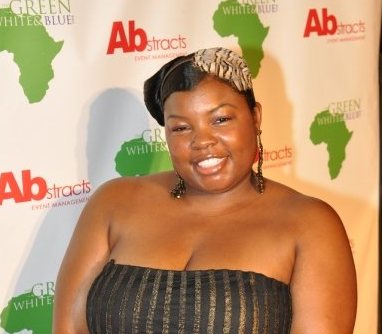
The Soap Maker

Cirese Clindinin whips up 50-pound batches of soap three times per week, which translate into more than 2,000 bars every month.

Inside the confines of her 12′ x 5′ kitchen, Cirese Clindinin makes soap. Lots and lots of soap. She boils down hundreds of pounds per month, on the same stove as she cooks her chicken dinners.

“They’re like my kids,” Clindinin says of her 15 varieties, from almond to eucalyptus, that she concocts for craft shows and online sales on the Down To Earth Body Shop. “I love them all.” She’s a one-woman show, handling research and development, sales, and marketing. She even tests all products on herself to ensure the ingredients — like oatmeal, goat’s milk, and rice bran — won’t irritate her customers’ skin.

Click [HERE] for the chance to win one of Cirese’s handmade soaps through No Joe Schmo.

Age: 31
Based in: Irvington, NJ
Graduated from: I dropped out of Rutgers in my junior year, when my business really picked up.
In the soap business for: About 12 years
Previous jobs: Sales temp jobs and receptionist positions. But I was the worst employee ever, because I would just be working on products for my personal business.

How you got your start: When I was 21, I was working on my business, going to school, and going to craft shows. Then I met Bobbi Brown, and a year later, my products were transformed into a real business when I landed an account with Estée Lauder.

Most valuable lesson learned: Bobbi Brown taught me that nice people finish first. And from Estée Lauder, I learned the importance of business integrity and putting out a good product. If your customers tell you a product doesn’t work, they’re probably right.

Where did you learn to make soap? From Barnes & Noble, mostly, and trial and error. I bought some books, tried it out, and honed it over time. I really like The Natural Soap Book: Making Herbal and Vegetable-Based Soaps.

What were some of your “errors”? Oh, man. I remember being on a crazy deadline for Estée Lauder. I had a big pot with 100 pounds of soap to be melted, and I forgot to cover the pot. I came back four hours later, and there was 100 pounds of soap all over the floor. You would think I would have only done that once, but it’s happened three or four times.
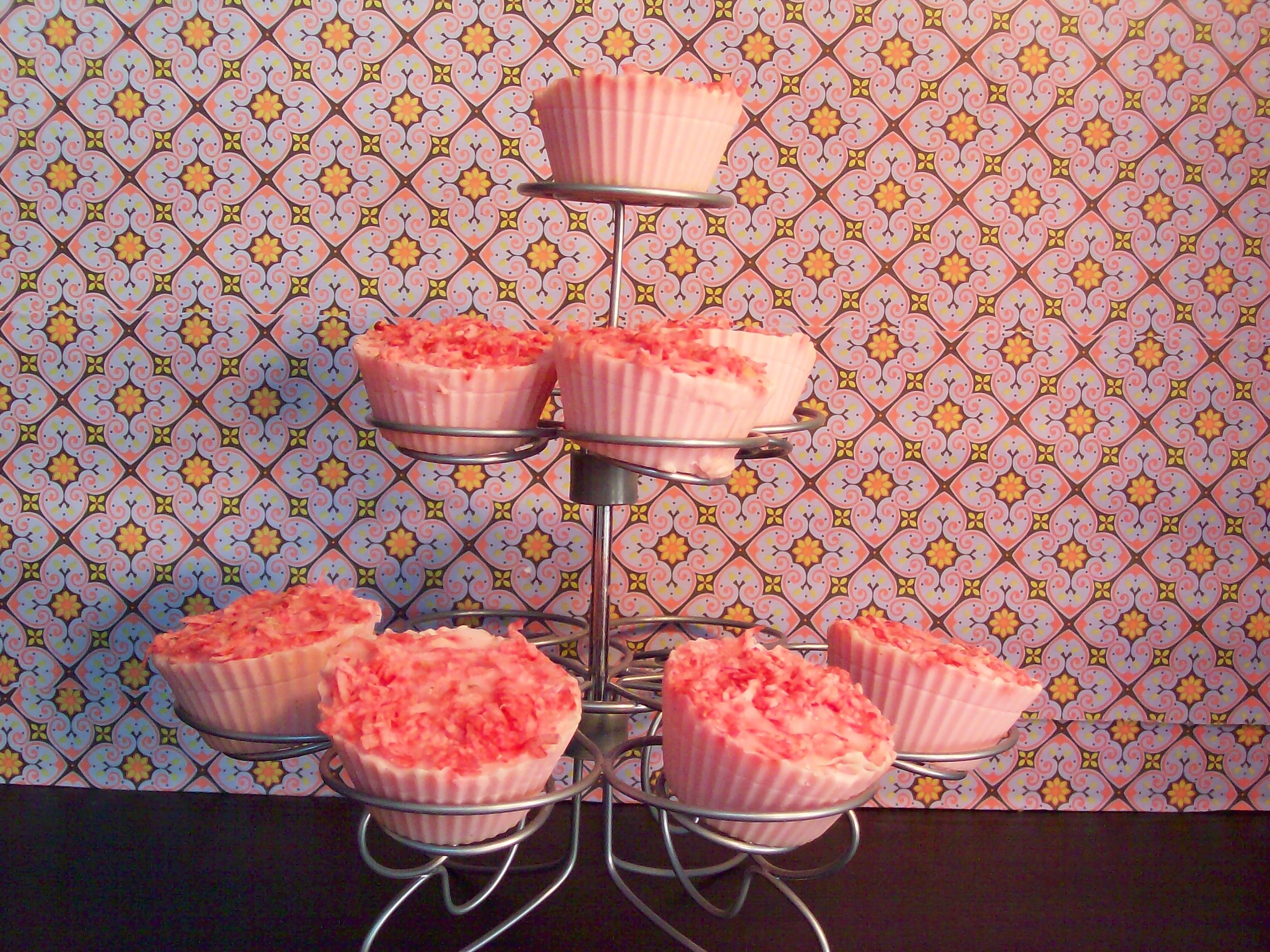
These lemon-vanilla cupcake soaps are topped with real pink coconut.

So you no longer work for Estée Lauder? I worked for her for nine years. That ended when the recession started getting bad. But getting back on my own [and starting the Down To Earth Body Shop] was exactly what I needed, because it was time for me to grow.

What have you learned as a small business owner? Have confidence in yourself, in your ability, and in your product. I’m still learning that.

What ingredients do you use? Mostly simple things you can find in your kitchen cabinet: oatmeal, milk (whole and/or goat’s milk), olive oil, avocado oil, sugar. It’s just like cooking. I add scent, texture, and color with things you might not normally imagine go into soap, like poppy seeds, sesame seeds, rice bran, pink and green miniature lentils, quinoa meal, millet seed, wheat germ, and shea butter.

The process: All the ingredients go into a pot on the stove at 150 degrees Fahrenheit, which takes a few hours to melt down. Then, I pour the mixture into 2-pound trays and add essential oils made with fresh ingredients, like mango oil, tangerine oil, almond oil, and safflower oil. After that, it’s time to create designs, often using old soap. I’ll cut up vanilla soap and layer it into the mango soap and let it dry. Finally, I let the soap harden at room temperature, or put it in the freezer for five to ten minutes. At craft shows, I like to leave it out in blocks and cut it fresh for customers.

Your workspace: I used to work out of this big, 500 square-foot warehouse. Now, I make soap right out of my own small kitchen. I get a much better response, though, since I’m really making it from scratch.

What would people be surprised to learn about your job? You have to be strategic. Soap is something that you think everyone needs, but it really requires marketing. It’s also a very messy business, which is perfect for me, since I’m already messy. It’s hard work — my schedule is pretty much seven days per week — and there is a lot of competition.

Best part of your job: Meeting new people, since I don’t really have any coworkers.

Most challenging part of your job: Learning the business side of things. I didn’t really want to, since I tend to be more creative, but I had to.

Cirese’s signature Sandbar Soap is made with a layer of sand and a layer of oatmeal and apricot seeds.

How does your soap differ from the regular store brand? Store-bought soap has more detergent in it, which dries out your skin and makes it tight. My soap, which contains Vitamin E, gives your skin more sheen and makes it softer.

Do you carry spare soap in your purse to avoid that milky pink soap in rest stop bathrooms? I suck it up at rest stops, but I do carry my own soap to hotels — usually something citrusy, like my lemongrass soap. And I always keep a box of soap in my car trunk for emergencies.

Your car must smell really clean. I can’t even smell it anymore. I think I’m immune to it by now. Sometimes, when I’m cutting up the soap at a craft show, I’ll hold it up to my nose and think, Wow, this smells so good! That’s the only time, though.

Your required reading: I love self-help books. I often reread 100 Ways to Motivate Yourself on mornings when I don’t feel like getting much done.

LAUNCHING YOUR CAREER>>
Find one product that you think you can make really well — and that you have a unique perspective on — and brand it. Instead of selling a ton of products, just choose one or two that are really solid. And don’t be afraid to get your hands dirty.

Enter below for the chance to win one of 10 homemade soaps from the Down to Earth Body Shop. Entry period closes on Sunday, June 10 at 11:59 p.m. ET. [Browse more of Cirese’s products on her website and Facebook.]

[Return to top]

← Back

Thank you for your response. ✨

Foodie Friday: The Miniature Food Artist

Shay Aaron, a Tel Aviv native, initially studied fine arts, but quit one year later to finish his pastry studies. This fall, he will begin classes for set and costume design.

Shay Aaron’s strict diet regimen includes Italian hoagies, lemon pound cake doused in icing, and dozens of cannolis oozing with chocolate. After four years, he has lost 175 pounds.

The catch: all the treats are about one-twelfth their actual size, and made from polymer clay.

Four years ago, at 308 pounds, Israeli artist Shay Aaron was overweight and depressed. He began creating miniaturized food sculptures at 1:12 scale that look almost completely edible, and used the hobby to curb his appetite. “I feel like I’m replacing my passion for greasy food with fake baked goods,” he says.

No need to worry about his creations being too beautiful to eat. You couldn’t if you tried. They fit on the edge of a fingertip, often no larger than a penny or a matchstick. His work, most of which is created using a pasta machine in his small living room studio, includes crops of fruits and veggies, mouthwatering dessert spreads, and loaves of Challah.

Age: 27
In the business for: 5 years
Describe what you do in one sentence. I create collectible miniatures on a 1:12 scale, and also make wearable pieces. 

How does one break into the miniature food art business? From a very young age, I had a weight problem, and I started creating fake food to help get over it. Four years ago, I weighed 308 pounds, and I was miserable. I was working with polymer clay, making millefiori and home décor pieces. One day, a customer asked me to create a miniature replica of a traditional Jewish dish. That was when I found what I wanted to do for the next five years. Now, I’m trying to replace my passion for real food with these little miniatures, and sometimes it works.

Where do your best ideas come from? On Friday mornings, I work with my mom in her little kitchen. We host the whole family every Friday evening, and my mom is charge of the cooking. I help her come up with special desserts that complement her dishes, so that’s where a lot of the ideas for my work come from. I also [draw inspiration from] Martha Stewart.

Does your work make you hungry? I can’t imagine sculpting something not related to work. That said, my work makes me hungry, for sure. The problem is that I work during the wee hours of the morning, and there’s nothing worse than eating at night.

What tools do you use for sculpting? You don’t need special tools and materials to get perfect results. The main material must be polymer clay, but I also combine wood, glass and aluminum, resin, metal, wood and ceramic. I use lots of unconventional tools in my work, from pasta machines to food processors. I also use rocks and boards that create interesting textures, as well as rolling pins and toothbrushes. All my little tools are placed in a little chest of drawers made of clear plastic.

Work you’re proudest of: My Mediterranean cuisine collection is really a part of me. Here in Israel, we usually purchase Mediterranean foods in the supermarket. But before I make miniature versions of any food – in this case, hummus and falafel – I feel like I need to make them for real. That way, I learn more about the process.

How do you price pieces that are barely the size of a penny? It’s hard. I would prefer that someone else priced my pieces, but nobody else can evaluate how much work I put into each piece. The only elements that count are time and effort – not materials used.

Your work is so small and intricate. Are you a perfectionist? No, I don’t define myself as one. I just know how important the details are. That’s where the secret is – in the details.

How did you choose a 1:12 scale? 1:6 is too big, and 1:24 is too small. A one-inch scale is also a traditional ratio for models and miniatures.

Click through to view some of Shay’s work:

This slideshow requires JavaScript.

Strangest request from a customer: I was asked to create a wedding ring that looked like a fortune cookie, with a tiny fortune that read, “Will you marry me?” Another guy, from Canada, asked me to create a ring for his wife that featured a replica of their wedding cake.

Best part of your job: That I don’t have a big boss. [Laughs.] The best part of what I do is the compliments and feedback from people around the world. I once received a video from a guy in America who proposed to his girlfriend using my hummus ring. It was one of the most wonderful moments I’ve ever had.

Most challenging part of your job: Creating miniature versions of very specific dishes. I always ask my customers to find images of the items they want me to create.

Do you display miniature art in your home? I keep a few items for myself, but most of my creations are made for sale.

What’s your work schedule like? I try my best to work every day, kind of like a nine-to-five job. It’s hard, because sometimes I don’t feel inspired enough to work on new pieces – and when I force myself to work, I’m not happy with the results.

Speciality dessert: Pies and tarts, and especially all lemon desserts. I love to blend sweet and sour flavors together. I also like all kinds of chocolate in any variation, shape, and state.

Dream job as a kid: I always thought I’d be an actor.

LAUNCHING YOUR CAREER>>
Always accept a challenge, and never give up on a task. But don’t force yourself to do things that you’re not comfortable with.

Check out hundreds of photos of Shay’s work on FacebookEtsy, and Flickr. You can also follow him on Twitter at @shayaaron.

Click here for more Foodie Fridays, like the co-founder of Crumbs Bake Shop and creative director at Dylan’s Candy Bar.

All photos courtesy of Shay Aaron.

The Textile Jeweler

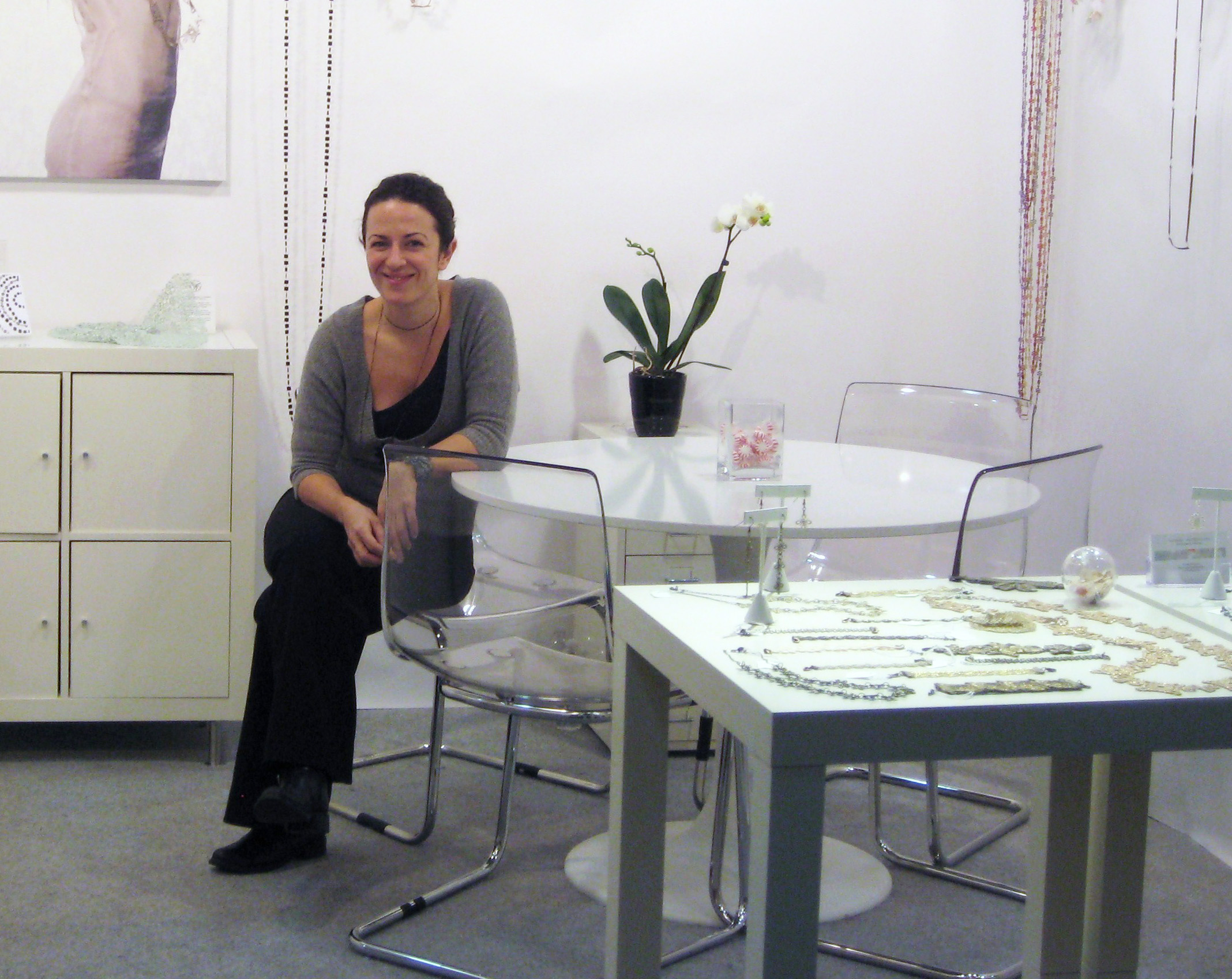
Paz Sintes in her booth during a trade show at the Javits Center in  Manhattan, January 2011.

Forget bling-bling. Forget chunky necklaces, logos splayed across designer bags, flashy jewels. The biggest up-and-coming trend is subtlety.

At least according to Paz Sintes. Sintes, a textile jeweler whose pieces are handcrafted using European vintage laces, strives for a simple, airy lightness that she equates to Fred Astaire’s dance. The Barcelona native moved to New York City with her husband five years ago to explore the “freelancer city” and started selling her collection in boutiques throughout Brooklyn and Manhattan. Then, at her neighbor’s suggestion, she began regularly setting up shop at craft shows.

“For me, textiles are luxury, my real passion, what I really want next to my body,” Sintes says. “I hate anything big, shiny, funky, and noisy. Maybe that makes me boring, but I don’t care.”

Age: 38
Based in: Brooklyn, NY
Grew up in: Barcelona, Spain
Graduated from: Winchester School of Art in the United Kingdom; Bachelor of Arts with honors in fashion
In the textile jewelry business for: 7 years
Previous jobs: High-end clothing designer for fashion corporations throughout Europe

What materials do you use for your jewelry? Mainly high-end European embroideries, like Lurex [a cotton rib-knit fabric]. I also use laser cuts made in Switzerland, vintage laces, and passementary [trimmings of gold or silver cord]. My collection is totally handcrafted; I design, hand-cut, mix, stitch, and dye everything at my home studio in Brooklyn with my assistant, Yulie. For metals, I work mainly with a Japanese supplier of anti-allergenic brass.

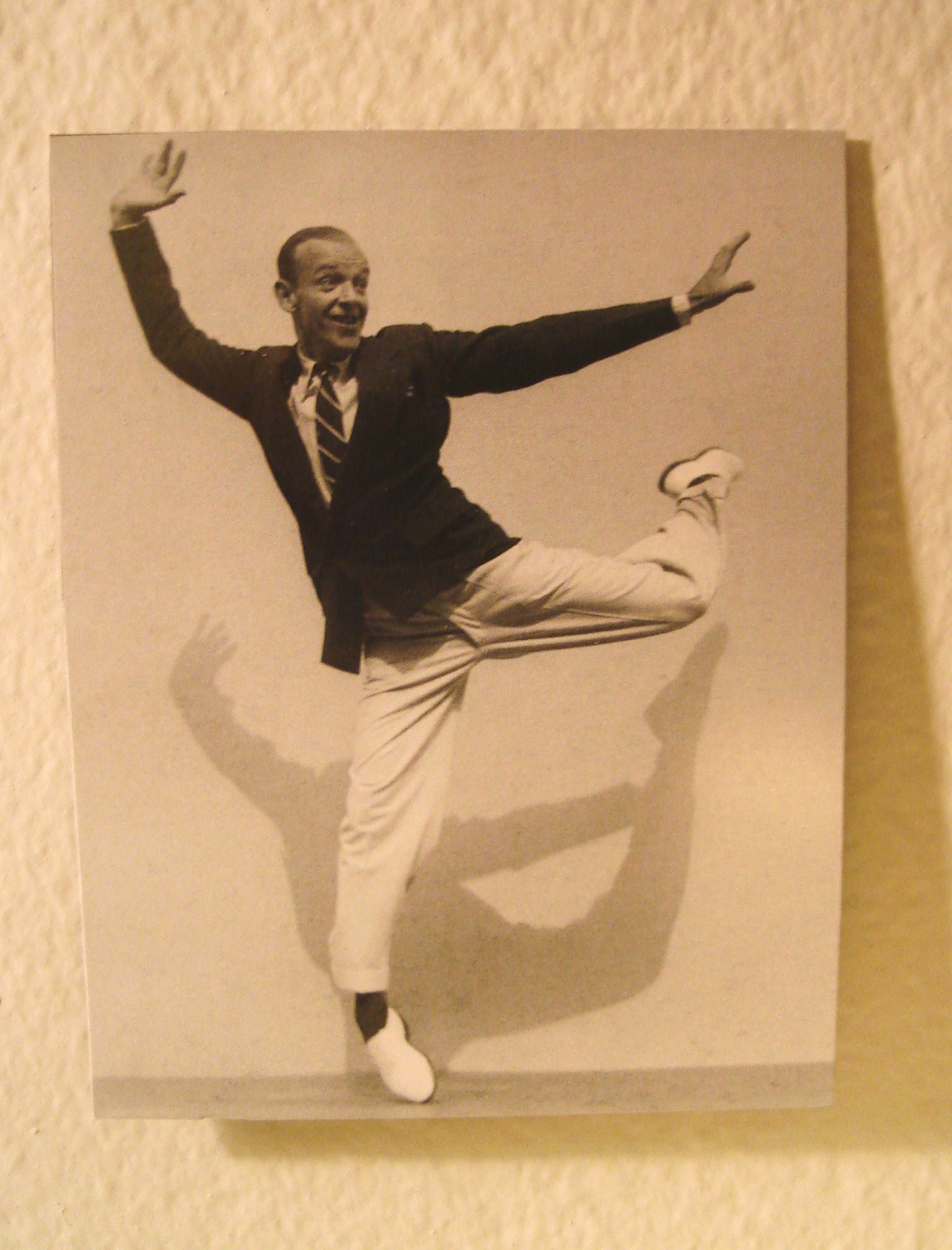
A “floating” photograph of Fred Astaire hangs in Sintes’ studio, which serves as a muse for lightness and freedom.

What distinguishes your work? Its softness and texture. My jewelry moves with you when you move, when you walk. I like to say that my pieces are like Fred Astaire’s music — light, airy, floating. I have a picture of [Astaire] in my studio.

The last piece of jewelry you purchased: I don’t remember. I have probably bought 10 pieces in my whole life, and I never wore them. That’s one of the reasons why I started my line — I couldn’t find any accessories that really attracted me.

Sources of inspiration: I always take notes in the street. And all styles of music, especially jazz. I sing jazz solos while I work!

Working at street fairs across New York City must result in some pretty funny customer encounters. Once, Uma Thurman stopped by my booth at Madison Square Park. She was dressed casually, with no makeup or sunglasses. She was looking at this one necklace, and behind her, other vendors were waving their hands and giving me signals. But I was frozen, just repeating information about French laces and high-end fabrics like a robot. Finally, I asked her, “Are you who I think you are?” She smiled and said, “I used to be! May I take a card?” Then she left very quickly.

Another time, an Asian couple spent half an hour debating whether to buy a necklace after I told them the price, which was $395. Finally, they gave me $4 and waited for their $0.05 back. They had thought I meant $3.95, which you can’t even buy a round-trip subway ticket for! They were totally embarrassed when I explained the situation.

Describe the woman who embodies your jewelry. She is 40 or older, a wealthy businesswoman living on the Upper West Side in New York City. She is very fashionable, very informed, always searching for new, interesting things. She already wears Tiffany’s, but is fascinated by textile jewelry.

How long does it take to complete a piece? Anywhere from two hours to months, depending on the piece. I often need to travel to Europe for my work.

French cotton-lurex-poly ribbon hand-stitched bracelet; approximate retail value of $135 to $145.

Retail prices: My pieces range from $30 to $400.

Favorite designers: My God, there are so many! I love Balenciaga, Lanvin, Romeo Gigli. Lately, some of my favorites are Anne-Valérie Hash and Olivier Theyskens.

Best part of your job: Creation is a joyful moment. Then again, artists don’t create, we discover. My friend, who is a composer, always says the music finds me. Another intimate, emotional moment is seeing customers smile when they look at my jewelry. That sometimes makes me cry.

Most challenging part of your job: Showing customers that although my pieces look very fragile and airy, they are in fact quite strong.

Favorite emerging trend: I think I’m creating one.

Trend you wish would go away: In terms of accessories, I hate bling-bling — anything big, shiny, funky, and noisy. I prefer shy, subtler jewelry. In terms of clothing, I don’t like logo-mania. It should be more about material than the logo.

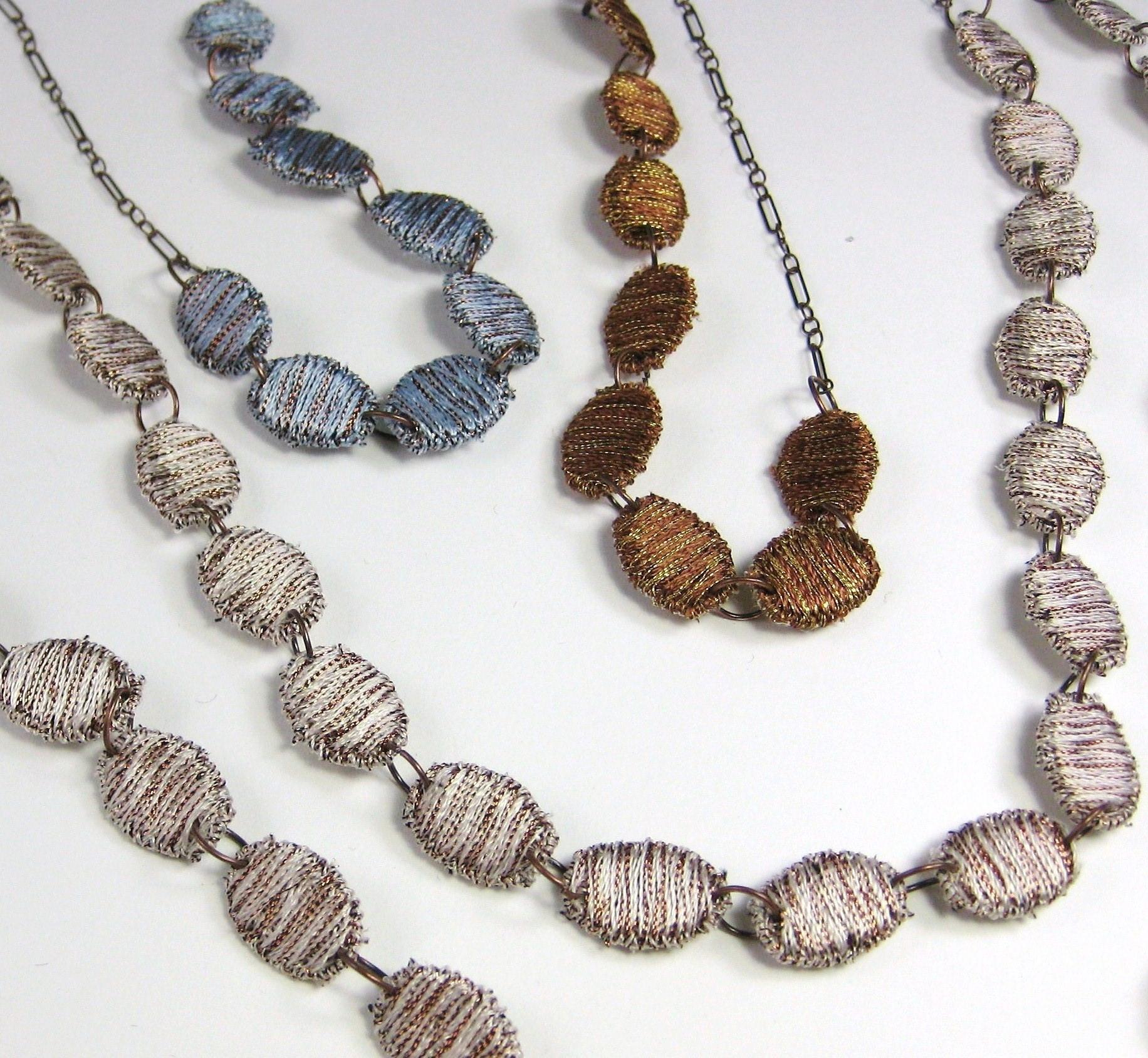
These short necklaces are made with Swiss cotton, viscose, and lurex oval guipures. Approximate retail value of $125 to $135.

Your tricks of the trade: I always start out with taking a picture of my materials: the textile, chain, and tools I’ll be using. Then, I take a photo of the finished piece, as a point of reference. I also package all my jewelry in clear plastic “bubbles,” which I import straight from Italy.

LAUNCHING YOUR CAREER>>
I have a very artistic vision: designers need to be honest. Consumers already have far too many things, which is why I avoid shopping. Don’t simply repeat things you see.

Check out Paz’s jewelry on Facebook, Etsy, and on her personal site, PazSiintes.com. Click here for a list of stores where Paz’s jewelry is sold.

More artsy No Joe Schmos to meet: 
The filmmaker and the film editor
The guy who makes rocket ships and Donna Karan jewelry
The tattoo artist

The Pooper Scooper

Cara Brown, co-founder of Dirty Work, keeps her iPhone with her on the job to snap photos of hilarious things she finds in the dog poop.

Fifteen years ago, Cara Brown had a “movie moment” revelation: she would switch careers from computer consultant to dog-poop remover. Brown and her business partner, Erin Erman, shut down their stressful tech startup for a different kind of stress: figuring out how to scoop frozen poop without ruining clients’ lawns.

When the two women opened Dirty Work, they were the ones finding, scooping, and hauling away dog waste. Now, they employ four scoopers in order to focus on the business. The windows of Brown’s Toyota Tacoma are plastered with signs reading Got poop? We scoop! and Picking up where your dog left off. On any given day, she’s awake by 4 a.m. and out the door by 5:30 a.m. – and for the next 12 or 14 hours, she checks on the company’s pickup trucks, coordinates schedule changes, meets with prospective clients, and occasionally scoops (hey, a girl’s gotta stay grounded).

Dirty Work has managed to thrive in a down economy; Brown claims the pet sector is relatively recession-proof. “People will need [our services] until dogs start learning to use the toilet,” she says. Reliability is a tenet central to their business model: employees scoop in rain, sleet, and snow. They scoop from sweltering 100-degree weather to frigid 10-degree weather, when they chip away at piles of poop with long metal spades, which act like ice picks.

Age: 39
Based out of: Atlanta, GA
In the poop-scooping business for: 15 years
Graduated from: Georgia Institute of Technology; majored in industrial engineering
Previous jobs: Computer consultant

How did you arrive at the realization that scooping poop was a career path you wanted to pursue? My business partner Erin Erman and I started a computer consultant business when we were finishing school in 1996. After two years, we were miserable; being on call 24/7 was really stressful and exhausting. Then one day, Erin’s stepmother told us about a piece she read on someone who started a pooper-scooper business. We turned to each other, and it was like a movie moment. We were like, “Oh my gosh, that is such a terrific idea.”

Co-owner Erin Erman’s dog, Brady, in one of Dirty Work’s trucks.

I think it’s safe to say: that’s not a common reaction to scooping poop. We’re both huge animal people, and there were only a handful of pooper-scooper services in the United States and Canada at the time.

Amount of poop that Dirty Work scoops per week: Several McDonald’s-sized dumpsters full.

Lead me through the poop-scooping process. We use long metal spades and line pails with trash bags that can just slide off afterward. After double-bagging the poop, we spray it with a deodorizer and transport it in pickup trucks to a service that treats it properly. Then we disinfect everything.

How many clients do you service? Several hundred. We have some that I’ve served literally since our business opened 15 years ago. We cover a sheer swath of Greater Atlanta, including residences, apartments, town homes, and some hotels. In total, we drive thousands of miles per week.

What primarily drives people to hire you? [Our clients] are really busy, or they simply hate the idea of cleaning up the waste. Or perhaps it’s a wife and/or mother that tells us, “My husband and/or kids said they would do it, and now it’s piling up.”

Staff size: Four people in addition to Erin and myself. I’m really involved in the business side of things now, but I still do some of the scooping a few days per week. It’s a good way to keep a feel for how the business operates.

Welsh Corgi puppies are cute. Their poop is not. Photo: pbh2.com

Do you work in rain or shine? Yes – in all types of weather, with the exception of lightening, since we use metal tools. Rain and ice aren’t our friends, though. Frozen poop isn’t fun.

I can imagine, especially when the ground is frozen, too. It’s essentially like taking an ice pick to an ice cube, hacking away. But we’re careful not to take away any grass, since people are very meticulous about their lawns.

Have you found anything valuable in the poop? All kinds of dog toys, especially ones shaped like animals. Once, two beaded eyes from a dog toy were placed perfectly in a pile of poop, so it was as though the poop was staring up at me. I had to take a photo of that. Another time, a client had placed her diamond engagement ring on the counter while washing dishes, and her Labrador Retriever jumped up and swallowed it. You can imagine what we were looking for in the poop that week!

Did you find the ring? Yes. But I’m not sure what her cleaning process was for that.

What do you wear on the job? Rainboots or waterproof shoes, waterproof gloves, and a hat are staples.

No masks to fight the odor? We’re mostly immune to the odor, although it still hits you sometimes, especially when it’s hot and wet outside. Plus, masks are really hot on your face from the hot air you breathe out.

When you meet new people, how do they react when you tell them about your job? Well, people I’ve gotten back in touch with from high school or college thought I’d go on to medical school, so they are quite surprised at the twist. But overall, people are really positive. We like to call ourselves entremanures.

Best part of your job: The dogs.

Most challenging part of your job: Getting the word out about our services. From a scooping aspect, it’s the climate.

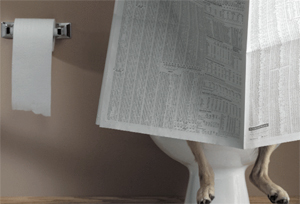
An ad for Dirty Work uses imagery of a dog on a toilet with the tagline Until then, call us.
Photo: DirtyWork.net

Do you foresee the day when your services become obsolete? Not until dogs start learning to use the toilet. But you never know – we never thought we’d have cars that drive themselves.

Average fee charged per yard: For a yard with one or two dogs, about $12.50 for weekly service. After paying for gas, insurance, licensing, truck maintenance, taxes, and payroll, it’s a very low profit. In five to ten years, though, I’d like to see the company grow by at least a fourth.

So you’re doing this largely out of love for dogs – not for the money. In a way, yeah.

Do you have pets of your own? Two cats and two dogs, all of which are adopted. Some frogs have also taken residence in my backyard this spring, along with some tadpoles and wild birds.

LAUNCHING YOUR CAREER>>
Do your research. Over the years, I have seen many people try to start businesses but fail because they don’t take it seriously. Don’t take shortcuts; be fair to your clients and employees. Scooping poop may not require hours of training required for jobs like plumbing and carpentry, but it’s still a business like any other.

Read about other animal-centric No Joe Schmos, like the CEO of Lincoln Park Zoo and the bull rider.

Would you pay $12.50 per week for a poop-free yard? Comment below.

The Marriage Proposal Planner

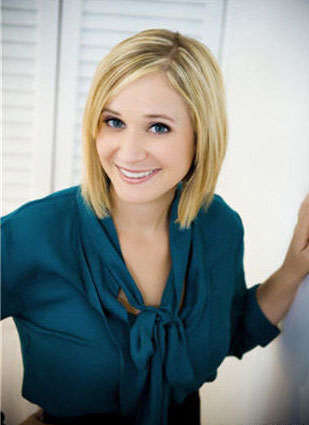
If any of my event planners had a nickel for every time I use the word anticipate, they’d be rich,” says Pease, who has been planning proposals since 2008. Photo: the-proposal-planner.com

Sarah Pease stays away from shows like Bridezillas and Say Yes to the Dress. She’ll pick up a Newsweek over Brides any day.

But as an official marriage proposal planner, Pease lives and breathes weddings all day long. Four years ago, she began a Manhattan-based event planning company, Brilliant Event Planning. After learning of a bachelor who surprised his girlfriend with an engagement ring placed strategically at the bottom of a KFC bucket, she added marriage proposal planning to her list of services. Pease has since positioned herself as The Proposal Planner™, helping hundreds of men brainstorm intimate ways to pop the question — often, ones who are too busy with their careers.

Her services alone can cost upwards of $5,000, a luxury perhaps targeted at the 1 percent. So more recently, she began offering all-inclusive packages for the guys shopping at Zales instead of investing in little blue boxes.

Age: My grandmother told me that a real lady never reveals her age.
Based out of: New York City
In the proposal planning business for: About four years
Graduated from: University Wisconsin-Madison with a double major in Latin American studies and Spanish
Previous jobs: top banking executive; Director of Operations at a European IT company

Latin American studies, banking, and IT all seem like a far cry from planning wedding proposals. While working at the tech company, my boss asked me where I wanted to be in five years. My immediate thought: not here. I went home that night and had a gut check, and I knew I was good at event planning. When I told my coworkers I was quitting my job and starting my own company, three of them told me that that they were getting married and asked for my help. Those were my first three clients.

Did you have a background in weddings and proposals? When I was younger, I was a violinist in a professional string quartet, so I took part of hundreds of wedding ceremonies. I figured that planning a wedding is a lot like project management and knowing how to take care of your clients, two things I’m pretty darn good at.

Describe your typical clientele. They are guys who have very demanding careers, typically with some expectation from the girls to not have ho-hum marriage proposals. By and large, they want an amazing story to share.

You tweeted to ABC that they should hire you to plan marriage proposals on The Bachelor and The Bachelorette. I think your exact words were that the current proposals bore you to tears. Yes – they’re awful! It’s hard to base the proposal off of their relationship, because their relationship is the TV show, but all proposals should be just as exciting as the marriage.

Where do you draw inspiration from for proposal ideas? I spend a full hour talking to my clients about what makes them unique, starting with the basics (How did you meet? Do you have kids? Have you been married before?) and then discuss  the fiancée (If she had a Sunday to herself, how would she spend it?). It’s very revealing information.

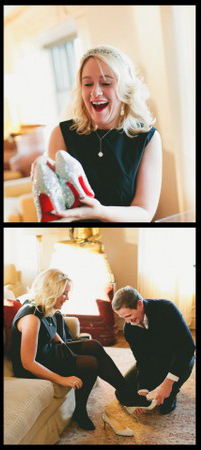
Laurie and the Louboutins. Photo: Maggie Harkov/ BrilliantEventPlanning.com

Tell me about an over-the-top proposal you planned. One couple, Laurie and Ange, got engaged right before Valentine’s Day. The bride-to-be, Laurie, was a princess – Ange loved to spoil her, and she loved to get spoiled. We got them a penthouse overlooking Central Park, covered the room with rose petals and candles. It involved a pair of $4,000 Christian Louboutin shoes, a tiara, and, obviously, a hugely beautiful diamond ring that was immersed in a long vase filled with crystals.

What’s your ideal proposal? The way that I got proposed to last March. The short version: he woke me up on a random Friday and surprised me with a trip to Jamaica. We landed, got on a private boat that took us to a private island, and had a picnic. I said yes, and we celebrated with far too much Jamaican beer.

What would people be surprised to learn about your job? It’s really, really stressful. Imagine if every day of your job was the most important day of somebody’s life. You get one shot, and if you mess up that one shot, you’ve messed up that moment for the rest of [your clients’] lives.

How do you cope with that pressure? I have a really great hair colorist.

The time between Thanksgiving and Valentine’s Day is Pease’s busiest season. Photo: pawngo.com

Where do you see the company heading? I see proposal planning becoming more of a trend. What I do is highly customized in the luxury market, for the 1 percent, if you will. But I just launched a site called ProposalIdeas.com that offers all-inclusive packages, making proposal planning more accessible for guys who may be buying the engagement ring at Zales or Kay Jewelers instead of Cartier or Tiffany & Co.

I also envision re-proposals. I can’t tell you how many guys find out what I do and say, “Gosh, Sarah, I wish I had done a better job [proposing].” Many times, we see ladies getting upgrades to their engagement rings, so guys can just take that to the next level and re-propose.

You mentioned your services are for the 1 percent. How much do you charge? Concept design only, which is the lowest level of custom service, starts at $495. Full planning, which includes design of proposal idea, vendor recruitment, negotiation, contracting, planning, and being on-site for the proposal, ranges from about $2,000 to upwards of $5,000. To be clear, those fees are just for my services – it doesn’t include the flowers, musicians, whatever else.

But your newer site, with the all-inclusive packages, caters to the 99 percent. Those include all elements, like musicians and chocolates, and range from $129 to about $1,000.

Tell me about your TV and media diet. Are you a Say Yes to the Dress junkie? I watch Shark Tank and American Idol, and I read New York, TIME, and Newsweek. That’s probably boring, right? I just have no need to watch Bridezillas, as none of my clients are Bridezillas. I only watched Say Yes to the Dress when I was thinking about my own wedding dress.

One proposal (The Bachelor excluded) that you’re dying to plan: A same-sex marriage proposal.

Your favorite movie proposal scene: From The Wedding Singer, when [Adam Sandler] sings Billy Idol with his guitar on the flight.


LAUNCHING YOUR CAREER>>
1. You must be confident that you can out-organize almost anyone out there. I don’t just mean making awesome lists with pretty pens. I mean breaking down huge projects into timelines, anticipating what will go wrong, and being ready for the long hours.

2. Give tough love. I’m often in the situation of telling a client that $15,000 won’t be enough for their wedding photographer. That’s a ridiculous conversation to have, but it happens all the time. I work with them to figure out a way to resolve their pocketbook or their expectations.

3. Know how to manage people. Ronald Reagan said – and I’m not a Republican – that when it comes to the people you work with: trust, but verify. That said, go in with your eyes open and give it a shot. You’ll know really fast if you hate it.

You can follow Sarah on Twitter at @BeBrilliantNYC.

Other No Joe Schmos that can help plan a wedding? The two-person orchestra for music, the die-hard dancer for entertainment, and the hot air balloon pilot for the honeymoon.