
The Guy Who Makes Rocket Ships and Donna Karan Jewelry

Mike Dillon was always industrious: as a boy, he painted store windows around the holidays to earn extra money.

It’s a bird! It’s a plane! Well, sort of – it’s a paper plane. At 26 feet long, it’s the largest paper plane in the world – and it hovers over the entrance to Dillon Works in Mukilteo, Wash.

According to its website, Dillon Works is a design and fabrication facility that “produces dramatic environments.” Clients across the globe – from Hong Kong, Estonia, and Moscow to Tokyo, Korea, and Portugal – come to founder and President Mike Dillon seeking sculptures, models, fixtures, accessories, and displays for theme parks, hotels and casinos, television commercials, and malls.

Dillon founded the company some 25 years ago after working as an Imagineer at Walt Disney Imagineering. Its mission statement is vague for a reason: the company’s project base is inextricably broad, ranging from floats for the Macy’s Thanksgiving Day Parade to giant snow globes to jewelry for Donna Karan. But it is precisely this diversity that helps Dillon Works survive economic downturns.

Age: 50
Graduated from: Ellensburg High School in Central Washington. I didn’t go to college; instead, I started working at Disney at age 19, which I consider my schooling.
Based in: Mukilteo, Wash.
Previous jobs: Worked on mechanical characters in holiday windows for Spaeth Designs; production assistant at Nordstrom; freelance producer in Los Angeles; Imagineer at Walt Disney Imagineering.

Dillon Works is the home of the world’s largest paper airplane. Wingspan, 26 feet; weight, over one ton.

What do you do at work all day? We work on a diverse range of custom design and fabrication because we bore easily. We’ve worked on 13-foot cupcakes for Dylan’s Candy Bar and a huge PlayStation Portable for the Sony PlayStation tradeshow exhibit for E3 (Electronic Entertainment Exhibition) in Los Angeles, which needed a forklift to lift it. At any given time, we’re doing about 10 to 12 projects.

How did you come to land a job at Disney when you were only 19? While living in Los Angeles, I worked on sets and props for commercials and movies. Everyone told me that my style was very Disney, so I finally met someone – who knew someone who knew someone – who worked at Disney. I got an interview at The Walt Disney Studios, and the guy I met there connected me with someone in Imagineering.

Then you created your own company, Dillon Works. Working at Disney was a great way to get paid, and I was taught by the best, but it was pretty corporate. The people above me didn’t seem very happy, and lots of people were getting laid off. I decided to leave before I could be laid off, too.

Where did you start Dillon Works? In my mother-in-law’s basement in Seattle. I then moved it to a large garage and hired a few people to make mascot costumes. From there, we moved to a small rental space to three separate buildings to where we are today: our own 30,000 square-foot building on a large piece of property.

Number of employees: 28.

The rocket ship that Dillon Works built for Hong Kong Disneyland.

Project that received the most recognition: Our Star Wars theater was written about worldwide, because I think it really strikes a chord with people. Making floats for the Macy’s Thanksgiving Day Parade was also a pretty big deal, as was creating a 35-foot tall rocket ship for Hong Kong Disneyland that weighed 11 tons.

Biggest mistake, and how you learned from it: About 24 years ago, I built a submarine sandwich balloon for a sandwich store. It was too heavy, and I was worried whenever the wind picked up. Ultimately, I gave the store its money back because I didn’t know how to fix the problem. I should have known to tell them in the beginning that the project wasn’t going to work for their budget.

How do you drum up business? In a large part, through word of mouth or repeat business. If architect we’ve worked with then moves to another firm, they might call us to do work for that new
firm.

Best part of the job: Creativity and exceeding a client’s expectations.

Most challenging part of the job: Since I don’t have a partner, I’m the creative guy and the business guy. It’s good because I have nobody to answer to, but that also means I have no one else’s shoulder to cry on.

A large pterodactyl with a 32-foot wingspan looms over the front desk at Dillon Works.

Something people don’t know about you: I bought my first car at age 14, before I was even old enough to drive it. Oh, and in Los Angeles, I worked on Galaxy of Terror with James Cameron, before he was James Cameron – he went by Jim.

Growing up, you loved: A lot of geeky stuff, like magic and puppets. My mother sewed coat linings at home for extra money when I was growing up, so I learned to sew, too. That’s part of the reason we sewed mascot costumes in the early days of Dillon Works.

Did your kids grow up with a plethora of cool toys? My two boys grew up surrounded by toys, so they got to try out all kinds of things. But they never had video games, even though Dillon Works did lots of projects related to video games.

Pricing per project: They run from a few thousand to a few million, easily. But remember, some projects involve an entire casino hotel complex, like the Trump Hotels and Casino Resorts.

Other hobbies: About two years ago, I started a second company called Alchemy Bluff Studios, which makes functional art furniture. It helps keep our employees busy during slow times.

Which it sounds like you just have tons of. [Laughs.]

Another Dillon Works project: a hallway of arches that leads to the Trump Casino Boat in Gary, Indiana. The column capitals are vacuum-formed plastic, finished in an applied gold leaf.

LAUNCHING YOUR CAREER>>
Mike Dillon shares three never-fail life lessons.

1. Keep your word; if you say you’re going to do something, do it.

2. Be creative with where you look for work; don’t pigeonhole yourself. Dillon Works makes it in this economy because we work on almost anything, from churches, hotels, and casinos to Donna Karan jewelry.

3. My mother taught me there are three sides to every story. Each person has his or her view, then there’s the truth.

Explore Dillon Works’ portfolio here. All photos courtesy of Dillon Works.

Great Balls of Fire: The Glass Blower

Rene Steinke is fascinated by how much glass has changed the world, from telescopes and microscopes to Intel chips.

“I have ADD bad, and glass blowing is the only thing that makes me focus,” Rene Steinke says between breaths. He’s working on a masterpiece as we speak. “It really channels all my energy.”

Steinke, a self-described 30-year-old child, spends his days teaching classes at Rainbow Glass and working in his dream factory in downtown Sacramento, Calif. (it’s half glass blowing studio, half skateboarding rink).

Growing up, Steinke worked at a pizzeria, where he burned himself more on the pizza oven than he does now on balls of molten glass. But pursuing his passion comes at a cost: his financial struggles force him to build all his equipment from junkyard scraps.

Age: 30
Based in: Sacramento, Calif.
Graduated from: Nowhere; I’m a high school dropout who found something I loved
In the business for: 15 years
Previous jobs: Pizza delivery man; construction worker

How did you transition from remodeling roofs to blowing glass? At age 15, someone at the construction site I was working at offered me an opportunity to help out at a glass blowing studio after work. The studio’s owners noticed I picked up [glass blowing] quickly and wasn’t afraid, and they offered me a job on the spot. I quit my construction job and started working there instead.

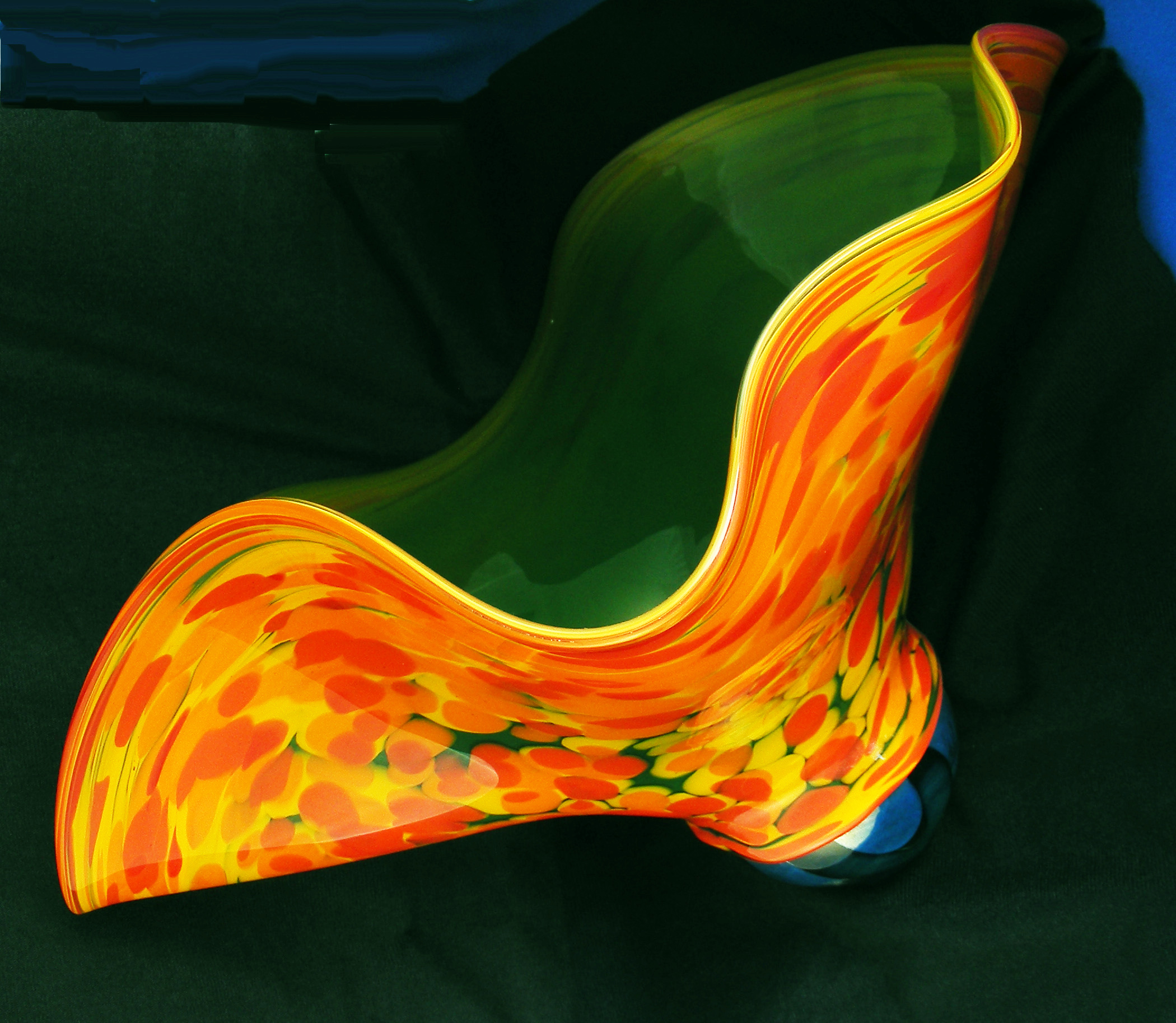
This multi-colored vessel features a large hand-blown marble in the center.

Without a formal education, what sort of training did you receive for blowing glass? I studied at the Corning Center for the Fine Arts in Corning, NY, under a famous Venetian glass blower. That opened my eyes to how glass blowing works.

Briefly explain the process of glass blowing. A ceramic crucible inside the 70-lb. kiln heats up to 2100 degrees Fahrenheit, melting the glass inside it. I take a steel pipe – a hollow blowpipe – and gather a ball of molten glass on the end. I blow into the pipe to shape the glass, let it cool, and dip it back into the furnace. Then I break the glass off the blowpipe and leave it in the oven to cool until the end of the day.

Do you coax the glass into certain shapes only using your breath? With the help of metal tools, like tweezers, and cherry wood blocks.

How close can you get to the glass without burning yourself? You never actually touch the glass, but you can use wet newspaper to shape it. Working on a large piece might require someone else to hold up a paddle or piece of wood as a heat shield.

Did you love fire as a little kid? Yes. I think fire is a wonderful thing. [Editor’s note: via email, Steinke’s mother stated that he wanted to be an arsonist or firefighter as a child.]

Steinke teaches student Gabriel Dart, 15, how to start the shape of a piece.

Most kids grow out of the pyro phase. I’ve always done extreme activities, like skateboarding and snowboarding – and I’ve always loved art. So I found this extreme art form, where I had an instant love for the process and the medium. I have bad ADD [attention deficit disorder], and this is the only thing that makes me focus.

Do you still find time to skate and snowboard? I have a warehouse in downtown Sacramento with a half-pipe and a glass blowing studio.

Best part of the job: Making something beautiful without touching it with your hands.

Most challenging part of the job: It’s very physically demanding work and difficult to learn. You keep stumbling over yourself until you figure it out, but that’s why I enjoy it so much.

It must be tough to keep the hot glass intact. If you let a piece go below 1,000 degrees, you risk breaking what you’re working on. The glass is moving all the time; you’re constantly chasing this weird, morphing piece, trying to control something that doesn’t want to be controlled.

Any serious injuries? Only cuts from the glass, not burns. When I worked at a pizzeria, I burnt myself more on the damn pizza oven than I have ever burned myself on glass. And now, I’m working with three to four times the amount of heat.

Steinke created this glass bicycle for the annual Amgen Tour of California. It features working parts, complete with rolling wheels.

How would you describe your style? I’m really into using nature, particularly sea life. I’m working on a product line of functional sea life art that’s half sculpted and half blown, like seahorse flower vases.

Your favorite project: I was the lead glass blower for a project in the Davis Public Library in Davis, Calif., which consisted of 32 pieces of glass suspended from the skylight in a reverse pyramid.

Common myths about the profession: People ask whether sucking inward will burn my lungs out. The answer: no, it won’t.

Biggest setback: Figuring out how to make money and survive. But I overcame that by scrounging – I built all my equipment from junkyard pieces. If I see metal in an alley, I’ll pull over and pick it up.

Pricing for your work: They range for $50 to $10,000, based on the time it took me, amount of glass used, and how much I love the piece.

If you could be reincarnated into someone dead or alive, who would it be? Let’s go with Tony Hawk.

Learn more about the process:

LAUNCHING YOUR CAREER>>
Interested in blowing glass? Rene Steinke offers some advice.
1. Remember that you fail your way to success.

2. Attend a reputable training program. Two schools that offer great ones are the Corning Center for the Fine Arts and the Pilchuck Glass School.

3. Travel abroad and learn from as many mentors as you can. There are a million ways to blow glass – don’t get stuck in just one.

PLUS: For more artsy No Joe Schmos, check out the tattoo artist, the filmmaker and film editor couple, and the permanent makeup artist.

All photos courtesy of Darby Patterson.

Beyond Skin Deep: The Tattoo Artist

Jesse Neese got his first tattoo at age 20, so he often jokes that his kids have to wait until then, too.

Why settle for just one tattoo when your entire body can be a canvas? Jesse Neese, the owner of Nuclear Ink in Omaha, Nebr., considers his entire body one tattoo.

The art of tattooing dates back to the beginning of mankind. It developed a somewhat seedy reputation, but modern artists with high hygiene standards now offer beautifully crafted, customized designs.

Neese, a father of two and former high school art nerd, has been inking thousands of customers for 12 years. His schedule book fills up months in advance; his larger projects, like full back pieces, can take multiple five-hour sessions.

Below, he reveals how the profession has helped bring him a sense of community.

Title: Owner, Nuclear Ink
Age: 37
In the business for: 12 years
Graduated from: University of Nebraska at Omaha, degrees in studio art and dramatic art
Pricing: $125 per hour
Previous jobs: salesman; waiter; customer service representative

What inspired you to pursue tattoo artistry? I saw a lot of bad tattoos around me, and I thought I could do better. If a permanent mark is going to be made on your body, it should be done well.

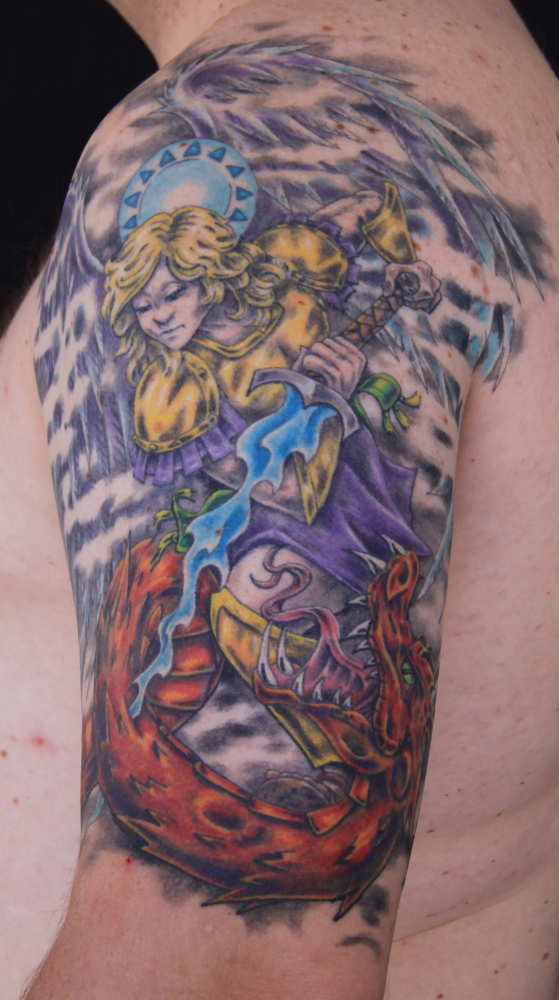
Neese often receives religious requests, such as this tattoo of Saint Michael.

How did you get started? At age 18, I went into every shop in town, asking to learn how to do tattoos. I didn’t have an “in,” though. So I got a few tattoos and an art degree, and forgot about wanting to be a tattoo artist. About 10 years later, I ran into an artist I used to know, and set up an apprenticeship with him. We eventually opened a studio together, and I bought his part of the business in 2003.

Does your theater background help with tattooing? There’s a lot of lighting involved in theater, so that gave me a good eye for light and shadowing with tattoos. For example, I use shadowing to give tattoos a 3D illusion. I also have lots of experience with costuming, which gives me an advantage with larger tattoos that flow around the collar.

What’s the preparation procedure for tattooing? I work with people to design the tattoo to fit their body. I take paper and measure out the space of the tattoo – sometimes, I’ll draw the design out on paper beforehand, and other times, I’ll just draw it right onto the skin with a marker. It’s easier to draw right on if a tattoo is wrapping all the way around the arm.

Do you numb people before injecting ink underneath their skin? I don’t believe in that – it’s not necessary. If you’re not willing to put up with the fact that it hurts a little, you don’t want it enough.

How long does the process take? Larger tattoos can take multiple four- to six-hour sessions, each a few weeks apart.

Neese typically works until 9 p.m. or 10 p.m. in the evening.

Craziest tattoo you’ve ever done: I don’t consider anything crazy. But I’ll never do the same tattoo more than once, unless friends or family want matching ones.

Your work looks heavy on fantasy art. I never want to get stuck in doing just wildlife or dragons. I run the whole range, from black and gray to color and from realism to crazy cartoons.

What do you think of the “tough guy” stereotype of tattoo artists? For the most part, [tattoo artists] are the nerdy art kids from high school – the ones that were picked on and messed with. We’re the ones that really love and enjoy artwork.

Something people don’t know about the job: How much work it is. I spend all day tattooing, then come home and fall asleep on the drawing table. Some say they only draw in a good mood, or when they’re upset – you can’t do that as a tattoo artist.

How many people have you tattooed? Anywhere from one to five per day, six days per week, for 12 years. So that’s thousands of tattoos in my life – I can’t even count how many.

How many tattoos do you have? I consider my body one tattoo – it’s an open space. I have some medieval engravings, totem animals, goblins, and Hot Rods with my wife, kids, and myself racing off in a cartoon buggy.

Various AC/DC tribute tattoos.

Do you tattoo yourself? It’s a mix of doing it myself and letting others do some, since it’s difficult to reach most angles.

Any music while you work? Nothing slow and mellow.

Favorite part of your job: Growing up, I never felt part of my community or the bigger picture. Now, I meet everyone in my community. I’ve tattooed local police officers, firefighters, doctors, nurses, and fast food workers.

What tattoos do the firefighters get? Many get the Maltese cross, but just as many get other personal designs.

Do you think it’s important for tattoos to have deep meaning? Not necessarily. Some TV shows make it seem like someone needs to die in order to get a tattoo. That’s negative; I’d rather get a tattoo to celebrate someone.

What does your office look like? It’s pretty clean, with white walls, a few murals, and lots of my own artwork – like poster-size photos of back tattoos I’ve done.

One of Angelina Jolie

LAUNCHING YOUR CAREER>>
1. Focus on becoming a professional artist: get an art degree and do as much artwork as possible. Consider joining the Alliance of Professional Tattooists (APT), which has a code of ethics I strongly believe in.

2. Get tattooed. You’ll learn a lot about how the process works and what it’s like to have one. It’s also valuable for a tattoo artist to have a tattoo he’s not happy with; it teaches you the gravity of the business, and keeps you in check.

3. When pursuing an apprenticeship, be professional: don’t show half-finished sketches on notebook paper. Instead, show a portfolio of finished artwork.

For more of Neese’s work, check out his art galleries and Nuclear Ink’s Facebook page. All photos, unless stated otherwise, are courtesy of Jesse Neese.

Another way to get inked: this No Joe Schmo is a permanent makeup artist!

The Permanent Makeup Artist

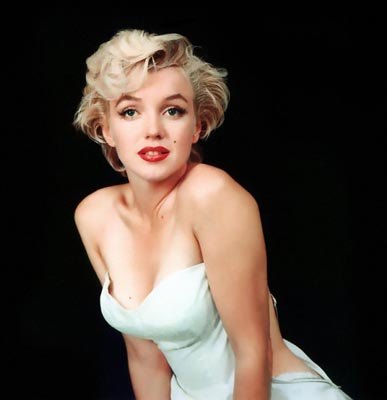
We’re guessing that Marilyn’s lips weren’t enhanced. Or were they? Photo credit: topnews.in

The trick to making money today, Michael Katz says, is finding something that not a “thousand zillion people are doing already.”

For him, that something is surgically tattooing makeup onto people’s faces. Katz has never been a typical 9-to-5 person, and now, as the owner of Miche Permanent Cosmetics (pronounced mee-SHAY), he is one of fewer than 70 professional technicians in New Jersey.

In addition to working on women’s eyes, eyebrows, and lips all day, Katz trains aspiring cosmeticians at Miche. The job allows him to take center stage – just the way he likes it – and maintain a side job of coordinating singles cruises to the Bahamas. Below, Katz discusses his golden rule, the startling costs of procedures, and how to be diplomatic with customers who want Spock-like eyebrows.

Age: 52
In the makeup business for: 14 years
Graduated from: Queens College
Trained by: Alexis Lawson, creator of SofTap, Inc.; Sandi Hammons of Premier Pigments
Previous jobs: Bass player; used car dealership owner; CPR teacher for the American Red Cross; makeup salesman, technician, and artist at various top spas across the country

Services offered at Miche: Aesthetic tattooing, including eyebrows, eyes, lips; and medical tattooing, like areola restoration, restoring hair follicles, scar camouflage, and correcting cleft palettes.

Katz goes for a more natural look. Photo: mybeautyblog.co.uk

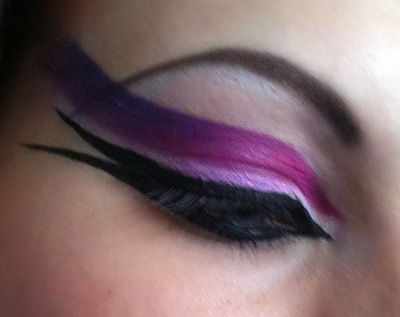
By “eyes,” do you mean tattooing on blue eyeshadow? No. I stick to natural requests, like eyelash enhancements, or tattooing on netural-colored eyeliner (in black or brown). I made an exception for one woman who worked as a Marilyn Monroe impersonator and needed the big 1940s eyebrows and ruby-red lips.

Equipment used: Sterile needles, which implant color under the skin like a tattoo, and a two-coil tattoo machine. Eyebrows hurt the least, but we use topical anesthetics to make procedures more tolerable. Lips are torture, so a nearby dentist numbs my clients by injection so they don’t feel anything.

How are tattoos and permanent makeup different? We don’t go as deep, and we use cosmetic pigments instead of tattoo dyes for a more natural-looking result. The tradeoff is that tattoos easily last 20 years, but permanent makeup often only lasts two to five years.

So it’s not really “permanent,” then. In my opinion, it’s more about enhancing and defining features on your face, or creating an illusion. Instead of permanent makeup, we should call it “semi-permanent definition.” [Laughs.]

Did you always love makeup? Not really. But I’ve always looked for careers that are unique and interesting.

So why this profession? The trick to making money today is finding something that not a thousand zillion people are doing already. There are less than 70 professional technicians in New Jersey. As a regular makeup artist, I attended trade shows where I saw permanent cosmetics — and thought it was the bomb. I was fascinated by it, so I got into the field.

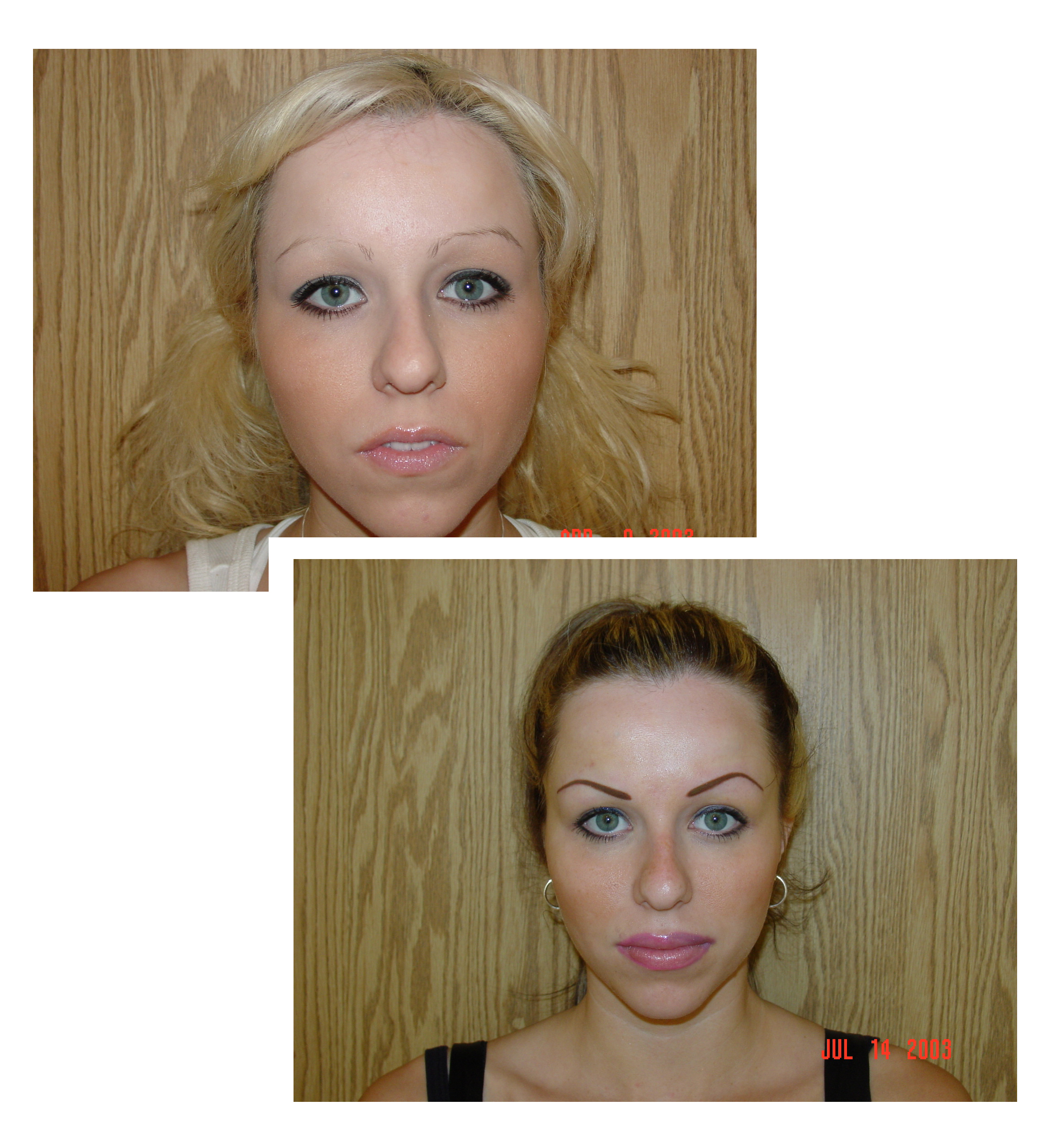
Eyebrow enhancements at Miche, circa 2003. Photo: Michael Katz

What made you decide to start your own business? In New Jersey, if you do permanent makeup in a day spa or salon, you get fined. My options were limited to working in a doctor’s office or opening my own place, and the state asked me to open a training center. So I opened Miche eight years ago to do procedures and run accredited training courses.

Perks to owning a business: Being your own boss. On the side, I’m also a cruise coordinator for singles groups in Florida. I sail from the Bahamas to Europe to Alaska, and I think I’ll be doing that forever.

Hardest part of owning a business: Cold calling and knocking on doors when I first started. Now, my business sells itself through word of mouth and my website.

Main clientele: Primarily women in their 40s, 50s, and 60s. Typically, clients don’t come in because they’re lazy about doing their own makeup – they come in because they’re missing half an eyebrow or have very thin lips. We augment them to make look more natural.

Cost of procedures: $500 for eyebrows, upper and lower eyes, or lip line. Upper or lower eyes only are $ 300. It’s $750 for lip lining and filling lips.

Preparation for a procedure: On average, each procedure takes an hour and a half. The preparation is half of that time – before-and-after photos, numbing the area, consent paperwork, and discussing shape and color.

Best part of your job: Meeting people from every walk of life. No two eyebrows are the same, no two eyes, no two lips.

Most challenging part of your job: Perfecting my radar with people so they’re not wasting time or money. I will diplomatically tell someone that permanent makeup can make them feel younger and look good, but it won’t save their marriage. I screen my students to make sure they have potential.

What types of students enroll in your course at Miche? Lots of people who are in the midst of a total life change – they may be changing careers because of the economy, or because of a divorce, or because they’re bored with life.

“Some customers want eyebrows out of Star Trek,” Katz said. “In a week, they’d be back with their lawyers, so I have to be diplomatic and say no.” Photo: krcarnes17.wordpress.com

Do you get nervous that you could totally mess up someone’s face? In the beginning, I was like, oh my God, talk about responsibility. I was scared to death! Now, my golden rule is that less is more. I work very conservatively.

As a male in a female-dominated industry, do you feel out of place? Having a good rapport with customers counts more than whether you’re a man or woman.

If you had to work at a desk job: I’d probably cry my eyes out.

LAUNCHING YOUR CAREER>>
Michael Katz gives the low-down on the chops to permanently alter faces.

1. Find out the regulations in your city or state for permanent makeup. Most schools won’t tell you this; they’ll just train you and send you off, but state regulations control where you can practice.

2. Search for a training program that is certified by the American Academy of Micropigmentation (AAM) or the Society of Permanent Cosmetics Professionals (SPCP). Some fly-by-night schools in New York City teach doing eyebrows on a grapefruit. At Miche, we use live models after students have completed their 60 hours of training.

3. You don’t need to be a makeup artist, but you do need to be able to deal with people. I’ve had successful bankers and nurses come through my classes because it’s something they’ve always wanted to do. Do your homework and decide whether this is something you’ll enjoy; you can’t be squeamish and refuse to use needles.

Are you a potential client? Search for a board-certified technician, and ensure their certification is recent. Ask: (1) How long have you been doing this; (2) How much does it cost; and (3) How much does it hurt?

Find out more about Miche Permanent Cosmetics on the company’s Facebook page.

What’s your opinion on permanent makeup? Would you agree to have eyeliner or eyebrows tattooed on your face?

The Filmmaker & The Film Editor

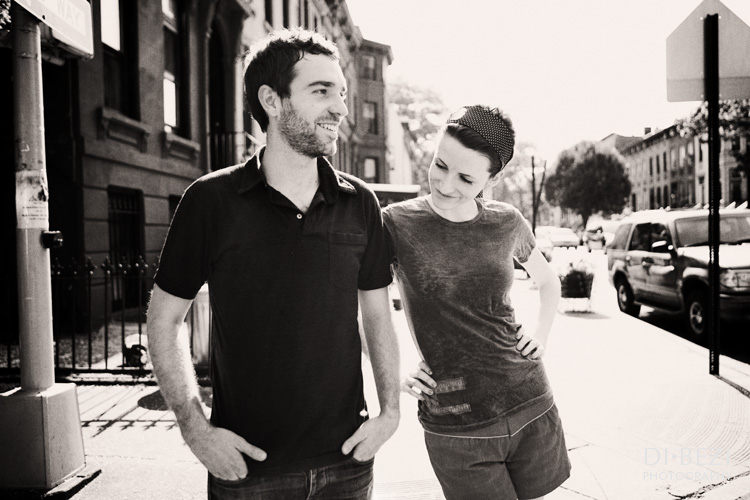
Alexis Boling, left, and his wife, Alex, right. Photo credit: DiBezi.com.

Alexis Boling and his wife, Alex, live together in “the closest thing to a hippie art business commune” in Brooklyn, NY. Their walls are filled with artsy shots of traffic cones instead of smiling family photos.

Alexis, a freelance cinematographer, started Harmonium Films and Music and shot and directed the first-ever music video for Vampire Weekend. Alex, a freelance video editor and producer – and an amateur metalsmither, as her Tumblr reveals – has worked on videos for a slew of corporate clients and websites, including ConsumerReports.com and RollingStone.com.

Below, the film-savvy couple discusses their favorite movie snack, the difficulties of working in the same industry, and the confusing nature of their names (remember, Alexis is the husband; Alex, which is short for Alexander, is his wife).

Age: Alexis, 32; Alex, 28
Graduated from: Alexis, University of Georgia, B.A. in English; Alex, Barnard College, B.A. in English
Salary: Everything is negotiable on a sliding scale; starting rate as a production assistant is typically $200/day

How did you get started in film?
Alexis: I was involved in theater in high school, but never thought of starting my own business. Then I worked on a small art film in college, and was officially bitten by the film bug.
Alex: I wanted to act, but didn’t want to be waiting tables for years while auditioning. So I interned at various production companies, where I found out about an opening for an office manager. I got the job and started three days after graduation.

How did you build your credibility?
Alexis: I put a really nice video camera on my credit card, took over my parents’ garage for a year, and shot anything and everything I could. That was the beginning of Harmonium Films and Music, which I eventually moved to New York City.
Alex: After working at my first job for two years in a one-room office, I began freelancing for HBO and PBS. In the past year, I’ve shifted from production coordinating to editing.

Alexis shot and directed Vampire Weekend’s first music video, “Mansard Roof.” Alex produced and edited it.

Where do you draw inspiration from?
Alexis: Stories that otherwise wouldn’t be told, voices that deserve to be elevated.

Like?
Alexis: For seven years, I’ve been working on a documentary called “French Monster Trucks,” about a family in France that used to run a small traveling circus and now runs a monster truck show. They bought these huge trucks and taught themselves stunts. It’s incredible to watch them bring the trucks down tiny European streets.

Seven years!? I hope to finish it this year. You need a lot of patience in this job.

Does working in the same industry put a strain on your marriage?
Alex: We’ve learned what dynamics don’t work, like when I’m producing and Alexis is directing. We would fight about money and bring the arguments home with us. But when he shoots and I edit, or when he directs and I act – that’s easy.

What’s the hardest part about working for yourself?
Alexis: You’ll never work harder than when you work for yourself. But people get very tied up in job security and think freelancing is too unstable. I don’t buy that at all. One job from one single employer is the least secure option; that one company can shut you down. Freelancers survive by a wave of relationships.
Alex: Unemployment between projects is hard. You should always have stuff in the pipelines for when you have downtime, but it can be difficult to understand that downtime will end.

Watch Alex’s acting reel:

Favorite movie?
Alexis: Buffalo ’66.
Alex: Children of Men.

Favorite movie snack?
Simultaneously: Cherry Coke.

Movie theater or Netflix?
Alexis: Rachel Maddow and HBO.
Alex: HBO on Demand. Or going to plays — I really enjoy theater.

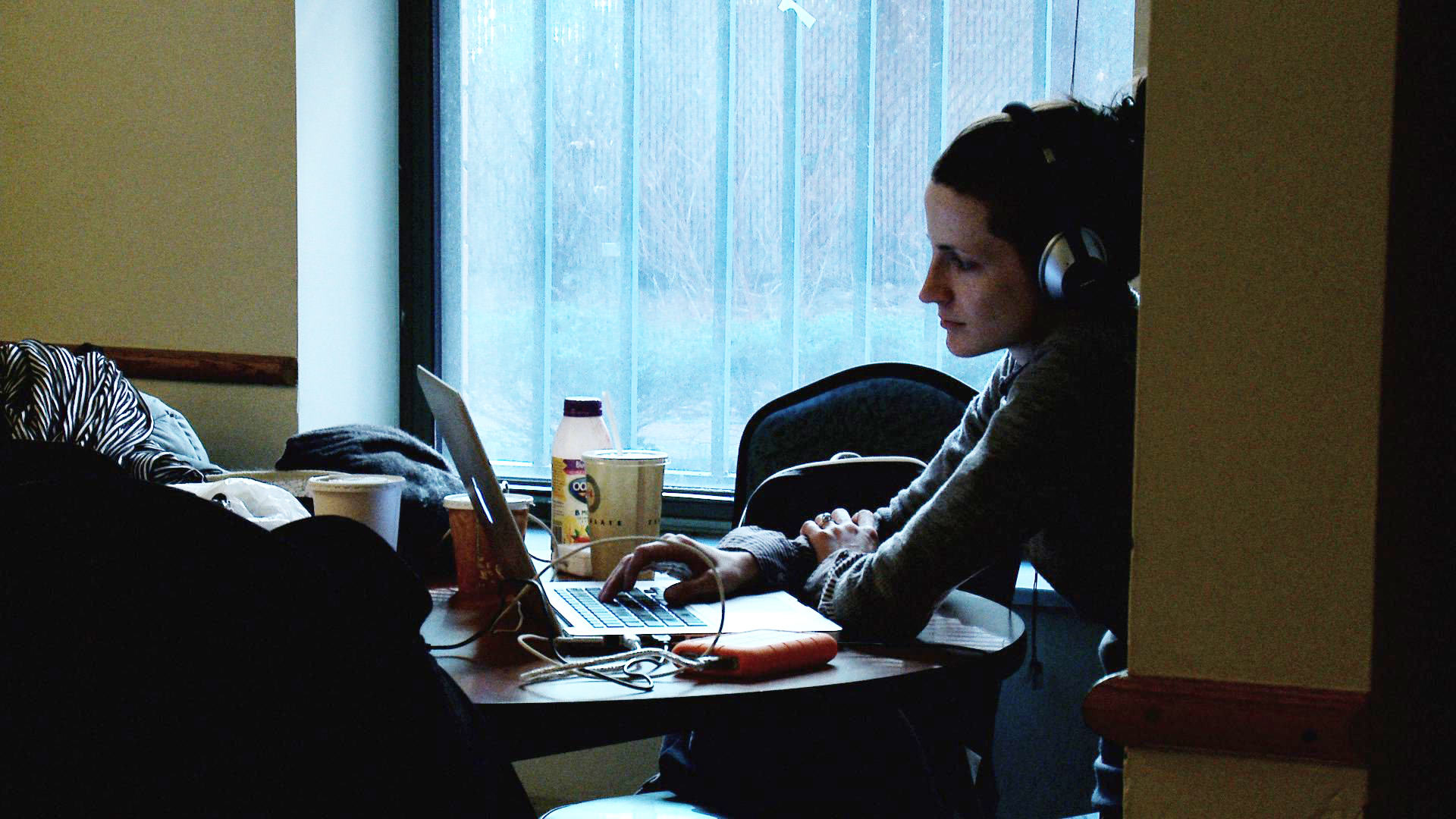
Alex editing her work on Final Cut Pro.

What decorates the walls of your apartment?
Alexis: Our 1870s brownstone in Bed-Stuy [Bedford-Stuyvesant, Brooklyn] is as close as you can get to a hippie art business commune. We have lots of photography from our family — not of our family. [Laughs.] Instead of smiling happy family pictures, we have art photos of traffic cones.

Something people don’t know about you?
Alex: My uncle invented stove top stuffing. He pioneered the idea of selling stale bread to people.

Alexis is typically a female name, and Alex can be a male one. Do people get confused?
Alex: Yes, definitely. Alex is my middle name — my first name is Bodine, but that doesn’t make things easier. People think we did the Alex-and-Alexis thing on purpose.

LAUNCHING YOUR CAREER>>
Alexis and Alex share 4 tricks of the film trade.

Follow Alex on Twitter at @bodine and follow Alexis at @alexisboling.