The Pop-Up Paper Engineer

“I always try to push myself in new directions with the engineering,” Reinhart says. “I try not to use similar mechanisms throughout my  books.”

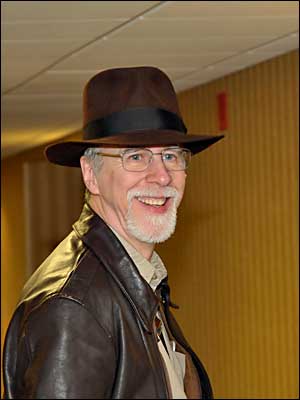
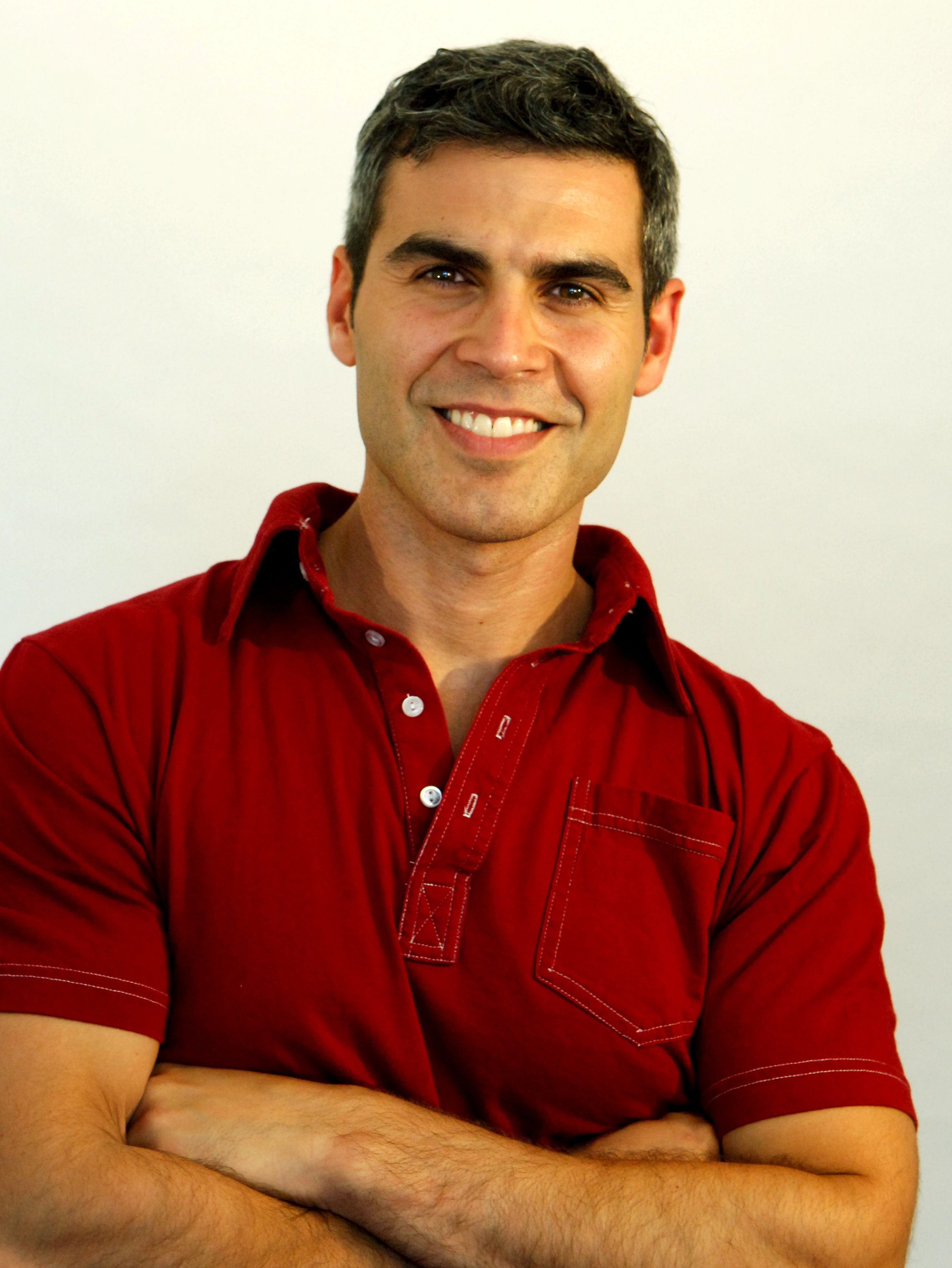
In a small, messy studio in Chelsea, Matthew Reinhart sits at his desk, cutting paper for children’s pop-up books and listening to Howard Stern. Star Wars memorabilia and cutesy anime posters adorn the walls. Interns – along with one full-time staffer – flit in and out.

Reinhart, the author and illustrator of elaborate, awe-inspiring pop-up books like Star Wars: Pop-Up Guide to the Galaxy, typically spends about six to eight months conceiving a storyline and cutting out hundreds of pieces for one of his books, some of which are as thin as a piece of thread or as small as a speck of pepper. His newest project – a book involving large transforming robots that he is deliberately vague about – is slated to take even longer.

Many hail his work as sophisticated engineering, but Reinhart remains is bashful. “I’m just this guy who sits in a studio and cuts up paper,” he says. “I’m an art student, not a math student.”

Yet his dedication to art was not always so clearly defined. Below, the author-slash-engineer discusses how gouging out eyes from corpses at New York City morgues made him realize the importance of pursuing a career you love.

Age: 40
Graduated from: Clemson University, biology major; Pratt Institute, industrial design major
In the business for: 13 years
Based in: New York, New York

You studied biology as an undergraduate. Did you always have a hidden passion for art? I always took an interest in making things, but my parents didn’t want me to be a starving artist. They wanted me to be a doctor. So I majored in biology at Clemson, and if I ever had an elective, I took an art course. My notebooks in biology class were out of control – I drew massive ink sketches in the margins.

When did it click that you should study art instead? I got into medical school, but decided to first take a year off and live in New York. I started working at the Eye-Bank for Sight Restoration, through which I went to morgues and took out people’s eyeballs, sometimes in the middle of the night. By the time I was 22, I had been to every morgue in the New York City area. I saw a lot of dead people – a lot of whom were really young. That made me realize that life is short, and I have to do something I love.

So death inspired you to take advantage of life. [Laughs.] I went to my parents and told them I wanted to pursue art, and they were totally behind me.

Why pop-up books? I met [acclaimed children’s book author] Robert Sabuda doing volunteer work together for a local community center. When I graduated from Pratt, I began working with him on a book, and then we began co-authoring books. It grew bigger, and I started my own projects.
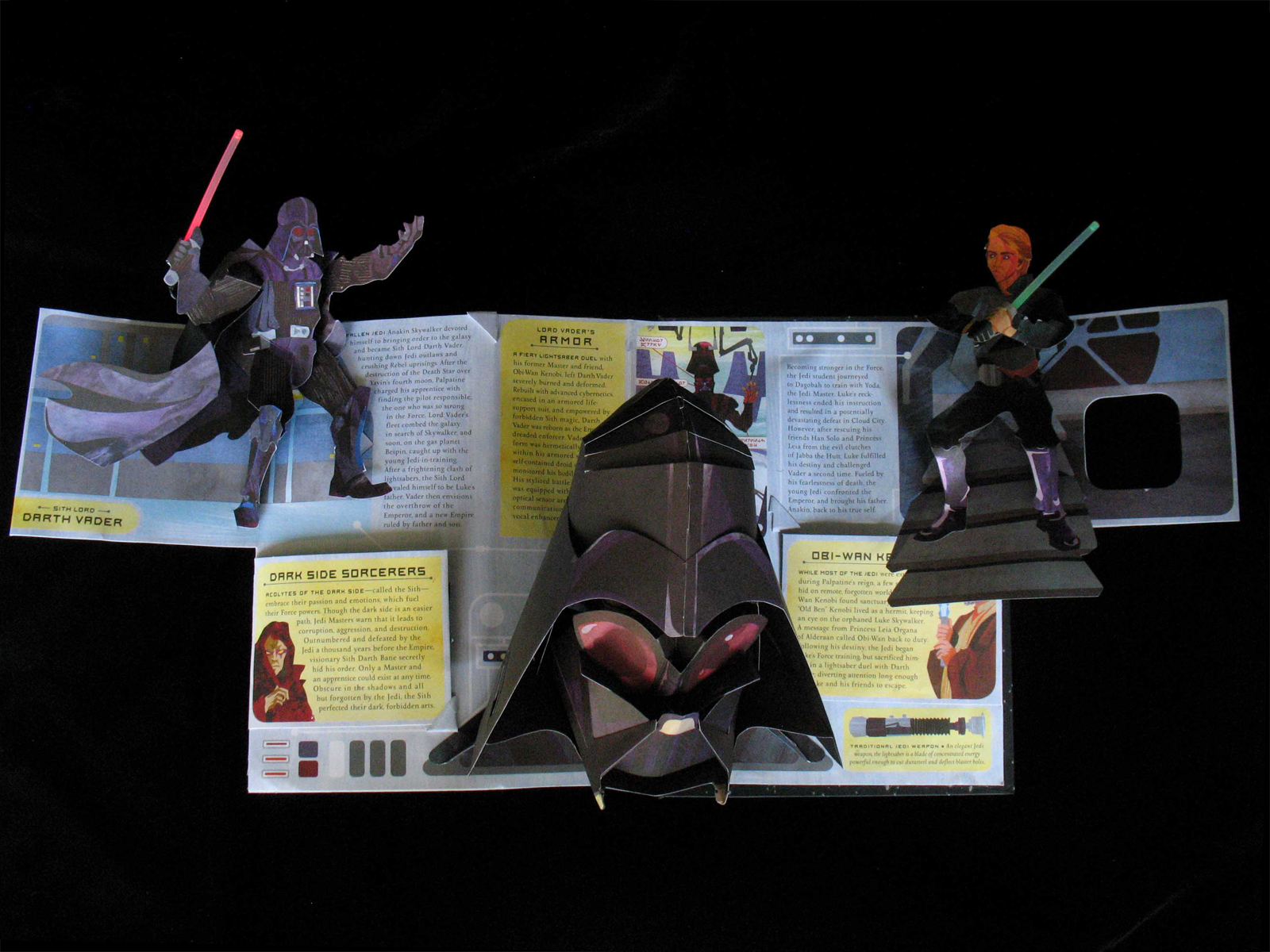
At the end of Star Wars, pieces of an Anakin Skywalker pop-up fold away as the light saber turns from blue to red. The pop-up fully transforms into Darth Vader.

What would people be surprised to learn about your job? It’s a lot less technical than people think. I’m an art student, not a math student. I don’t sit here with my trigonometry calculator and figure out the sine or cosine; I cut paper and see if it works.

Which comes first: pop-ups or words? Words are almost always first. Once we agree on a manuscript – which is like writing a term paper only three pages long – we outline what will go on each page. Then, I create the rough pop-ups, cutting and folding paper, which takes two or three months. Next is the cut-paper collage and placement in the digital file. One book might have 200 to 300 separate pieces.

Time span of creation, from start to finish: About six to eight months, but Star Wars took a little longer.

Tools used: 110-lb. cardstock; scissors; white artist’s tape; double-stick tape; white glue (similar to Elmer’s); scanners; and X-Acto blades. I use tweezers to pick up the really small pieces.

Do you use computers for design, or just implementation? Some people make pop-ups totally on the computer, but we don’t. You don’t know how all the pieces are going to fit together unless you’re holding them in front of you.

Last year, eBooks passed print in adult fiction for the first time. Pop-ups can’t exactly be digitized. Do you perceive that as a disadvantage? It’s a really weird time, and there’s a lot of nervousness in the publishing industry. Some of my work has slowed down, but I think kids will always play with [physical] books, especially picture books.

Do you use an eReader? My iPad is easier when I’m traveling, and I can get a lot of different comic book titles on it without worrying about collecting them. But if I find a really beautiful book about graffiti, I want the actual book.

This slideshow requires JavaScript.

Best part of your job: Working with amazingly creative people, like DC Comics. And I get to wear shorts to work if it’s hot.

Most challenging part of your job: Deadlines are the worst. The changing economy makes it hard to create something spectacular and also cost-appropriate.

Do you have certain ideas for pop-ups that are simply too expensive to be produced en masse? Yeah, there are certain elements. But I get to put light sabers in books, which is pretty cool.

Were you an avid reader as a kid? It’s funny – throughout my entire childhood, I didn’t really have any pop-up books. I wasn’t a big reader. I remember faking a report for A Wrinkle in Time using the liner notes on the book’s inside flap. I wasn’t even smart enough to use CliffsNotes! So now, I think about how I can pull in young readers who aren’t so interested in reading – the young versions of me.

In the New York Times, David Pogue wrote that calling your Star Wars book a pop-up book was like calling the Great Wall of China a partition. That was one of the most amazing things to have ever been written about me. I truly love this work, and sure, there are times when I’ve neglected my social life or personal life for it. But it’s very much a part of me.

One book character you’re dying to meet: The Cat in the Hat or Horton would be pretty cool. Optimus Prime would also be pretty kickass.

Your required reading: I did a book with Maurice Sendak – rest in peace – I love his work. The artwork of Mercer Mayer and Peter Spier is fantastic, too.


LAUNCHING YOUR CAREER>>
1. Paper engineering is a competitive field right now, especially with the emphasis on digital media. Be persistent and look around at what exists – then make sure you’re doing something completely different.

2. Acknowledge that you won’t be on top in the beginning. You’ll spend a lot of time working under someone else, paying your dues and being patient. Don’t assume, I made this book, so it should be published. [Success] doesn’t always come quickly.

3. Invest in a copy of The Elements of Pop-Up by David A. Carter and James Diaz.

Follow Matthew’s work on his blog and learn how to create your own Darth Vader pop-ups on his website.

For more crafty No Joe Schmos, check out the miniature food artist, the roller coaster engineer, and the textile jeweler.

The Soap Maker

Cirese Clindinin whips up 50-pound batches of soap three times per week, which translate into more than 2,000 bars every month.

Inside the confines of her 12′ x 5′ kitchen, Cirese Clindinin makes soap. Lots and lots of soap. She boils down hundreds of pounds per month, on the same stove as she cooks her chicken dinners.

“They’re like my kids,” Clindinin says of her 15 varieties, from almond to eucalyptus, that she concocts for craft shows and online sales on the Down To Earth Body Shop. “I love them all.” She’s a one-woman show, handling research and development, sales, and marketing. She even tests all products on herself to ensure the ingredients — like oatmeal, goat’s milk, and rice bran — won’t irritate her customers’ skin.

Click [HERE] for the chance to win one of Cirese’s handmade soaps through No Joe Schmo.

Age: 31
Based in: Irvington, NJ
Graduated from: I dropped out of Rutgers in my junior year, when my business really picked up.
In the soap business for: About 12 years
Previous jobs: Sales temp jobs and receptionist positions. But I was the worst employee ever, because I would just be working on products for my personal business.

How you got your start: When I was 21, I was working on my business, going to school, and going to craft shows. Then I met Bobbi Brown, and a year later, my products were transformed into a real business when I landed an account with Estée Lauder.

Most valuable lesson learned: Bobbi Brown taught me that nice people finish first. And from Estée Lauder, I learned the importance of business integrity and putting out a good product. If your customers tell you a product doesn’t work, they’re probably right.

Where did you learn to make soap? From Barnes & Noble, mostly, and trial and error. I bought some books, tried it out, and honed it over time. I really like The Natural Soap Book: Making Herbal and Vegetable-Based Soaps.

What were some of your “errors”? Oh, man. I remember being on a crazy deadline for Estée Lauder. I had a big pot with 100 pounds of soap to be melted, and I forgot to cover the pot. I came back four hours later, and there was 100 pounds of soap all over the floor. You would think I would have only done that once, but it’s happened three or four times.

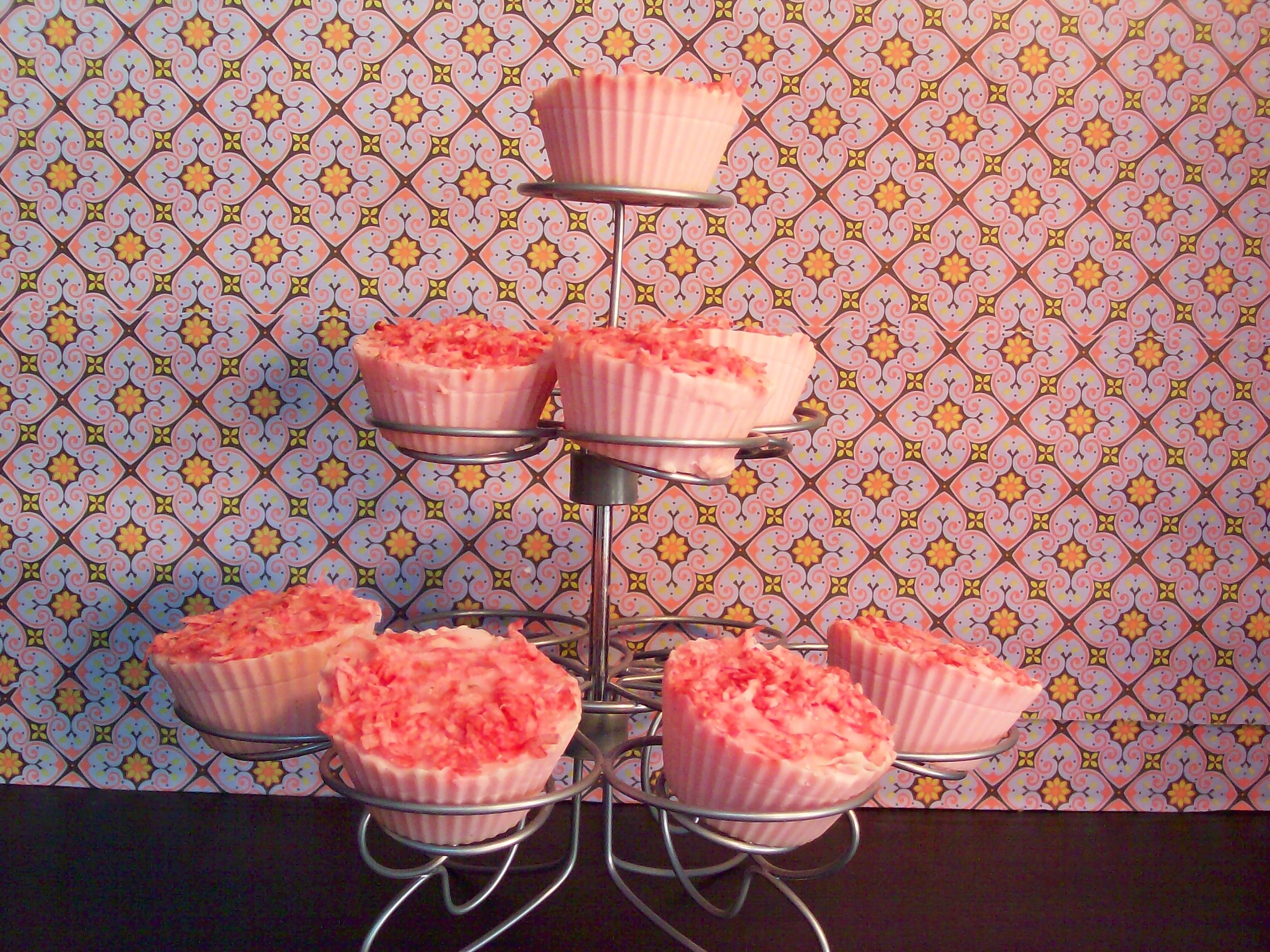
These lemon-vanilla cupcake soaps are topped with real pink coconut.

So you no longer work for Estée Lauder? I worked for her for nine years. That ended when the recession started getting bad. But getting back on my own [and starting the Down To Earth Body Shop] was exactly what I needed, because it was time for me to grow.

What have you learned as a small business owner? Have confidence in yourself, in your ability, and in your product. I’m still learning that.

What ingredients do you use? Mostly simple things you can find in your kitchen cabinet: oatmeal, milk (whole and/or goat’s milk), olive oil, avocado oil, sugar. It’s just like cooking. I add scent, texture, and color with things you might not normally imagine go into soap, like poppy seeds, sesame seeds, rice bran, pink and green miniature lentils, quinoa meal, millet seed, wheat germ, and shea butter.

The process: All the ingredients go into a pot on the stove at 150 degrees Fahrenheit, which takes a few hours to melt down. Then, I pour the mixture into 2-pound trays and add essential oils made with fresh ingredients, like mango oil, tangerine oil, almond oil, and safflower oil. After that, it’s time to create designs, often using old soap. I’ll cut up vanilla soap and layer it into the mango soap and let it dry. Finally, I let the soap harden at room temperature, or put it in the freezer for five to ten minutes. At craft shows, I like to leave it out in blocks and cut it fresh for customers.

Your workspace: I used to work out of this big, 500 square-foot warehouse. Now, I make soap right out of my own small kitchen. I get a much better response, though, since I’m really making it from scratch.

What would people be surprised to learn about your job? You have to be strategic. Soap is something that you think everyone needs, but it really requires marketing. It’s also a very messy business, which is perfect for me, since I’m already messy. It’s hard work — my schedule is pretty much seven days per week — and there is a lot of competition.

Best part of your job: Meeting new people, since I don’t really have any coworkers.

Most challenging part of your job: Learning the business side of things. I didn’t really want to, since I tend to be more creative, but I had to.

Cirese’s signature Sandbar Soap is made with a layer of sand and a layer of oatmeal and apricot seeds.

How does your soap differ from the regular store brand? Store-bought soap has more detergent in it, which dries out your skin and makes it tight. My soap, which contains Vitamin E, gives your skin more sheen and makes it softer.

Do you carry spare soap in your purse to avoid that milky pink soap in rest stop bathrooms? I suck it up at rest stops, but I do carry my own soap to hotels — usually something citrusy, like my lemongrass soap. And I always keep a box of soap in my car trunk for emergencies.

Your car must smell really clean. I can’t even smell it anymore. I think I’m immune to it by now. Sometimes, when I’m cutting up the soap at a craft show, I’ll hold it up to my nose and think, Wow, this smells so good! That’s the only time, though.

Your required reading: I love self-help books. I often reread 100 Ways to Motivate Yourself on mornings when I don’t feel like getting much done.

LAUNCHING YOUR CAREER>>
Find one product that you think you can make really well — and that you have a unique perspective on — and brand it. Instead of selling a ton of products, just choose one or two that are really solid. And don’t be afraid to get your hands dirty.

Enter below for the chance to win one of 10 homemade soaps from the Down to Earth Body Shop. Entry period closes on Sunday, June 10 at 11:59 p.m. ET. [Browse more of Cirese’s products on her website and Facebook.]

[Return to top]

Go back

Your message has been sent

Warning
Warning
Warning
Warning
Warning
Warning

Warning.

Foodie Friday: The Miniature Food Artist

Shay Aaron, a Tel Aviv native, initially studied fine arts, but quit one year later to finish his pastry studies. This fall, he will begin classes for set and costume design.

Shay Aaron’s strict diet regimen includes Italian hoagies, lemon pound cake doused in icing, and dozens of cannolis oozing with chocolate. After four years, he has lost 175 pounds.

The catch: all the treats are about one-twelfth their actual size, and made from polymer clay.

Four years ago, at 308 pounds, Israeli artist Shay Aaron was overweight and depressed. He began creating miniaturized food sculptures at 1:12 scale that look almost completely edible, and used the hobby to curb his appetite. “I feel like I’m replacing my passion for greasy food with fake baked goods,” he says.

No need to worry about his creations being too beautiful to eat. You couldn’t if you tried. They fit on the edge of a fingertip, often no larger than a penny or a matchstick. His work, most of which is created using a pasta machine in his small living room studio, includes crops of fruits and veggies, mouthwatering dessert spreads, and loaves of Challah.

Age: 27
In the business for: 5 years
Describe what you do in one sentence. I create collectible miniatures on a 1:12 scale, and also make wearable pieces. 

How does one break into the miniature food art business? From a very young age, I had a weight problem, and I started creating fake food to help get over it. Four years ago, I weighed 308 pounds, and I was miserable. I was working with polymer clay, making millefiori and home décor pieces. One day, a customer asked me to create a miniature replica of a traditional Jewish dish. That was when I found what I wanted to do for the next five years. Now, I’m trying to replace my passion for real food with these little miniatures, and sometimes it works.

Where do your best ideas come from? On Friday mornings, I work with my mom in her little kitchen. We host the whole family every Friday evening, and my mom is charge of the cooking. I help her come up with special desserts that complement her dishes, so that’s where a lot of the ideas for my work come from. I also [draw inspiration from] Martha Stewart.

Does your work make you hungry? I can’t imagine sculpting something not related to work. That said, my work makes me hungry, for sure. The problem is that I work during the wee hours of the morning, and there’s nothing worse than eating at night.

What tools do you use for sculpting? You don’t need special tools and materials to get perfect results. The main material must be polymer clay, but I also combine wood, glass and aluminum, resin, metal, wood and ceramic. I use lots of unconventional tools in my work, from pasta machines to food processors. I also use rocks and boards that create interesting textures, as well as rolling pins and toothbrushes. All my little tools are placed in a little chest of drawers made of clear plastic.

Work you’re proudest of: My Mediterranean cuisine collection is really a part of me. Here in Israel, we usually purchase Mediterranean foods in the supermarket. But before I make miniature versions of any food – in this case, hummus and falafel – I feel like I need to make them for real. That way, I learn more about the process.

How do you price pieces that are barely the size of a penny? It’s hard. I would prefer that someone else priced my pieces, but nobody else can evaluate how much work I put into each piece. The only elements that count are time and effort – not materials used.

Your work is so small and intricate. Are you a perfectionist? No, I don’t define myself as one. I just know how important the details are. That’s where the secret is – in the details.

How did you choose a 1:12 scale? 1:6 is too big, and 1:24 is too small. A one-inch scale is also a traditional ratio for models and miniatures.

Click through to view some of Shay’s work:

This slideshow requires JavaScript.

Strangest request from a customer: I was asked to create a wedding ring that looked like a fortune cookie, with a tiny fortune that read, “Will you marry me?” Another guy, from Canada, asked me to create a ring for his wife that featured a replica of their wedding cake.

Best part of your job: That I don’t have a big boss. [Laughs.] The best part of what I do is the compliments and feedback from people around the world. I once received a video from a guy in America who proposed to his girlfriend using my hummus ring. It was one of the most wonderful moments I’ve ever had.

Most challenging part of your job: Creating miniature versions of very specific dishes. I always ask my customers to find images of the items they want me to create.

Do you display miniature art in your home? I keep a few items for myself, but most of my creations are made for sale.

What’s your work schedule like? I try my best to work every day, kind of like a nine-to-five job. It’s hard, because sometimes I don’t feel inspired enough to work on new pieces – and when I force myself to work, I’m not happy with the results.

Speciality dessert: Pies and tarts, and especially all lemon desserts. I love to blend sweet and sour flavors together. I also like all kinds of chocolate in any variation, shape, and state.

Dream job as a kid: I always thought I’d be an actor.

LAUNCHING YOUR CAREER>>
Always accept a challenge, and never give up on a task. But don’t force yourself to do things that you’re not comfortable with.

Check out hundreds of photos of Shay’s work on FacebookEtsy, and Flickr. You can also follow him on Twitter at @shayaaron.

Click here for more Foodie Fridays, like the co-founder of Crumbs Bake Shop and creative director at Dylan’s Candy Bar.

All photos courtesy of Shay Aaron.

The Textile Jeweler

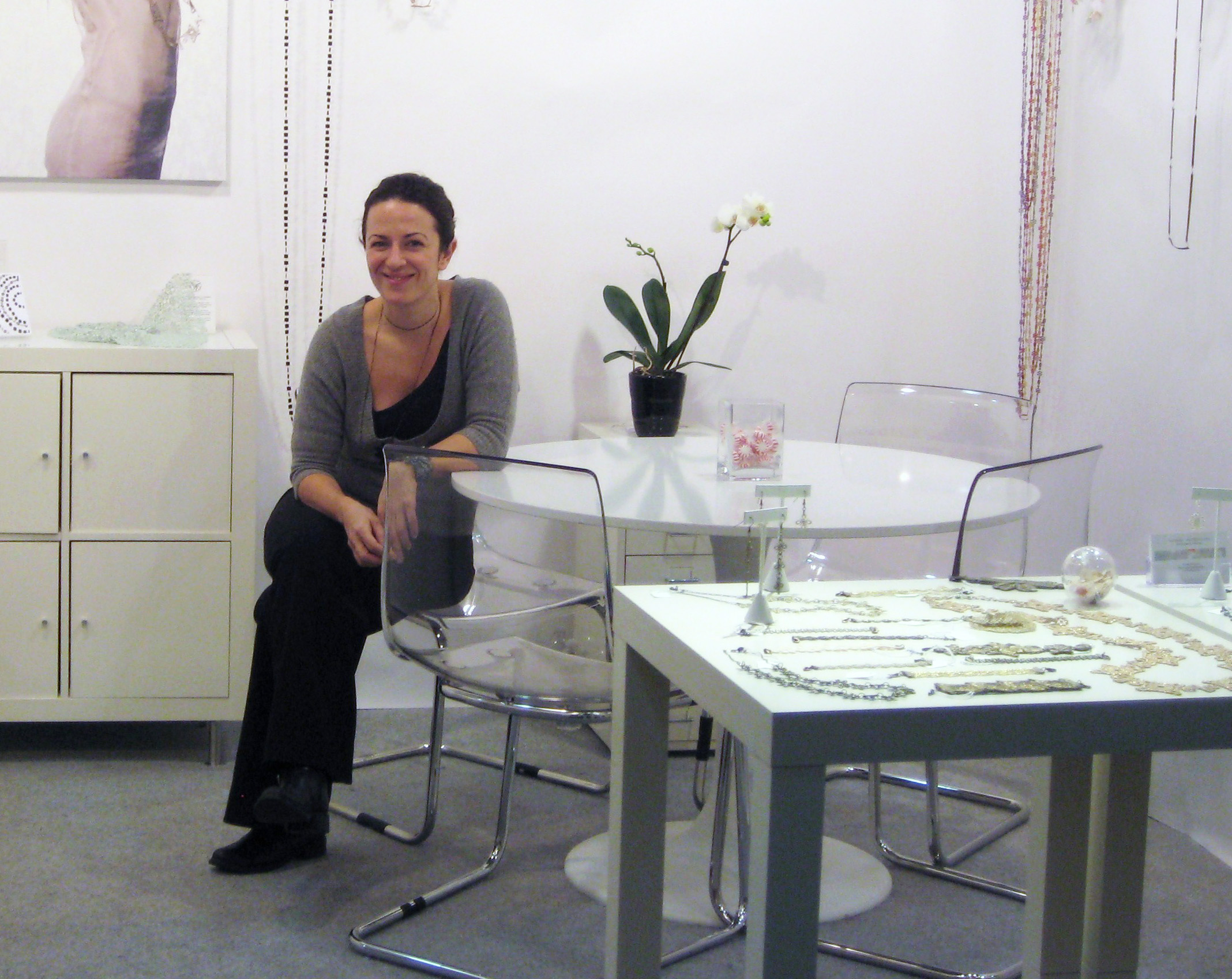
Paz Sintes in her booth during a trade show at the Javits Center in  Manhattan, January 2011.

Forget bling-bling. Forget chunky necklaces, logos splayed across designer bags, flashy jewels. The biggest up-and-coming trend is subtlety.

At least according to Paz Sintes. Sintes, a textile jeweler whose pieces are handcrafted using European vintage laces, strives for a simple, airy lightness that she equates to Fred Astaire’s dance. The Barcelona native moved to New York City with her husband five years ago to explore the “freelancer city” and started selling her collection in boutiques throughout Brooklyn and Manhattan. Then, at her neighbor’s suggestion, she began regularly setting up shop at craft shows.

“For me, textiles are luxury, my real passion, what I really want next to my body,” Sintes says. “I hate anything big, shiny, funky, and noisy. Maybe that makes me boring, but I don’t care.”

Age: 38
Based in: Brooklyn, NY
Grew up in: Barcelona, Spain
Graduated from: Winchester School of Art in the United Kingdom; Bachelor of Arts with honors in fashion
In the textile jewelry business for: 7 years
Previous jobs: High-end clothing designer for fashion corporations throughout Europe

What materials do you use for your jewelry? Mainly high-end European embroideries, like Lurex [a cotton rib-knit fabric]. I also use laser cuts made in Switzerland, vintage laces, and passementary [trimmings of gold or silver cord]. My collection is totally handcrafted; I design, hand-cut, mix, stitch, and dye everything at my home studio in Brooklyn with my assistant, Yulie. For metals, I work mainly with a Japanese supplier of anti-allergenic brass.

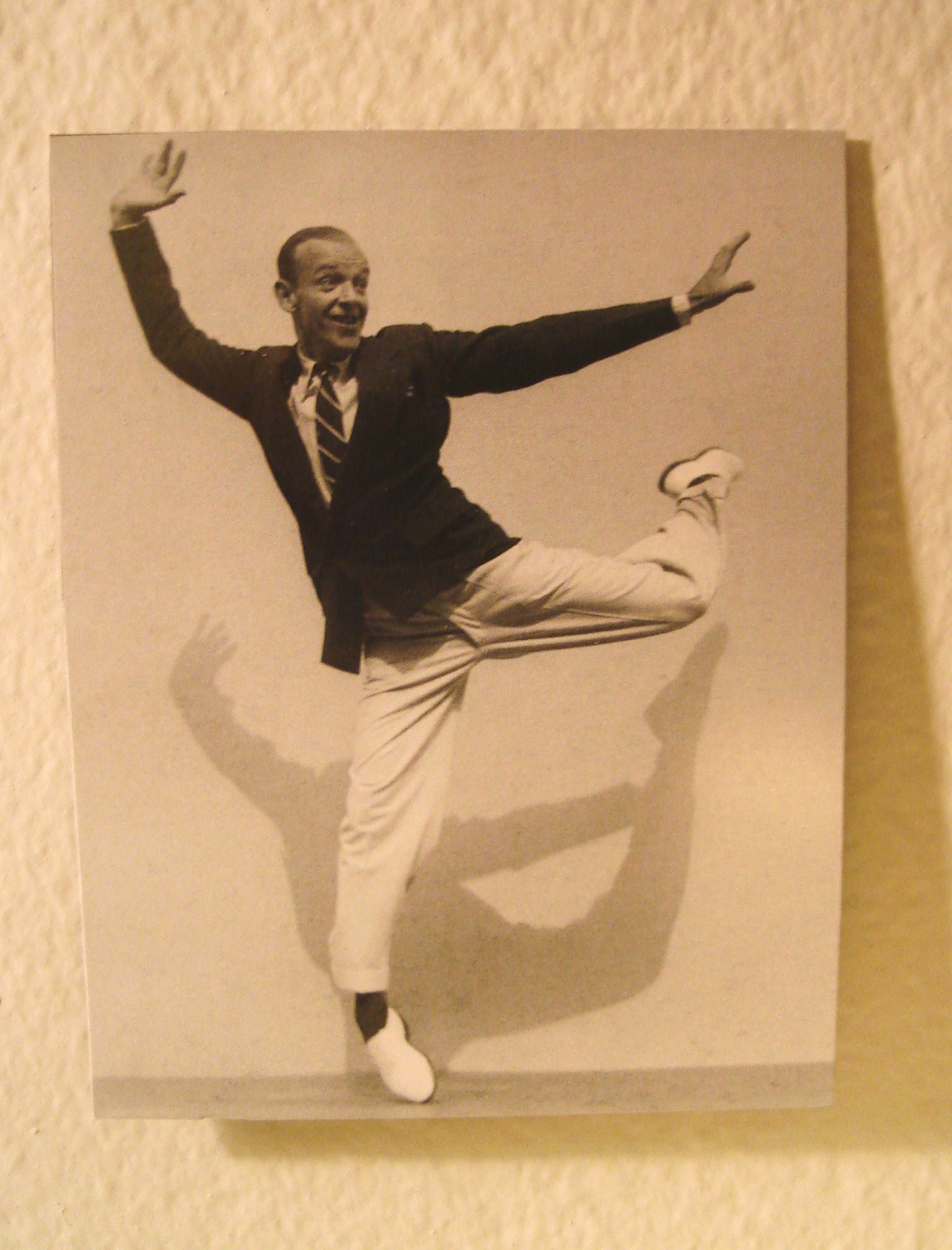
A “floating” photograph of Fred Astaire hangs in Sintes’ studio, which serves as a muse for lightness and freedom.

What distinguishes your work? Its softness and texture. My jewelry moves with you when you move, when you walk. I like to say that my pieces are like Fred Astaire’s music — light, airy, floating. I have a picture of [Astaire] in my studio.

The last piece of jewelry you purchased: I don’t remember. I have probably bought 10 pieces in my whole life, and I never wore them. That’s one of the reasons why I started my line — I couldn’t find any accessories that really attracted me.

Sources of inspiration: I always take notes in the street. And all styles of music, especially jazz. I sing jazz solos while I work!

Working at street fairs across New York City must result in some pretty funny customer encounters. Once, Uma Thurman stopped by my booth at Madison Square Park. She was dressed casually, with no makeup or sunglasses. She was looking at this one necklace, and behind her, other vendors were waving their hands and giving me signals. But I was frozen, just repeating information about French laces and high-end fabrics like a robot. Finally, I asked her, “Are you who I think you are?” She smiled and said, “I used to be! May I take a card?” Then she left very quickly.

Another time, an Asian couple spent half an hour debating whether to buy a necklace after I told them the price, which was $395. Finally, they gave me $4 and waited for their $0.05 back. They had thought I meant $3.95, which you can’t even buy a round-trip subway ticket for! They were totally embarrassed when I explained the situation.

Describe the woman who embodies your jewelry. She is 40 or older, a wealthy businesswoman living on the Upper West Side in New York City. She is very fashionable, very informed, always searching for new, interesting things. She already wears Tiffany’s, but is fascinated by textile jewelry.

How long does it take to complete a piece? Anywhere from two hours to months, depending on the piece. I often need to travel to Europe for my work.

French cotton-lurex-poly ribbon hand-stitched bracelet; approximate retail value of $135 to $145.

Retail prices: My pieces range from $30 to $400.

Favorite designers: My God, there are so many! I love Balenciaga, Lanvin, Romeo Gigli. Lately, some of my favorites are Anne-Valérie Hash and Olivier Theyskens.

Best part of your job: Creation is a joyful moment. Then again, artists don’t create, we discover. My friend, who is a composer, always says the music finds me. Another intimate, emotional moment is seeing customers smile when they look at my jewelry. That sometimes makes me cry.

Most challenging part of your job: Showing customers that although my pieces look very fragile and airy, they are in fact quite strong.

Favorite emerging trend: I think I’m creating one.

Trend you wish would go away: In terms of accessories, I hate bling-bling — anything big, shiny, funky, and noisy. I prefer shy, subtler jewelry. In terms of clothing, I don’t like logo-mania. It should be more about material than the logo.

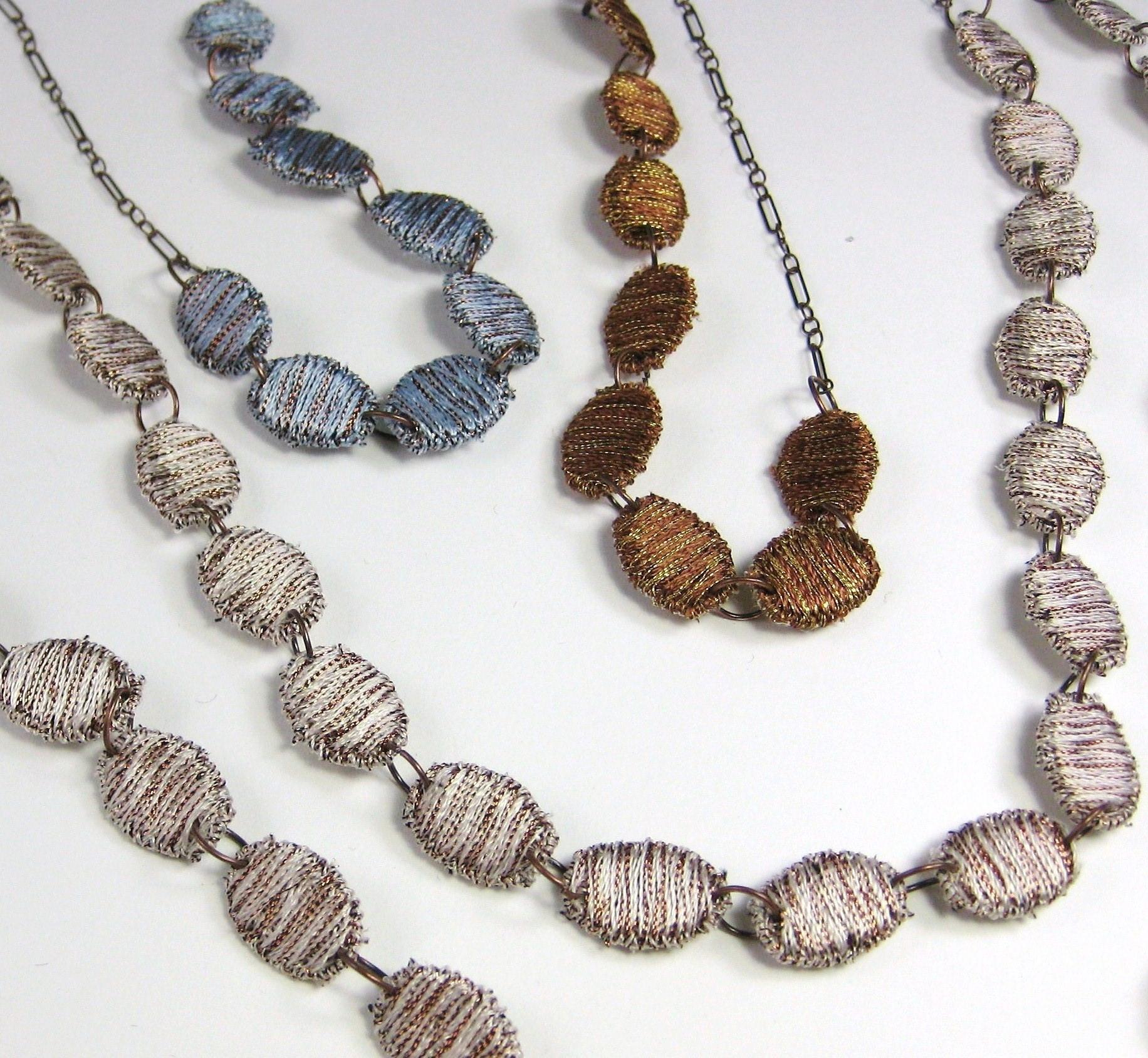
These short necklaces are made with Swiss cotton, viscose, and lurex oval guipures. Approximate retail value of $125 to $135.

Your tricks of the trade: I always start out with taking a picture of my materials: the textile, chain, and tools I’ll be using. Then, I take a photo of the finished piece, as a point of reference. I also package all my jewelry in clear plastic “bubbles,” which I import straight from Italy.

LAUNCHING YOUR CAREER>>
I have a very artistic vision: designers need to be honest. Consumers already have far too many things, which is why I avoid shopping. Don’t simply repeat things you see.

Check out Paz’s jewelry on Facebook, Etsy, and on her personal site, PazSiintes.com. Click here for a list of stores where Paz’s jewelry is sold.

More artsy No Joe Schmos to meet: 
The filmmaker and the film editor
The guy who makes rocket ships and Donna Karan jewelry
The tattoo artist

The Fountain Pen Doctor

Richard Binder admits to having poor handwriting, but he’s working to develop a “legible but still characterful sloped script.”

After bailing out of the computer industry, Binder became a full-time fountain pen doctor, meaning he repairs and restores fountain pens. His small family business charges anywhere from $20 to well into three figures for pen restoration – more often than not, ones of high sentimental value. The pens come from everywhere: New Zealand, South Africa, Japan. Work on a single pen may take anywhere from ten minutes to several hours. Once restored, its nib – the point through which the ink flows  – should glide over paper like an ice skate. (The same cannot be said of ballpoint pens, he aptly notes.)

“I’m not changing the world in any big way, but I am making a better world one pen at a time, and that’s a good thing to do,” Binder says. “People send me their toys and pay me to play with them. It doesn’t get any better than that.”

Age: 65
Based out of: Nashua, New Hampshire
Has repaired pens for: About 15 years
Previous jobs: Mechanical drafting and tool design; technical illustration; computer engineering

Do you employ a staff? My wife, Barbara, manages the business while I work on pens. We have one assistant and one shipping person who are each here two days per week.

What do you do at work all day? I personally test and adjust every pen or nib we sell. When I’m not preparing pens we’ve sold for shipment, I’m repairing and restoring pens, or answering customer emails.

What’s a nib? The front part of a fountain pen that actually does the writing. It’s usually made of gold or steel.

Do you work a typical 9-to-5 five-day workweek? Yes, with a half hour for lunch.

Briefly describe the pen restoration process to a newbie. It varies from pen to pen, but the general run involves disassembly, cleaning, restoring the filling system, reassembly, adjustment to write well, and a little polishing. Most pen collectors prefer that their pens be in as close to new condition as possible.

How many pens do you restore on a regular basis? We have served several thousand people in more than 60 countries. We do a lot of business with Australia and New Zealand.

Price per pen restoration: It depends, but standard restoration is $35. Repairing major damage can sometimes reach three figures.

That seems more expensive than just buying a new pen. True, but sentimental value drives many of our sales. A grandfather’s cherished pen doesn’t have a dollar sign in front of it.

Is your office teeming with pens? My “office,” which we refer to as the pen studio, is in a converted bedroom. My pen collection is confined to a 12-drawer metal map chest in the pen studio.

Watch:

How many pens are in your collection? About 400, since I started my collection in 1998, but I haven’t counted for some years.

Best part of the job: After I’ve sent a particularly challenging family heirloom pen home, I sometimes receive a heartfelt thank-you note, which I love. Pens are truly avenues to people.

Most challenging part of the job: Getting up in the morning. (Laughs.) Working in my home makes getting out of bed necessary, but still not fun. In terms of pens, one of the greatest challenges is coming up with a way to repair a type that I’ve never seen before.

Why fountain pens? My son-in-law discovered eBay and dragged me in. (Laughs.) Pens are a marvelous part of history and technology. It’s the most personal accessory you can own; it’s a means to express yourself in a purely unique way. When you write with a fountain pen, it assumes the characteristics that your hand puts into it.

The Parker 51 fountain pen, which was developed in 1939, is considered by most collectors to be the finest pen ever made.

If you could bring one pen with you on a desert island, which would it be? The Parker “51” (see left).

What do you attribute your success to? At least partially due to the fact that I embarked on this business later in life. Both my wife and I were better prepared for it than many owners of other startups are.

Where do you see yourself in 10 years? Our business is growing rapidly, so we’re going to be closing down the restoration side and concentrating exclusively on sales and customizing purchased pens. I’m also looking into offering summer camps and master classes in pen repair and restoration.

So iPads and mobile devices aren’t putting pens out of business? I think iPads tend to isolate us from others. One way to get back in touch with one another is through writing. As far as I can tell, the number of fountain pen users is climbing.

Do you own an iPad or tablet? I have a laptop, which I use because of time constraints. But I write notes all the time by hand.

LAUNCHING YOUR CAREER>>
Learn to repair insignificant pens before taking it on as a career. If you jump into it and you’re not very good, you’ll ruin thousand-dollar pens.  You must be very passionate about pens and be willing to work at it part-time, as most pen repair-people are paid very poorly. I repaired pens part-time for three or four years before taking a buyout and going full-time.

For more on Richard Binder’s pen restoration, visit RichardsPens.com. For more pen-wielding No Joe Schmos, check out the CollegeHumor.com editor.