
The CollegeHumor.com Editor

Photo credit: collegehumor.com

After making a name for himself at his badass college newspaper, Streeter Seidell joined the crew at CollegeHumor.com in 2005 to help write the site’s first book, The CollegeHumor Guide to College. Since then, he has co-starred on MTV’s Pranked, forced CollegeHumor interns to belt out karaoke during Intern Appreciate Night, and embarrassed a coworker in front of 18,000 people. But more on that later.

Seidell was named editor in chief of CollegeHumor just two weeks ago, so he’s still shaping his responsibilities. He begins our chat with an apology: “Sorry if you can’t understand me, but I’m eating a Twix,” he explains. “I admit that I sometimes take part in a little midday candy.” See also: cheeseburger enthusiast.

Title: Editor in Chief, CollegeHumor.com
Age: 28
Graduated from: Fordham University, degree in communications
Previous jobs:
Intern at The Gersh Agency; restaurant waiter; landscaper
A landscaper? I never mowed lawns as a kid, and I couldn’t believe what I had been missing out on. There’s something really satisfying about looking at how straight you made the lines.

Job description in one sentence: I’m responsible for the overall tone of content, including videos, articles, and photos.

How you got the job: In college, I wrote for the badass student-run paper – you know, the paper that said f*ck. I stumbled upon CollegeHumor.com and emailed some of my clips to [editor and co-founder] Ricky Van Veen. He put my work up on the site, and I started working for CollegeHumor the day after graduation.

How you moved up the ranks: Early on, I had a theory that proved correct: If I aggressively sought crappy work, I’d be indispensable. I noticed that Ricky was doing tons of manual labor, like sorting through links and pictures, so I relieved him of those duties while still writing.

You acted in skits, too? We started making videos at CollegeHumor before anyone else did, which was a real game changer. Our initial ones were 15 minutes long without professional lighting or sound.

Check out Streeter’s favorite sketch he was in:

Something people don’t know about your job: There’s this image of CollegeHumor being a no holds barred party. There is quite a bit of joking around, but it’s much more serious than people think. Sometimes, interns are surprised they have to do real work.

Formula for a successful CH video: There’s no set type or grand plan, which can be frustrating, but is also crucial to our success. It means we can try weird stuff all the time. You might spend forever writing a sketch you think will be huge, but nobody likes it – and then a video of a kid falling off a coffee table is the biggest hit.

Turnaround time for videos: About two weeks. Less if it’s super-timely.
Staff size: About 100, plus freelancers.

Were you the class clown growing up? No. I was really hoping for that superlative, though.

I’m sorry. Was the kid who won funnier than you? All kids are funny, but it takes a certain type to think, “Okay, I’m funny. Will someone pay me to be funny?” That’s the type of kid who ends up with a career in comedy.

Best prank: When I convinced [my co-worker] Amir that he won a half million dollars for talking a half-court shot at the University of Maryland basketball game. It was one of the single greatest moments of my life – 18,000 people did exactly what I told them to do.

Most embarrassing CH moment: In my early sketches, I was 20 pounds fatter and had a little chin goatee going on. Getting on camera right after college probably wasn’t the best for me.

In CH videos, everyone on staff seems so close. I’ve worked with the same core group of six or seven people for the past six years, which is unheard of today. My work friends are my real friends – there’s no separation.

The CollegeHumor writing staff, L to R: Ethan Doughty, Amir Blumenfeld, Streeter Seidell, Jeff Rubin, and Sarah Schneider. Photo credit: flickr.com/Zach Klein

Do you have any special traditions at the office? Lots, actually. An ad salesman who used to work here was notorious for writing bad jokes in reply-all emails. So we created a trophy called the Turby – named after this ad salesman, whose nickname was Turbo. We award the trophy to whoever sends a really shitty reply-all email, and it keeps getting passed around. We have a nominating committee and everything.

That’s hilarious. What else? Whenever it’s someone’s birthday in the office, the entire staff stands at his or her desk and claps for a while. It was much easier with just 15 people on staff – now, it can get out of hand to move 60 or 70 people over to a desk. But we do it anyway. Oh, and we make the interns sing karaoke on Intern Appreciation Night.

Streeter is a pretty unique name – do you go by a nickname? Nicknames have never stuck because my name is just so weird. I’d love one, though.

Favorite TV show of all time: It’s a toss-up between Lost and the British version of The Office.
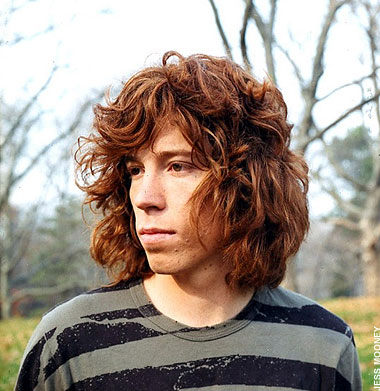
That face is just asking to be punched. Photo credit: thinlinestupid.wordpress.com

Celebrity you’d like to punch in the face: Shaun White. I think that would make a lot of skateboarders and snowboarders really happy.

Comedian role model: Mike Birbiglia. His work is sad, moving, and funny; you leave his shows feeling you just watched Forrest Gump.

Go-to joke during an awkward silence: At Christmas, someone will give a very personal gift that they’ve obviously put a ton of thought into. And I’ll yell, “That’s from all of us!” My dad still cracks up every time.

LAUNCHING YOUR CAREER>>
1. Nobody is going door to door asking if any funny people live there. You need to build your own fan base and distribute your writing and videos.

2. The entertainment and comedy industries can be foreboding, but just accept that you probably won’t level up to the huge personalities right away. Identify where you’d like to work, and find an in by interning or writing for the show.

3. Comedians are very cliquey, and recommendations will get you everywhere. Form a group for yourself by performing regularly at the same comedy clubs – you’ll start seeing the same people. A more formal way to meet people is taking classes at the Upright Citizens Brigade.

Follow Streeter on Twitter at @StreetSeidell and check out his personal website at StreeterSeidell.com. What’s your favorite CollegeHumor sketch?
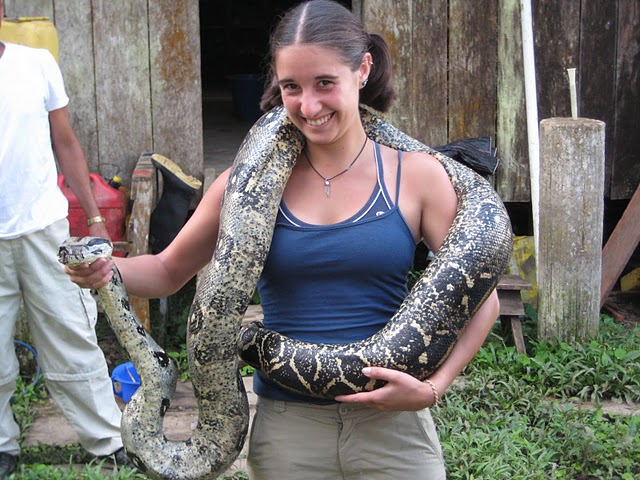
Saving the Rainforest in $8 Rubber Rain Boots

Jenny Litz doesn

For the past 15 months, Jenny Litz woke up each morning and checked for tarantula bites on her skin, cockroaches in her shoes, and poisonous snakes on the ground.

In the coastal rainforest region of Ecuador, where Jenny worked as a field research assistant, such things are commonplace. After interning abroad in Ecuador in college, she knew she belonged in the hot, rainy environment, which was a full 21 hours away from her home in Seattle by plane, bus, open-air truck, and horse.

She fell in love with the rainforest community and its barbecued cuy (more commonly known as guinea pig), so she returned to Ecuador to educate kids about deforestation and to study bird population patterns. “The rainforest is something everyone loves deep down and has a passion for,” Jenny says. “But people may not realize it until they see it.”

Age: 25
Graduated from: Western Washington University, degree in biology
Salary: Lived on a stipend of $200 per month (after rent: $60 per month)
Previous jobs: Lifeguard; worked at a plant nursery; substitute teacher

Jenny holding an umbrellabird, with a radio on its back to study its home range.

Ties to the rainforest: Since I was a little kid, I always loved the idea of the rainforest. In college, I realized the sad reality: the rainforest was being cut down at a ridiculous rate. Trucks take down huge tree trunks 24 hours a day. It’s very personal for me – I fell in love with this place, and don’t want to it disappear.

Why Ecuador? My junior year in college, I interned there for three months in part because I was minoring in Spanish. I worked with scientists from UCLA in a biological research station studying plants, which made me realize I didn’t want to study plants. I wanted to work with birds.

So you moved back after graduation? I reconnected with the scientists from the Center for Tropical Research at the UCLA Institute of the Environment and Sustainability. I volunteered in Ecuador on a tourist visa for three months and taught kids in rural rainforest communities about ways to coexist with their environment; their families were cutting down trees to make money, and the children were killing birds with slingshots.

Don’t the inhabitants want to preserve the rainforest? You’d think so. But they thought selling the trees was the most profitable use of their land.

Jenny with a group of children in the rainforest community, where she taught environmental education.

What was most striking about their way of life? [The people I worked with] lived in shacks with tin roofs, and their only source of running water was the river. But despite their poverty, these people shared everything. If they had one mattress for their entire family of 12, they gave it to you and slept on floor.

What happened after your three-month visa was up? I came back to the United States and acquired a two-year visa to work as a field research assistant in the Chocó region of Ecuador with a group from Tulane University.

Did you work with kids again? I studied migratory birds and their population patterns, which is where my true interest was. I spent half my days in the rainforest and half in the capital city of Quito.

The dirt road is four hours walking or on horseback.

Distance between the Chocó rainforest and Seattle: It’s a 10-hour plane ride to Quito, then a five-hour bus ride to the outskirts of the jungle. Then I got on an open-air truck squeezed with 40 people, chickens, and huge sacks of rice. After two hours on a bumpy dirt road, we arrived at the last place a car could get to, and from there took a horse or walked for four hours, wearing knee-high rubber boots that cost $8 in town.

That’s 21 hours total. If you do it all at once. I usually spent the night in Quito.

Ecuadorian delicacies: The guinea pig, called cuy, was delicious. I also ate rabbit once, which was dark, juicy, and cooked over a barbecue. Street vendors also sold tons of crazy different fruits, like fresh passion fruit.

El Mercado, the market in Ecuador, sold lots of fresh, cheap, and delicious fruits.

Anything you didn’t try? The skull soup, which was served with sheep’s head in it. You’re supposed to eat its brains.

Job responsibilities as field research assistant: Waking up at 4 a.m., hiking to the study site, and opening mist nets for the birds to fly into. We often caught four to 10 birds every half hour, and would then measure, examine, and release them.

Examine them for what? We attached a small metal bracelet to each bird’s foot to identify the species if we caught if again years later. We also took a tiny blood sample and removed two tail feathers from each bird, which served as DNA samples. The samples and data were taken to labs at Tulane for comparative studies on life spans and growth.

How many bird species did you encounter? There are 1,640 species of birds in Ecuador. In the area we worked in, there were 350. Our nets were only nine feet tall, so they didn’t catch birds in the canopy, like parrots.

Favorite bird: The endangered umbrellabird was emblematic of our project; almost nobody had ever studied it before this project. The feathers hanging from its chin looked like a long beard.

Measuring a toucan

Best part of the job: Being so close to the animals. I held toucans in my hands and felt the wind from bats’ wings just inches from my face.

Worst part of the job: Waking up at 4 a.m. every day and hiking in rainy, hot, and muddy conditions. The lifestyle in general is pretty hard.

Besides for the rain boots, what’s your jungle attire? High nylon soccer socks, convertible zip-off pants, and light, breathable tops. I always carried a backpack with a 1.5-liter water bottle and bugspray to avoid mosquitoes carrying Leishmaniasis parasites, which make holes in your skin.

What changed between your first and second trips to Ecuador? I eventually got used to the tarantulas in my room, the cockroaches in my shoes, and the poisonous snakes everywhere. I’d often see small gravesites on roadsides where someone had been bitten and killed on the spot by a snake.

Did you have reverse culture shock coming back to America? I was blown away. Everyone has a smartphone, and there are these weird squares you scan [QR codes].

What did you miss about America? My family, obviously. And Cool Ranch Doritos – Ecuador sold other types, but not Cool Ranch.

What are your current plans? I’ve been substitute teaching since I returned in May, and now I’m applying to grad school to study conservation ecology. I want to focus on tropical environments and complete my thesis in South America.

Greatest setback: I applied for a Fulbright grant in Ecuador and came back as an alternate. Getting funding is so complicated – my research depends on grants.

Have you ever felt in danger as a woman in the rainforest? Rainforest communities are very patriarchal societies. People there assumed [my boyfriend] Luis and I were married, and asked why I didn’t already have 10 kids. Women definitely don’t have equal rights, but I never felt in danger.

Photo credit: toursinperu.blogspot.com

LAUNCHING YOUR CAREER>>
1. Study a foreign language, then travel or intern abroad in your area of designated fieldwork. It changes your way of looking at the world.

2. Research people who are involved in your field of interest. Contact whoever is heading up a cool new project and ask about volunteer positions; don’t be afraid to make a cold call.

3. Look at and subscribe to online publications like The Wilson Journal of Ornithology.

Visit Jenny’s blog at jennylitz.tumblr.com and check out more exclusive rainforest photos on the No Joe Schmo Facebook page! Unless otherwise noted, all photos courtesy of Jenny Litz and Luis Carrasco.


Did you study abroad in college and want to return there post-graduation? If so, where? Comment below!

Foodie Friday: The Head Beer Brewer

Alan Brady couldn't imagine doing anything else for a living. Photo credit: Curt Potter

As the head brewer at The Blue Point Brewing Company, Alan Brady brews 150 kegs a day. But he only drinks a glass or two – he’s too busy modifying brewing processes, overseeing production operations, and maintaining quality control.

At 17, Brady brewed batches and batches of beer at home – so many, in fact, that he started throwing it out (“It cost me next to nothing,” he rationalized). Below, Brady describes how he nailed his first brewery job, why he doesn’t believe non-beer drinkers, and his favorite toast – one that’s bound to raise eyebrows among any company.

Title: Head brewer, The Blue Point Brewing Company
Age: 35
Based in: Long Island, NY
Graduated from: Nowhere. I’m a high school dropout.
Previous jobs: Worked at a beer and soda retailer in Westchester, NY; at a homebrew supply shop; at breweries in Connecticut and Boston
How he learned to brew: When I was 17, my mom and I bought my dad a homebrew beer kit for Father’s Day. I was more interested in it than he was, so I started brewing like crazy – a couple of times a week.

That must have been a hit at high school parties. There’s a different responsibility when you’re making beer. It’s not something you buy at the 7-Eleven for $2, get drunk on, and have a hangover from the next day. I had a beer here and there, but it wasn’t like my friends were getting hammered all the time.

Something people don’t know about your job: Brewers don’t sit around all day and get wasted. We’re running machinery and are surrounded by dangerous chemicals and boiling hot water.

First major screw-up: I was using bleach to sanitize my materials at home, and I didn’t rinse it out well enough. It affected the beer like crazy.

Alan Brady takes a whiff of whole leaf hops, which add bitterness and act as a natural preservative.

What are the main ingredients in any beer? Water, barley, yeast, and hops. But you can combine those four ingredients in millions of different ways.

Go-to beer: American pale ale. It’s one of the best beers we make.
Weirdest beer ever tasted: Garlic beer and chili pepper beer.

How do you develop a new recipe for a beer? I’m inspired by other beers, ingredients, and flavors – or, from a business perspective, whatever is in demand. The first batch of a new beer might not be exactly what I’m looking for, but I sit down with a notebook and analyze the taste: Is it too bitter? Too strong?

What kind of ingredients inspire you? I cook a lot, so I was making a dish at home using Szechuan peppercorns. They numb your tongue, and even used to be illegal in the United States. I bought some online – after they became legal, that is – and incorporated that flavor into the beer. Going outside the box can really work.

What are you brewing now? Our summer ales have been out for a few months. One of our other new beers is called No Apologies, which has a pretty high alcohol content but isn’t a real moneymaker. We brew it because it’s cool.

How did you end up in Long Island? The brewery I worked at in Connecticut went out of business, and then I got laid off from a brewery in Boston. I saw that a place in Long Island [Blue Point Brewing Company] was hiring, and have been here ever since.

Mmm, that's the stuff. Photo credit: BluePointBrewing.com

How did you stand out during job interviews? When I was brewing at home, I had all the freedom in the world. I made a concoction of Canadian lager, apple cider, and a bunch of spare ingredients – like plum extract and apricot extract. It was actually pretty good, so I bottled it and brought it to my first interview.

Pros of brewing in Long Island: The brewing scene is blowing up here right now. We helped pave the way with that.

Cons of brewing in LI: There’s no manufacturing here, and utilities are very expensive.

Best part of the job: Our tasting room, which is open a few days a week. After sweating and cursing at broken machinery, I’ll enjoy a brew in the tasting room with a customer who really appreciates our work.

Worst part of the job: The stress – we’re growing extremely rapidly.

Do you get tipsy on the job? I’ll usually have a beer before I leave work, but that’s it. Even though I get free beer, you can’t just drink it endlessly.

I know people who would beg to differ, but I digress. Where does the name Blue Point originate? It’s the town over from our brewery. The owners, Mark Burford and Pete Cotter, lived there and homebrewed before opening up shop. By using the town’s name, they were also trying to cash in on the world-famous bluepoint oysters.

How much beer do you brew each day? 150 kegs.

What beers should all beer-drinkers try at some point? All my beers. [Laughs.] There’s some funky stuff out there, like Belgian beers brewed with certain bacteria that makes them super-sour. Or beers brewed with wild yeast instead of cultivated yeast.

What about people who don’t like beer? I don’t want to hear that someone doesn’t like beer because they don’t like Budweiser. They just haven’t found the right one. Read the labels on bottles, so you can learn what you like and what you don’t.

An average day inside the brewhouse. Photo credit: Curt Potter

Where is your favorite spot in the world for craft brews? These days, the U.S. is on top of the game. In Europe, brewing is very traditional – they stay away from new styles, which we embrace.

Favorite toast: I knew a guy from Colorado who would always scream, “Sore unipa!” when making a toast. When I finally asked him what it meant, he told me it’s said in [the video game] Mortal Kombat, when players attack each other. So now I’ll sometimes say sore unipa – which means absolutely nothing – or simply cheers.

LAUNCHING YOUR CAREER>>
From beer to career: Alan Brady shares what’s on tap.
Make beer on your own as a way to get your foot in the door. It’s tough, because everyone wants to brew, but there are only so many jobs. During interviews, I can’t stress the importance of a good handshake, paying attention, and communicating a strong work ethic. Brewing is unique because it incorporates biology, microbiology, chemistry, physics, cooking, and refrigeration – so it can help to have a background in science.

Follow The Blue Point Brewing Company on Twitter at @BluePointBrewer, check out its Facebook fan page, and salivate over its selection of more than 15 microbrews.

For exclusive behind-the-scenes coverage inside the brewery, visit exclusive photos on the No Joe Schmo Facebook page.

No Joe Schmo’s One Month Anniversary!

Photo credit: guardian.co.uk

It’s hard to believe that No Joe Schmo has been around for one whole month! Since its launch, 14 people with cool & crazy jobs have been featured, in addition to tons of tips and advice on the job search. Let’s take a look back at some of the highlights…

First-ever No Joe Schmo>> The Hot, Young, and Single Circus Ringmaster

Coolest Foodie Friday>> Mrs. Willy Wonka: Creative Director of Dylan’s Candy Bar

Most total views (350+ views for just this post!)>> The Brand Namer

Who was your favorite No Joe Schmo so far? Comment below and let us know!

Business Card Etiquette, Part 2: Virtual Cards

Smartphones and QR-code readers enable users to instantly exchange contact info. Photo credit: scrs.co

Several weeks ago, I wrote a post about creating business cards that stand out from the crowd. But perhaps best way to do that is by having no card at all; an article in last week’s Sunday Styles section of The New York Times discussed the pitfalls of traditional business cards. The piece quoted Gina Trapani, founder of Lifehacker, as saying business cards are close to extinct among the tech-savvy. “I see people exchange Twitter handles, I see people scan each other’s badges,” she told the Times. “But I definitely don’t see people handing out cards anymore.”

So, want to save a tree and go virtual? Use one of these three websites to get started.

1. Hashable.com >> This social networking app allows users to “check in” with people to track meetings and calls; exchange business cards by typing in a person’s email address or Twitter handle; and make easy intros by using the hashtag #intro. Other features include sharing digital calendars, scanning in QR codes, and exchanging contacts by holding phones together (think osmosis).
Make it real: Hashable, Inc. is located at 6th Avenue and 36th Street in NYC. The website encourages users to “stop by and #sayhi” if they’re in the neighborhood.
Follow them: @hashable


2. Cardcloud.com >> Use this app from any phone with Internet connection to share business info with other Cardcloud users (or send via email to non-users). Add notes to a card to spur your memory, or tags to index a person and rate their importance. The “cloud” backs up each card, and integrates smoothly with Twitter and Facebook.
Make it real: Not sure where you met someone? Cardcloud stores and displays the geolocation of where you exchanged a business card.
Follow them: @getcardcloud

This About.me profile boasts just two sentences: one about a background in design, the other about an addiction to beet chips.

3. About.me >> Build a personal profile page that points users to your content from around the web, much like a central hub to build your online identity. Your personal splash page is heavy on visuals: limit your bio to a few sentences summarizing your current projects. Icons link to your content on various platforms, including Twitter, Facebook, LinkedIn, Tumblr, WordPress, Flickr, Vimeo, YouTube, Formspring, and Instagram. To name a few.
Make it real: Sign up and get a free pack of About.me business cards. (Seems a bit ironic, no?)
Follow them: @aboutdotme

LAUNCHING SOON: Look out for Vizualize.me, which promises to “visualize your resume in one click.” Free premium accounts for the first 10,000 sign ups.

Voila! Goodbye, Rolodex. No more stacks of cards overflowing from your desk drawers, no more rushing to make reprints. However, in the same Times article, Trapani countered that “you’re real and you have a real job if you have a business card.” Do you think tactile cards still have a certain status attached?

Check out other tips & advice from No Joe Schmo, such as ways to maximize your resume and questions to ask at the end of interviews.